

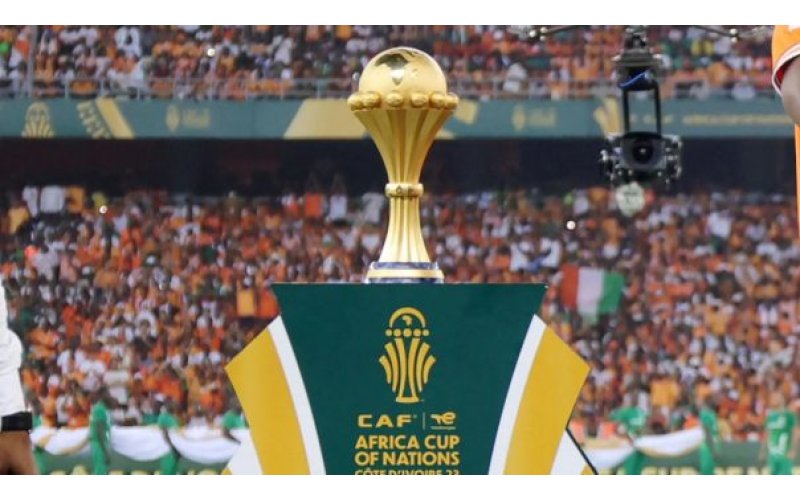
The clock ticks down to 18h00 GMT on Monday when the
draw for the final competition of the 2025 Africa Cup of Nations will be held
at the Mohammed V National Theatre in Rabat.
Then the roadmap would have been laid for the first
Africa Cup of Nations to be held in December and spilling to the following
year.
It triggers the series of football competitions that
the Kingdom of Morocco will hold this year.
The kingdom has always been the sports destination on
the continent. Great thanks to the facilities that Morocco has put in place.
From great stadiums to world-class hotels, and
efficient communication and transportation systems, Morocco offers a
plug-and-play scenario making it the ultimate destination for hosting events,
even at short notice.
One of the outlandish facilities is the Mohammed VI
Football Complex.
It was founded in 2009 in Salé, on the instigation of
His Majesty King Mohammed VI, may God assist him, in his letter to the National
Sports Conference held in Skhirat on October 24, 2008.
In this Royal letter, His Majesty the King called for
the development of a modern and efficient system to organize the sports sector
based on the restructuring of the national sports landscape and the upgrading
of sports.
The Mohammed VI Football Academy, the jewel that
produces Moroccan stars, was built according to criteria that correspond to the
best international standards in terms of training centers in order to put in
place the conditions for the training of Moroccan talents, enabling them to
play in the biggest soccer clubs, whether in Morocco or in Europe.
One of the items that catches the attention at the
vast entry lounge is a huge framed picture of the reception accorded the 1976
Africa Cup of Nations winning team of Morocco.
All the players in the picture wore maroon-coloured
suits. In the middle of the group picture is a young boy, then 13. He wore a
blue suit and a striped tie.
That was the then Prince Mohammed who is today, King
Mohammed VI. The magnificent football complex in Rabat is named after him.
Information gathered that there are three more such
football training complexes, though on a lower scale, in Morocco while others
are still being planned.
King Mohammed’s association with sports, especially
football therefore predated his ascension to the throne on 23 July 1999 upon
the passing on of his father, King Hassan II.
Football in Morocco has blossomed under King Mohammed
VI. In 2022, Moroccan clubs were holders of both the CAF Champions League and
the CAF Confederation Cup.
Women’s football has received a big boost as the
Moroccan women’s team made a debut at the FIFA Women’s World Cup to be
co-hosted by Australia and New Zealand in 2023.
Before King Mohammed VI’s reign, the Moroccan women’s
team was like a punching bag in the African Women’s Championship.
For instance, the team was pummelled 8-0 by Nigeria on
17 October 1998. But in 2022, Nigeria’s Super Falcons struggled in vain and
were eliminated by Morocco in the semi-finals of the Women’s Africa Cup of
Nations.
King Mohammed VI was born on 21 August 1963, the day
the Nigeria Football Federation (Founded 1933, though they seemed not aware)
clocked 30.
He is not the only royal person interested in sports.
The imposing Prince Moulay Abdellah Stadium in Rabat is named after an uncle of
King Mohammed VI, indicating the royal family’s strong obsession with sports.
Another indication could be gleaned from the picture
of the trophy presentation to Real Madrid when the Spanish giants won the 2014
FIFA Club World Cup.
The trophy was presented by Prince Moulay Al Hassan,
the Crown Prince of Morocco. At the time he was making the trophy presentation,
he was 11 years old.
King Mohammed VI’s passion for football is legendary.
When Morocco won the U-23 Africa Cup of Nations in 2023, coach Isaam Charai at
the post-match conference rightly credited the Moroccan monarch, King
Mohammed VI, as the inspiration for the astronomic rise in Moroccan football
standard.
Comments:
Leave a Reply