

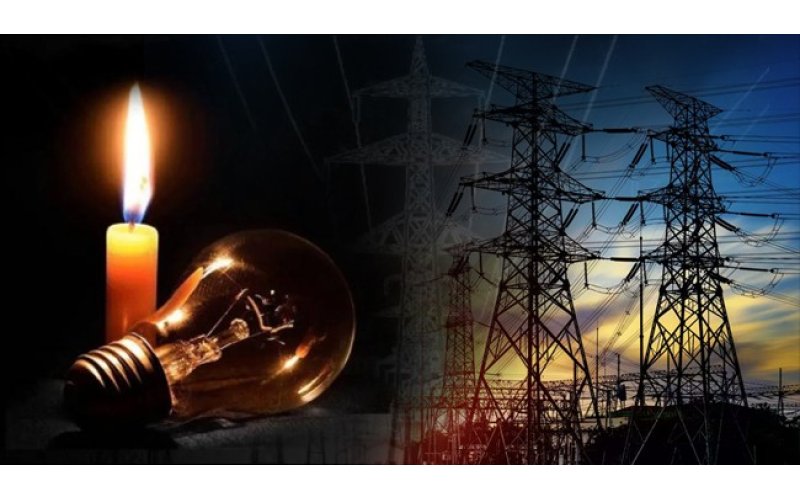
Electricity Distribution Companies (DisCos) have
apologised to Nigerians over persistent power outages across the country,
acknowledging the difficulties households and businesses have faced following
weeks of inadequate electricity supply.
The Managing Director and Chief Executive Officer of
the Association of Nigerian Electricity Distributors (ANED), Sunday Oduntan,
offered the apology on Monday during an interview on Channels Television's Sunrise
Daily.
Oduntan acknowledged the hardship caused by the
prolonged outages, admitting that Nigerians deserved an apology for the ongoing
electricity challenges.
"I'd like to first of all start by apologising to
Nigerians. Apology is needed; it is essential because Nigerians have been taken
through this problem over the past few weeks," he said.
ANED CEO Faults Blame Game Among Power
Sector Operators
Beyond the apology, Oduntan expressed concern over
what he described as a renewed blame game among key stakeholders in Nigeria's
electricity industry.
He recalled that similar disagreements between
distribution companies, transmission operators, generation companies and gas
suppliers had contributed to the industry's challenges between 2016 and 2019.
According to him, rather than working together to
resolve the problems affecting electricity supply, operators have continued to
shift responsibility to one another.
He explained that DisCos often blame the Transmission
Company of Nigeria (TCN), while transmission operators point to generation
companies (GenCos), which in turn attribute their challenges to inadequate gas
supply and payment disputes with suppliers.
Oduntan warned that returning to this pattern would
make it more difficult to address the country's electricity crisis.
Oduntan Questions Conflicting Statements
on Gas Supply
The ANED chief also questioned conflicting
explanations from the Nigerian Independent System Operator (NISO) and the
Nigerian National Petroleum Company Limited (NNPC) regarding the factors
responsible for the recent power shortages.
He noted that NISO had identified low water levels and
insufficient gas supply as some of the factors affecting electricity
generation, while the NNPC subsequently issued a statement indicating that gas
was available.
However, Oduntan argued that the NNPC needed to
provide further clarification, particularly on whether outstanding payments
were affecting gas supply to power generation companies.
He maintained that Nigerians deserved clear
information about the actual situation, including whether gas had been paid for
and delivered to the relevant power plants.
The ANED chief consequently called on the Minister of
Power to take the lead in bringing all relevant stakeholders together to
establish the causes of the shortages and develop lasting solutions.
He stressed that stronger leadership and coordination
were necessary to end the exchange of accusations within the electricity value
chain.
Nigerians Struggle as Power Outages
Persist
The apology comes amid growing public frustration over
unreliable electricity supply, with households and businesses struggling to
cope with prolonged blackouts in different parts of the country.
The situation has also renewed concerns about the
electricity Band A, B and C tariff classifications, which determine customer
charges based on the expected hours of daily electricity supply.
Customers on Band A, who are entitled to a minimum of
20 hours of electricity daily, have also raised concerns over inadequate power
supply.
The outages have further intensified the difficulties
faced by residents amid rising temperatures and the high cost of alternative
energy sources.
Several Nigerians have taken to social media to
express their frustration, with public figures also criticising the persistent
electricity challenges.
Veteran actress Kate Henshaw questioned why Nigerians
continued to struggle with reliable power, lamenting that households had
effectively become mini-factories because of the need to generate their own
electricity.
Content creator Cute Abiola also appealed to President
Bola Tinubu over the situation, highlighting the difficulties Nigerians face in
coping with the heat and accessing alternative power sources.
Meanwhile, the rising cost of petrol and diesel has
made generator usage increasingly expensive, while the cost of installing solar
panels, inverters and battery systems remains beyond the reach of many
households and small businesses.
Tinubu's Electricity Campaign Promise
Resurfaces
The latest power crisis has also brought renewed
attention to President Bola Tinubu's campaign promises on electricity supply
and the elimination of estimated billing.
During his 2023 presidential campaign, Tinubu pledged
to improve electricity availability across the country and ensure Nigerians no
longer had to pay estimated electricity bills.
Addressing members of the Organised Private Sector in
Lagos at the time, he promised that Nigerians would have access to adequate
electricity and urged voters to hold him accountable if he failed to deliver.
The renewed concerns over prolonged blackouts have
therefore intensified calls for the Federal Government and electricity sector
operators to take decisive action to address the country's persistent power
supply challenges.
Comments:
Leave a Reply