

…they act with impunity and get away with it but this
is not sustainable
…says the Nigeria of today is certainly not what our
founding fathers envisaged
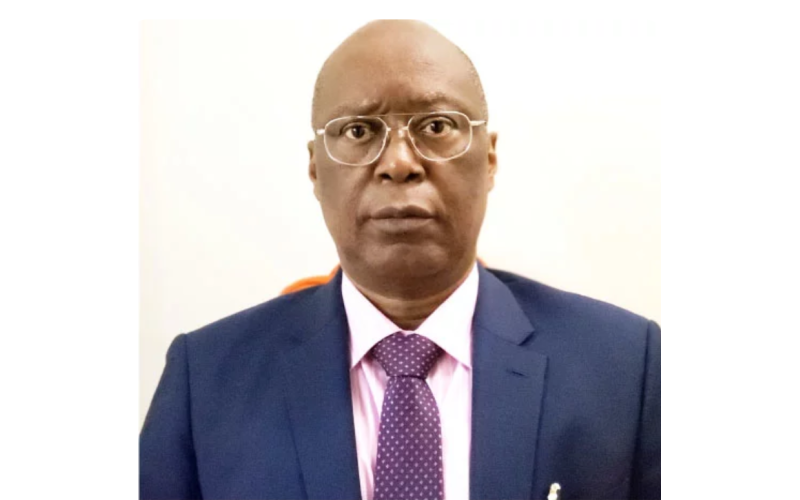
Former Governor of Edo State, former Chairman, NLRC, a
two-term Senator, a Professor of Law, author of law books, Senator Oserheimen
Osunbor in this chat with TNG’s Regional Editor, North, Emman Ovuakporie spoke
extensively on various national issues ranging from switch from presidential
system to Parliamentary system of governance, Electoral Reforms, the Nigeria of
today and many other burning issues.
Read him:
How can our elections be made better? What amendments
would you suggest for the electoral laws?
Since 1999,proposals have been made after every
election to use the lessons learnt in each election to
improve our Electoral Laws and the quality of our
elections. This is to ensure that they are fair, credible
and transparent.
Accordingly, the National Assembly passed Electoral
Acts in 2001, 2002, 2006, 2010
and 2022 and in the process introduced progressively
far reaching innovations with each amendments.
Regrettably, despite the efforts of legislators at the
National Assembly, the quality of the elections has
not improved, if anything, the quality has fallen. The
main reason for this is that political parties have
failed to abide by the well intentioned provisions of
the Acts to guarantee that political party
candidates emerge through a fair and transparent
process.
Often, the political party leaders simply
ignore the law and do as they please in the nomination
of candidates. Regrettably, the Judiciary that
should hold the political parties accountable and
compel them to respect their own constitution and
guidelines for the election of candidates appear
themselves to be complicit as they seemingly bow to political pressure or
inducements and wash their hands off the cases with the excuse that they are
internal matters of the political parties and not justiciable.
In effect, aggrieved party members are denied justice
by the courts. For these reasons, I do not see much need in dissipating efforts
on
enacting or reforming electoral laws to promote
internal democracy when the courts are unwilling to enforce them.
Unfortunately, we have now reached a point in Nigeria
where many political leaders
believe that laws do not matter.
They act with impunity and get away with it but this
is not sustainable in the long run. Nigerians are too familiar with the
well-publicised cases where the judiciary clearly failed to enforce the
provisions of party constitution and guidelines which are contractual in nature
and have binding effect between the political parties
and their members. So also is there a long list of people who lost elections at
the polls or did not even participate at all in the elections but were
declared winners by the courts. For me our major
concern now should be less about more law reforms
but more about enforcement and compliance with
existing laws.
Given the recent happenings in Edo State and some
other states, how can we make Deputy Governors have security of tenure?
Deputy Governors, like governors, Presidents and Vice
Presidents already enjoy security of tenure under the constitution. This is why
in a vast majority of cases Deputy Governors serve out their terms
successfully. Therefore, I do not see the need for
special protection for Deputy Governors. In those
instances where deputy governors have been removed
from office a number of reasons may account
for this.
To enjoy security of tenure deputy governor must show
loyalty to the governor who at any rate
is his boss. A Deputy Governor must not see himself as
a co – governor or alternate governor. Inordinate
ambition to take over power or succeed the governor
can push a deputy governor to begin to wish or
plot evil against the governor engaging in power
tussle and thereby putting the governor in a fighting mode for his own
survival. Once a deputy governor understands that the governor is the captain
of the ship he will enjoy security of tenure. It is not a matter for
legislation. This is not to say that there are no governors who are mean
towards their deputies. The answer is not to engage in combat or show of shame
but to resort to coping strategies by seeking political solutions to whatever
problems exist.
How do you see the current democracy in Nigeria, with
people being arrested for protests? Do we still have right to protest in
Nigeria?
Our courts up to the apex, the Supreme Court, have
time and time again recognized and upheld the
constitutional right of Nigerians to protest. Infact
the right to protest is a fundamental right of the
people in a democracy. Any attempt to deny or whittle
it down would amount to an affront on our
constitution and desecration of our democracy.
What are your comments on the recent governorship
election in Edo State?
As you know, that election is currently being
questioned at the Election Petition Tribunal and hence sub-judice. I will
therefore reserve my comments.
Nigeria recently celebrated 64 years of Independence
amidst complains from citizens on the state of the nation. What are your
thoughts on this and your advice to citizens?
The Nigeria of today is certainly not what our
founding fathers envisaged when we got our
independence in 1960. This is not the Nigeria that we
aspired to have and were
trained to work towards. It is very distressing that
values of hard work, excellence, integrity, honesty
and high standards in all aspects of our national
lives are falling. The decline accelerated since 1999.
Evil and mediocrity are rewarded while excellence and
integrity are derided.
This state of affairs is
getting from bad to worse. To many people, all that
matters now is money, and they do not care how
you get it, The most disturbing aspect of the decline
in the nation is that the Judiciary which should hold government and
institutions accountable is failing in its responsibility.
The checks and balances which are essential for
democracy to thrive rarely exist now. About 20 years ago Nigerians rated the
Judiciary, the highest of the three arms of government over and above the
Legislature
and the Executive.
Today, various reports from within Nigeria and from
abroad such as the United
Nations Office on Drugs and Crime, ( UNODC), rate the
Judiciary as the most corrupt arm of government. Unless this ugly trend is
reversed the failings of the Judiciary may precipitate the collapse of our
democracy. Many,
including prominent personalities like former
President Goodluck Ebele Jonathan are voicing out their fears that when public
trust in the Judiciary is completely eroded and this Democracy collapses, God
forbid, the Judiciary will take responsibility. These
admonitions should not be seen as disrespect for our Judiciary but a wake up
call. The Judiciary must redeem itself and earn back the respect of Nigerians.
Every Nigerian in whatever sphere we find ourselves
must strive to uphold the highest standards,
discourage negative attributes and protect our
Democracy.
Some Nigerians including members of the National
Assembly have been clamouring for an entirely new constitution for the country.
What are your views on this?
It is true that some people are calling for an
entirely new constitution but I have serious problems with
this, and that is what will happen to the current
constitution of the Federal Republic of Nigeria, 1999.
The 1999 constitution is the basic law of the land
from which all institutions and arms of government derive their existence,
authority and legitimacy. All officers of government, whether at the
Legislature,
Executive or Judiciary and all levels of government
have sworn to uphold, defend and protect the 1999 constitution.
It will be a violation of their oath of office to
discard the constitution in favour of an entirely
new one. A constitution is not a trivial thing that
you can adopt or discard just because some people so wish. Those who demand a
new constitution must first address those fundamental issues.
Would you rather prefer further amendments to the 1999
Constitution to an entirely new constitution?
It is not a matter of what I prefer but what is
possible. The framers of the 1999 constitution knew fully
well that it is not perfect for all time, hence
provision is made in section 9 for its alteration and
amendment to make it suit the needs of the people. The
constitution is supreme and its provisions have binding force on all
authorities and persons throughout Nigeria, which means that the only option
available is amendment as there is no provision in it for making of an entirely
new constitution.
As a matter of fact, a constitution can only be
abrogated and substituted by a new constitution where there is a revolution.
This means a situation not envisaged or contemplated by the constitution A
revolution can be in the form of a civilian uprising which leads to a change of
the legal order as happened in Egypt,
ushering in the government of General Al Sisi or a
military revolution better known as Coup d- etat as we have experienced in the
past in this country, as well as in other countries, leading to change of the
legal order and the making of a new constitution.
Successive French Revolutions also led to new
constitutions in France. Examples can be drawn from many other countries. The
problem with Revolutions, is that once it starts you can never tell how it will
end.
As a former. Governor, what are your thoughts on Local
Government Autonomy?
The issue of Local Government Autonomy reveals very
clearly some of the contradictions in our federal system of government. Related
to this is the call for the scrapping of States Independent Electoral
Commission (SIEC) and the transfer of their functions to the National Election
Management body, the
Independent National Electoral Commission (INEC).
Ordinarily, this should not happen in a Federation.
consisting of two tiers, Federal and State/Provinces.
Local governments usually come under states as they
are not federating units in Nigeria. Whereas under the constitution, local
governments are under
states, the call for Federal Government to deal
directly with them undermines the states and the proper
working of a federal system of government..What some
refers to as “true federalusm”. With this
popular clamour, I think it is more appropriate now to
characterize our system of government as
“Modified Federalism” rather than “True Federalism”.
Nigerians are increasingly demanding the
modification of our Federal Constitution.. I perfectly
understand that the call for local government autonomy has emerged from a
realization that many state governments have refused to allow their local
governments to function properly as envisaged by the
constitution.
This is especially so with respect to the management
and utilization of funds allocated from the Federation Accounts to local
government councils but which many state governments appropriate or
misappropriate instead of releasing the
funds to the local governments as envisaged by section
162 (6) of the constitution.
The subsection,
quite clearly has not worked. I do hope that the
chairmen of local government councils will utilize the
funds judiciously and for the purpose for which they
are meant. All stakeholders should help ensure
that the objective of the local government system to
bring development to the grassroots is not defeated especially now that the
councils can no longer complain that the funds have been hijacked by their
governors.
Should the Federal allocations be paid directly to the
Local Government Account or through State Governments?
The Supreme Court has rested this issue by its recent
decision directing that funds due to local
governments councils from the Federation Accounts be
paid directly to them. Section 162 (6) provides
that local governments councils share from the
Federation Accounts should be paid into a State Joint
Local Government Accounts and each state would
contribute to that account before distribution to its
local governments but this has not worked. Rather in
most cases the local governments are
shortchanged of what is due to them from the
Federation Account.
So instead of getting more money,
they end up getting less. The State Joint Local
Government Accounts no longer make sense nor serve
its purpose hence the Supreme Court was absolutely
right by effectively scrapping section 162 (6) of
the constitution. This should be formalized in the
ongoing round of constitution amendment.
There is also a strong clamour for Nigeria to change
from the presidential system of government to the parliamentary system. What is
your view?
It seems to me that most of those advocating the
adoption of the parliamentary system are not aware or have forgotten that
Nigeria started off in 1960 with a parliamentary system .
The weakness of that system contributed largely to the
collapse of the First Republic, after only five years, in to January 1966. By
contrast, the presidential system has been running for about 29 years now. On
this score alone the presidential system has obviously fared better and proved
superior to the parliamentary system.
For them to be persuasive, those calling for the
return to the failed parliamentary system should show that they understand the
flaws that led to the collapse of the system in the First Republic and convince
Nigerians that those weakness will not reoccur.
Unfortunately, the advocates are not engaging in such
logical scrutiny but are simply being sentimental and unscientific in voicing
their preference for the parliamentary system.
The reasons commonly advanced in support of the
parliamentary system are firstly , that it is cheaper to operate. Secondly,
that the presidential system breeds pseudo-dictatorship as it confers too much
powers on the President and Governors.
My response to these argument is that it is the
Nigerian people that make presidential system expensive and turn executive
office holders into pseudo-dictators. Even if we return to the parliamentary
system, the same elected office holders will continue to approve for themselves
outrageous employment and bogus allowances.
The Prime Minister and Ministers can still become
autocratic if the society accepts or encourages it. Example of this can be
drawn from some countries that operate the parliamentary system. First Republic
Minister of Finance, Festus Okotie- Eboh, was reputed to be very flamboyant, if
not extravagant and that was under the parliamentary system.
“Operation Wetie” in the then Western region and
events leading to the Nigerian civil war happened under the parliamentary
system. Or have we forgotten parliamentarians, some of them illiterate, that
rode in the longest American car , Pontiac guzzled petrol at 8 miles per
gallon?
I personally have strong reservations against
continuous experimentation with our system of governance with attendant
political Instability without sound well thought – out reasons. We should not
reduce governance to our style of football administration that oscillates like
a pendulum from local coach to foreign coach and back to local coach without
any improvement on our performance.
As the immediate past foreign coach G.Rohr, and others
before him, have revealed, the main problem with our football performance is
lack of commitment, dedication and indiscipline. It has nothing to do with the
colour of the skin of the coach. It is about our attitude as Nigerians.
Without changing our attitude to governance we will be
perpetually going round in circles by continuously changing from one
constitution to another or from one system of governance to another- whether
parliamentary, presidential or hybrid.
There is a raging controversy about what we have today
as the National Assembly vis a vis the system of government we practiice. Is it
right to refer to the National Assembly as Parliament?
I cannot understand why many Nigerians, including the
media, now refer to our National Assembly as parliament. Even the Senate
President and Senators refer to the Senate as parliament. Same with the speaker
and members of the House of Representatives.
The 1963 Constitution , in chapter 5 , vested
legislative powers in parliament created in Section 41 thereof but that
constitution is now defunct. In its place we now have the 1999 Constitution
which, in section 4 , vested legislative powers in the National Assembly
consisting of a Senate and a House of Representatives.
“There is no reference to “Parliament ” in our current
Constitution. I cannot understand why people choose to use a name outside our
constitution. The U.S. has a congress, the U.K. has a parliament and Nigeria
has a National Assembly.Is this too difficult to understand.
Referring to the National Assembly or each of its two
Houses as “Parliament” creates an erroneous impression that we run a
parliamentary system. This can be confusing to many especially foreigners not
accustomed to our constitution. I have had occasion in the past to explain the
correct position to a foreign in expert who had been under the impression that
we operate a hybrid system of the French model.
Comments:
Leave a Reply