

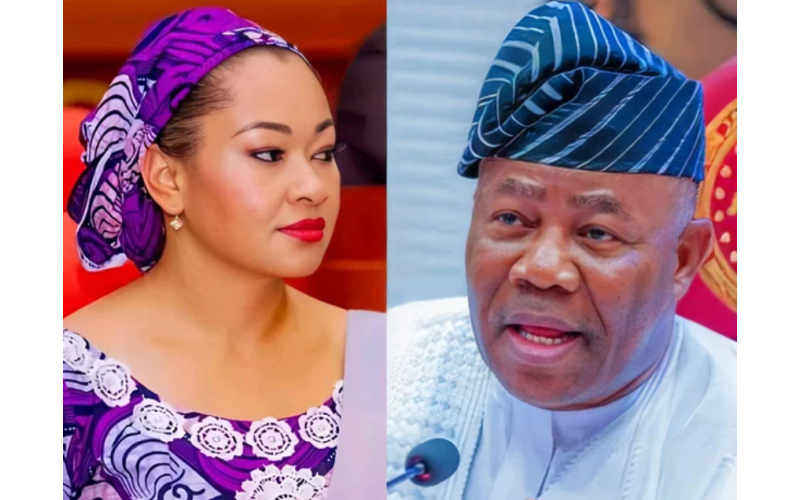
The President of the Nigerian Senate has come under
intense scrutiny following allegations of sexual harassment leveled against him
by a former legislative aide. The accusation, which surfaced earlier this week,
has ignited national debates on gender rights, workplace harassment, and
political accountability in Nigeria. In response, women’s rights groups, civil
society organizations, and political analysts have called for an independent
investigation and legal action if necessary. The controversy has added to the
growing demand for stronger protections against sexual misconduct in Nigeria’s
political and professional spheres.
Details of the Allegation
The allegations were made by a former female
legislative aide who worked in the Senate between 2022 and 2024. In a widely
circulated statement, the accuser claimed that the Senate President made
repeated inappropriate advances toward her and allegedly retaliated against her
professionally when she refused his advances.
The woman, whose identity has been partially protected
due to safety concerns, detailed instances of unwarranted meetings, persistent
messages, and coercive attempts to establish an inappropriate relationship. She
further alleged that after rejecting these advances, she was reassigned to less
significant roles and, eventually, forced out of her position under
questionable circumstances.
Legal representatives of the Senate President have
categorically denied the allegations, calling them “fabricated and politically
motivated.” A statement from his office described the accusations as “an
attempt to tarnish the reputation of a dedicated public servant.” However, the
growing public discourse has increased calls for a formal investigation into
the matter.
Reactions from Women’s Rights Groups and
Civil Society
Several prominent women’s rights organizations have
taken a strong stance on the issue, demanding accountability and transparency.
Groups such as Women Advocates Research and Documentation Centre (WARDC), Stand
to End Rape Initiative (STER), and the Federation of Women Lawyers (FIDA) have
condemned the alleged harassment and called for an immediate, independent
probe.
WARDC’s Executive Director, in a press statement,
emphasized that sexual harassment in the workplace is a systemic issue in
Nigeria and that public officeholders should not be exempt from scrutiny.
“Women should feel safe in their workplaces, and men in positions of power
should not be allowed to exploit that power for personal gain.”
STER’s founder, a prominent advocate for survivors of
sexual violence, reiterated that such allegations must be taken seriously. “The
Senate President must step aside while investigations are conducted. This case
should set a precedent that no one, regardless of their status, is above the
law.”
FIDA Nigeria, a leading organization of female
lawyers, has pledged legal support for the accuser, stating that if necessary,
they will push for both criminal and civil proceedings against the accused.
Political and Public Response
Beyond the activism space, political stakeholders have
reacted to the allegations with mixed responses. While some senators have
remained silent or defended their leader, opposition lawmakers have called for
an ethics review and the possibility of disciplinary action.
The National Assembly’s Ethics and Privileges
Committee is under pressure to take up the case, with some legislators
advocating for an internal review before external legal proceedings. However,
critics argue that an internal review may lack the independence needed to
ensure justice.
Public sentiment has also been strongly divided.
Social media has been flooded with discussions, with many Nigerians, especially
young women, using hashtags like #JusticeForTheAide and #EndWorkplaceHarassment
to express solidarity with the accuser. Others, particularly supporters of the
Senate President, claim the allegations are part of a political smear campaign
ahead of the 2027 elections.
Legal Implications and the Path Forward
Nigeria’s legal framework on workplace harassment
remains weak, with many survivors facing challenges in seeking justice. The
Sexual Harassment in Tertiary Educational Institutions Prohibition Act, passed
in 2020, does not extend to workplaces, leaving gaps in legal protections for
employees, particularly in government offices.
Women’s rights activists have called for urgent
legislative reforms to close these gaps and provide clearer protections and
consequences for harassment in political and professional spaces.
Meanwhile, the accuser has indicated her willingness
to cooperate with any official investigation. If formal legal action is
pursued, the case could set a significant legal and cultural precedent in
Nigeria’s fight against gender-based misconduct.
Conclusion
The allegations against the Senate President have
intensified the national conversation on workplace harassment, power dynamics,
and women’s rights in Nigeria. With civil society groups demanding
accountability, political allies taking sides, and public discourse reaching a
fever pitch, the coming weeks will be crucial in determining how Nigeria’s
institutions handle cases of this nature.
If properly investigated, this case could mark a
turning point for workplace safety and accountability in Nigeria’s political
landscape. However, if dismissed or mishandled, it could further entrench the
culture of silence and impunity surrounding sexual harassment in high offices.
Comments:
Leave a Reply