

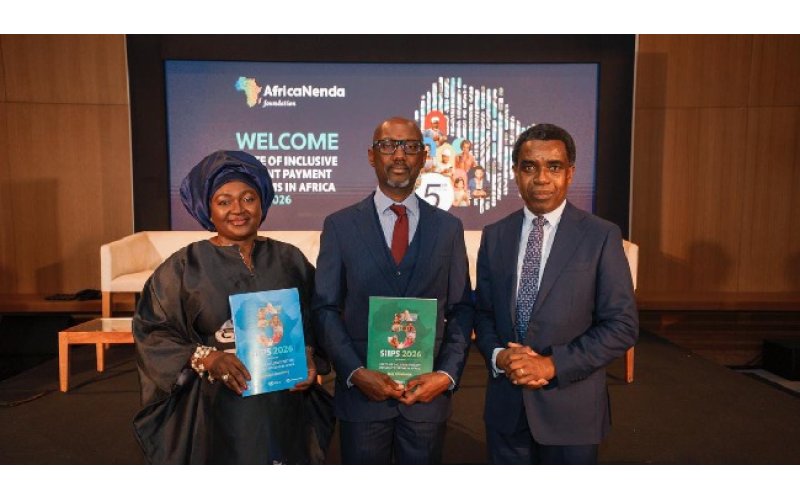
Africa's instant payment systems processed 71.4
billion transactions worth $1.8 trillion in 2025, nearly three times the volume
recorded in 2021, according to a new report by the AfricaNenda Foundation, the
United Nations Economic Commission for Africa and the World Bank Group.
The fifth edition of the State of Inclusive Instant
Payment Systems in Africa (SIIPS) report, published on Thursday, November 19,
2026, highlights the rapid expansion of digital payment infrastructure across
the continent. It warns, however, that access alone has not translated into
widespread everyday use. The report found that 89 per cent of African adults
live in countries with access to an instant payment system. Yet a survey of
1,403 digital payment users across 15 markets showed that 55 per cent still use
cash for about half of their transactions. More than half of respondents had
experienced payment problems, including delays and transfers to the wrong
recipients, and one in three affected users never reported the incident,
largely because they did not know how.
"Five years ago, our first report mapped 29
instant payment systems; today there are 39, and one in two African adults live
in a country served by an inclusive instant payment system," said Sabine
F. Mensah, Deputy CEO of the AfricaNenda Foundation and lead author of the
report. "The question has changed. It is no longer whether Africans can
pay instantly, but whether they trust the system enough to stop reaching for
cash. Our research shows that trust is won in seconds, through a payment that
goes through instantly, with preventive safeguards such as recipient name
validation, and a payment confirmation message received in real time. It is
kept by getting timely resolution and people's money back when something goes
wrong."
39 instant payment systems
The report identified 39 live instant payment systems
across Africa, made up of 35 domestic systems in 29 countries and four regional
systems. In all, 43 African countries now have access to instant payment
capabilities through domestic or regional platforms. Four domestic systems were
introduced in the past year in Liberia, Burundi, Guinea and Mauritania, and a
new regional system now serves the eight countries of the West African Economic
and Monetary Union (WAEMU). Another 17 countries have instant payment projects
underway.
Transaction volumes have grown by an average of 28 per
cent a year since 2021, while the average transaction value fell from $45 to
$26, indicating greater use for small, everyday purchases. Mobile money systems
accounted for 73 per cent of all transaction volumes.
The report named instant payments, clear confirmation
messages and recipient verification as the three main factors that build user
confidence. It also found that the handling of failed transactions affects
adoption: 43 per cent of users who lost money reduced their use of digital
payments, while those who received refunds often increased theirs.
Trust and fraud protection
On security, the report found that payment service
providers are adopting artificial intelligence fraud prevention faster than
instant payment system operators, while users largely see AI as a risk,
particularly because of threats such as deepfakes. Countries with operational
instant payment systems record about seven percentage points higher active
account usage. The report added that more inclusive instant payment systems
create opportunities to expand access to other financial services, including
credit, through digital cash flow records.
"Africa has built inclusive instant payment
infrastructure at remarkable speed, drawing on the talent of its own software
engineers and designers," said Robert Ochola, CEO of the AfricaNenda
Foundation. "The next five years must be about making these systems
affordable to use, safe and sustainable to run."
Comments:
Leave a Reply