

The
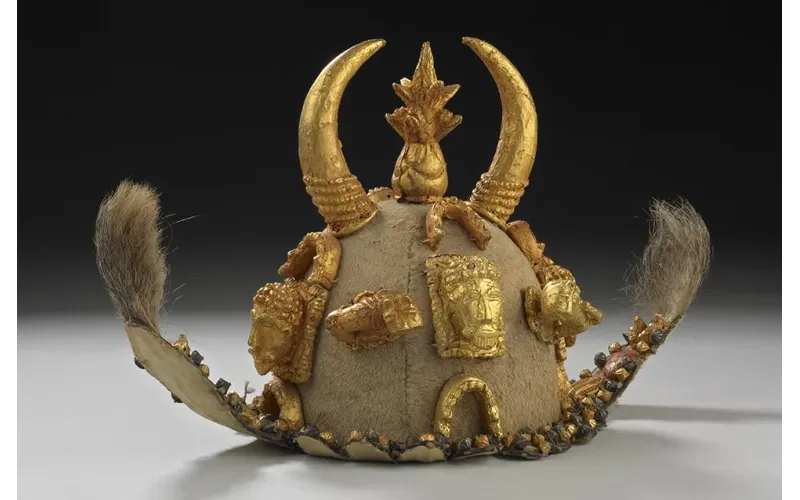
UK is sending some of Ghana's "crown jewels" back home, 150 years
after looting them from the court of the Asante king.
A gold peace pipe is
among 32 items returning under long-term loan deals, the BBC can reveal.
The Victoria &
Albert Museum (V&A) is lending 17 pieces and 15 are from the British
Museum.
Ghana's chief
negotiator said he hoped for "a new sense of cultural co-operation"
after generations of anger.
Some national
museums in the UK - including the V&A and the British Museum - are banned
by law from permanently giving back contested items in their collections, and
loan deals such as this are seen as a way to allow objects to return to their
countries of origin.
But some countries
laying claim to disputed artefacts fear that loans may be used to imply they
accept the UK's ownership.
Tristram Hunt,
director of the V&A, told the BBC that the gold items of court regalia are
the equivalent of "our Crown Jewels".
The items to be
loaned, most of which were taken during 19th-Century wars between the British
and the Asante, include a sword of state and gold badges worn by officials
charged with cleansing the soul of the king.
Mr
Hunt said when museums hold "objects with origins in war and looting in
military campaigns, we have a responsibility to the countries of origin to
think about how we can share those more fairly today.
"It doesn't
seem to me that all of our museums will fall down if we build up these kind of
partnerships and exchanges."
However, Mr Hunt
insisted the new cultural partnership "is not restitution by the back
door" - meaning it is not a way to return permanent ownership back to
Ghana.
The three-year loan
agreements, with an option to extend for a further three years, are not with
the Ghanaian government but with Otumfo Osei Tutu II - the current Asante king
known as the Asantehene - who attended the Coronation of King Charles last
year.
The Asantehene still
holds an influential ceremonial role, although his kingdom is now part of
Ghana's modern democracy.
The items will go on
display at the Manhyia Palace Museum in Kumasi, the capital of the Asante
region, to celebrate the Asantehene's silver jubilee.
The Asante gold
artefacts are the ultimate symbol of the Asante royal government and are
believed to be invested with the spirits of former Asante kings.
Nana Oforiatta Ayim,
special adviser to Ghana's culture minister, told the BBC: "They're not
just objects, they have spiritual importance as well. They are part of the soul
of the nation. It's pieces of ourselves returning."
She said the loan
was "a good starting point" on the anniversary of the looting and
"a sign of some kind of healing and commemoration for the violence that
happened".
UK museums hold many
more items taken from Ghana, including a gold trophy head that is among the
most famous pieces of Asante regalia.
The Asante built
what was once one of the most powerful and formidable states in west Africa,
trading in, among others, gold, textiles and enslaved people.
The kingdom was
famed for its military might and wealth. Even now, when the Asantehene shakes
hands on official occasions, he can be so weighed down with heavy gold
bracelets that he sometimes has an aide whose job is to support his arm.
Europeans were
attracted to what they later named the Gold Coast by the stories of African
wealth and Britain fought repeated battles with the Asante in the 19th Century.
In 1874 after an
Asante attack, British troops launched a "punitive expedition", in
the colonial language of the time, ransacking Kumasi and taking many of the
palace treasures.
A
gold model harp (top left) was given to the British Museum in the early 19th
Century. But the gold torc (right) and sword of state were among the looted
artefacts
They include three
heavy cast-gold items known as soul washers' badges (Akrafokonmu), which were
worn around the necks of high ranking officials at court who were responsible
for cleansing the soul of the king.
Angus Patterson, a
senior curator at the V&A, said taking these items in the 19th Century "was
not simply about acquiring wealth, although that is a part of it. It's also
about removing the symbols of government or the symbols of authority. It's a
very political act".
The British Museum
is also returning on loan a total of 15 items, some of them looted during a
later conflict in 1895-96, including a sword of state known as the Mpomponsuo.
The British Museum
is also lending a cast-gold model lute-harp (Sankuo), which was not looted, to
highlight its almost 200-year-old connection with the Asantehenes.
The sankuo was
presented to the British writer and diplomat Thomas Bowdich in 1817, who said
it was intended as a gift from the Asantehene to the museum to demonstrate the
wealth and status of the Asante nation.
Can you loan objects
back to a country that says you stole them?
It's a solution to
UK legal restrictions that may not be acceptable to countries which say they
want to right a historic wrong.
The issue of the
Parthenon Sculptures, or Elgin Marbles as they were named in the UK, is the
best-known example.
Greece has long
demanded the return of these classical sculptures that are displayed in the
British Museum. Its chair of trustees, George Osborne, recently said that he
was looking for a "practical, pragmatic and rational way forward" and
was exploring a partnership that, in essence, puts the question of who actually
owns the classical sculptures to one side.
This agreement with
the Asantehene is another version of that; a compromise that works for the
Asante king and is possible within the parameters of British law.
Just as Nigeria
would be unlikely to accept a loan of the Benin Bronzes, it would have been
difficult for Ghana's government to accept this kind of agreement.
But Mr Hunt said the
deals between the V&A, the British Museum and the Manhyia Palace Museum
"cut through the politics. It doesn't solve the problem, but it begins the
conversation".
"We know the
objects were stolen in violent circumstances, we know the items belong to the
Asante people," she said.
The British
government has a "retain and explain" stance for state-owned
institutions, which means contested objects are kept and their context is
explained.
Neither the
Conservative nor Labour parties have signalled any interest in changing current
legislation. The British Museum Act of 1963 and the National Heritage Act of
1983 prevent museum trustees at some high-profile institutions from
"deaccessioning" items in their collections.
Mr Hunt is
advocating a change in the law. He would like to see "more freedom for
museums, but then a kind of backstop, a committee where we would have to appeal
if we wanted to restitute items".
Some have raised
concerns this would mean British museums losing some of their most prized items
in future. Or as a previous culture secretary, Michelle Donelan, put it to me
in relation to a return of the Parthenon Sculptures, that it would "open
the gateway to the question of the entire contents of our museums".
But Mr Hunt said the
ownership of very few of the V&A's collection of 2.8 million items has been
disputed.
Another fear is that
contested items that go on loan will never be returned.
Ghana's chief
negotiator Ivor Agyeman-Duah scotched that. "You stick to agreements that
you have, you don't go against them," he said.
There are other
beautiful Asante gold items in the UK. The Wallace Collection includes the
trophy head which is among the most famous Asante treasures. It too was taken
by British forces and bought at the 1874 auction.
The Royal Collection
also holds objects including another gold trophy head in the form of a mask.
This type of item represented defeated enemies; the trophies were attached by a
hoop to ceremonial swords in the state regalia.
Will they ever be on
show in Ghana in future? Mr Agyeman-Duah is taking it one step at a time.
But as Britain is
increasingly confronting the cultural legacy of its colonial past, these types
of agreements may be a diplomatic and practical way to address the past and
create better relationships in the future - if both sides can accept the terms.
Comments:
Leave a Reply