

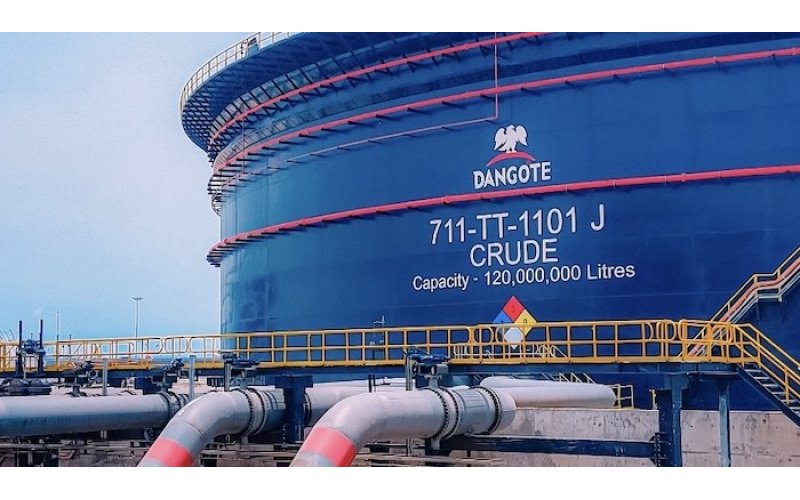
The refinery is expected to receive 2 million
barrels of U.S. WTI Midland in early March
Nigeria’s
Dangote oil refinery has exported two fuel cargoes, the first from the newly
inaugurated refinery, trading sources with knowledge of the matter, have said.
Although
the sources told Reuters on Wednesday that the tenders for the sale have been
issued, THISDAY learnt on Wednesday night, that the sale of the
products had already taken place.
The
refinery, Africa’s largest with a nameplate capacity of 650,000 barrels per
day, was built on a peninsula on the outskirts of the commercial capital Lagos
by the continent’s richest man, Aliko Dangote.
Nigeria
has for years relied on expensive imports for nearly all the fuel it consumes
but the $20 billion refinery is set to turn it into a net exporter of fuel to
other West African countries, in a huge potential shift of power and profit
dynamics in the industry, the report said, adding that Dangote declined its
request for comment.
The
first cargo is 65,000 metric tons of low sulphur straight run fuel oil, which
Dangote awarded to Trafigura and was due to load at the end of February, three
of the sources said, even though it was gathered that the deal had already been
consummated. Trafigura also declined to comment.
At
least one refiner said they had been offered the cargo by Trafigura without
elaborating further.
The
second tender is for about 60,000 tons of naphtha, three other sources said.
Two of them added that the tender closes on February 15. Loading details were
not immediately available.
Sources
told Reuters last week that the refinery was preparing to deliver its first
fuel cargoes to the domestic market within weeks.
The two
fuels on offer are typical products of running light sweet crude through a
crude distillation unit (CDU) in a refinery without further upgrading capacity.
It is expected to take months for upgrading units to be brought online, experts
have said.
The
refiner began buying crude in December last year and Nigeria’s state-owned oil
firm NNPC Ltd has been the main supplier. Dangote has also purchased some U.S.
oil and is expected to receive 2 million barrels of U.S. WTI Midland in early
March, according to LSEG and Kpler ship tracking.
Meanwhile,
oil majors are targeting new oil fields that can be profitable even if oil
prices fall to about $30 per barrel, using a third year of rising demand to
reshape portfolios amid uncertainty over the industry’s future.
Investors
have not returned to oil stocks despite recent high earnings. Even the world’s
lowest-cost oil producer, Saudi Aramco has joined the rush to cut costs.
The
shift to fields with favorable break-even points follows deeper and more
frequent boom-cycles in the last decade. It also reflects executives’ belief
that current high prices may not last, Reuters said.
“After
three major oil price crashes in 15 years, there is wide acceptance that
another one is likely to happen,” said Alex Beeker, director of corporate
research at energy consultancy Wood Mackenzie.
That
uncertainty and inventor demands for returns underpin executives’ focus on
buying lower-cost crude production and the flexibility to adjust output in
response to price swings. Exxon Mobil and Chevron, last year spent more
on shareholder pay-outs than on new oil projects, a sign of the industry’s
desire to regain investor favor.
The
energy sector accounted for just 4.4 percent of the overall weighting of the
S&P 500 Index of top U.S. publicly traded companies as of January 30,
according to S&P Global, down from nearly three times that a decade ago.
Exxon,
Chevron and Occidental Petroleum (OXY.N), recently struck deals worth a
combined $125 billion to acquire companies that will help them pump oil for
between $25 and $30 per barrel.
In
Europe, Shell and Equinor are pursuing projects with $25-30 per barrel
break-evens, while France’s Total Energies aims to get its production costs
under $25.
Nigeria
has one of the highest cost per barrel production in the world, but operators
have recently said they plan to reduce it to less than $30 in recent months.
Comments:
Leave a Reply