

The Federal Ministry of Finance and the Central Bank of Nigeria
(CBN) are working on fresh initiatives to rescue the naira, according to hints yesterday.
The Finance Minister and Coordinating Minister for the Economy,
Mr. Wale Edun, yesterday met with CBN Governor Olayemi Cardoso and Economic and
Financial Crimes Commission (EFCC) Chairman Ola Olukoyede to strategise on
stabilising the beleaguered currency.
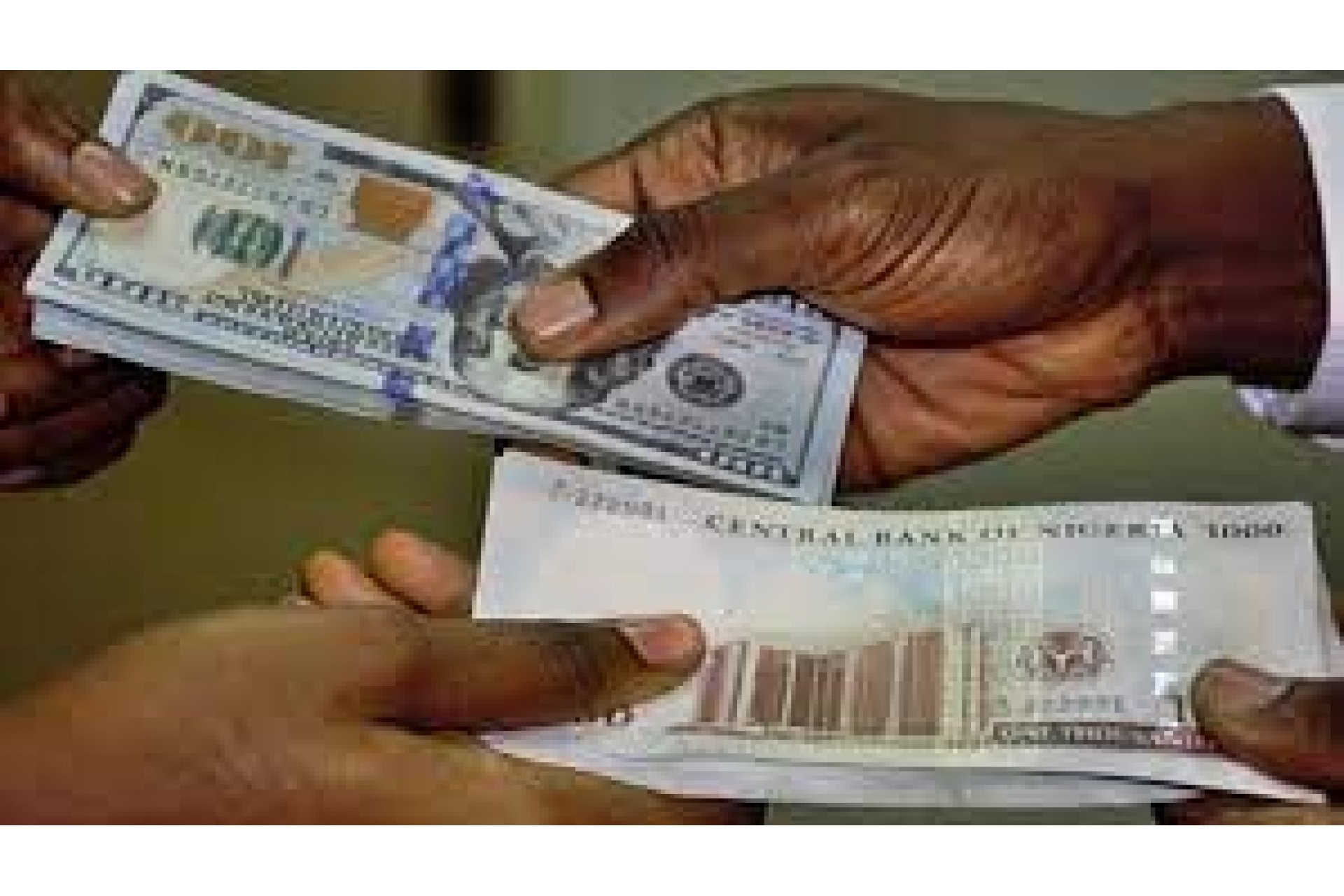
This occurred on a day the naira sustained its rally against the dollar,
closing at N1,440 at the parallel market. The rate represents a N10 gain from
the N1,450 to dollar recorded on Thursday.
But apparently not satisfied with the exchange rate, the trio launched into a meeting in
Abuja yesterday to discuss ways of shoring up the naira.
Details of the meeting were not immediately
available, but the Federal Ministry of Finance in a terse statement on its X
handle said: “This afternoon at Finance HQ, HM Finance & Coordinating
Minister for the Economy, Wale Edun, EFCC Chairman Ola Olukoyede @officialEFCC
and CBN Governor Olayemi Cardoso @cenbank, engaged in a strategic discussion
focused on enhancing the efficiency of our financial system and stabilizing the
Naira.
“The meeting highlighted our continuous efforts in
aligning monetary and fiscal policies, underscored by a commitment to the rule
of law.
“The EFCC Chairman reaffirmed the Commission’s
support for these initiatives, emphasizing his dedication to enhancing the
integrity of financial regulations.”
This meeting comes amidst efforts to bridge the
gap between the official and black market exchange rates, including this week’s
EFCC raids on unauthorized foreign exchange operators.
Mr. Edun reiterated the government’s “commitment
to the rule of law” as a cornerstone of achieving these objectives.
Speaking in a similar tone, Mr. Olukoyede, the
EFCC Chairman, “pledged the Commission’s unwavering support” for these
initiatives. He stressed the organization's dedication to enforcing financial
regulations with integrity, and combating illegal activities threatening the
financial system.
Governor Cardoso, leading the apex bank, expressed
the CBN’s commitment to collaborate with the Ministry of Finance and the EFCC.
He emphasized the importance of “coordinated efforts” in achieving their shared
goals of economic stability and financial system efficiency.
An official of the Ministry of Finance said that “these meetings hold regularly where they try to coordinate fiscal
and monetary policies to make sure there’s a strong coordinated handshake and
they’re operating in sync whilst maintaining their independence.”
The source said while the CBN retains its grip on
financial sector regulation, control of the transmission mechanisms and tools
for setting the exchange rate, the macroeconomic strategy is driven by the
minister.”
“The minister takes his coordinating role very
seriously. He’s there to provide thoughts leadership, mentorship support,
intellectual support and all of that.”
On further efforts to stabilize the Naira, the
official said: “The CBN is putting things out and setting the market right.
It’s all about macroeconomic stability, enhancing liquidity, deepening the
capital market and making sure there’s access to capital for inclusive
development.
“While challenges remain, the collaborative
approach and commitment to the rule of law demonstrated by these leaders will
pave the way for potential progress in strengthening the Naira and fostering a
more robust financial system for the nation.
Naira sustains rally after apex bank’s intervention
With the naira now trading at N1,461.9/$ at the
NAFEM window- official market, the spread between the official and parallel
rates have converged, signaling rate unification.
Hassan Abdul, a BDC trader in Central Lagos, said
the naira was traded for N1,400 to the dollar at about 1.00pm, but weakened to
N1,440 to dollar at the close of business after dealers asked for higher
premium to cover loss positions.
“The CBN policies in recent days have shaken up
the market. We have seen a high volume dollar offload by speculators. But for
that to be sustained, the apex bank needs to support dollar injections into the
official markets,” he said.
Banks are at the centre of forex market
activities, with their action and inaction contributing significantly to market
performance.
Observing that the banks were not living up to
expectations, the Central Bank of Nigeria (CBN) last Wednesday issued new
directives to shore up the value of the naira.
The banks were accused of hoarding over $5 billion
by holding back funds expected to be injected into the official forex market.
Following the 4.25 per cent depreciation in the
naira between January 29 and 31, the CBN has issued two complementary circulars
to commercial banks and International Money Transfer Operators (IMTOs) to
address price discovery and market distorting restrictions.
The first circular instructed banks to limit their
net open position to 20 per cent of shareholders’ funds unimpaired by losses
using the gross aggregate method to hedge forex losses while softening forex
demand. Meanwhile, the circular to IMTOs instructed Deposit Money Banks to
ensure that international transactions now occur at the prevailing market rate,
thereby removing transaction pegs.
Previously, IMTOs were required to quote rates
within an allowable limit of -2.5 per cent to +2.5 per cent around the previous
day’s closing rate of the Nigerian foreign exchange market, according to the
circular TED/FEM/PUB/FPC/001/009 dated September 13, last year.
All authorized dealers, International Money
Transfer Operators, and the general public are advised to take note of this
development and ensure compliance with the revised regulations. The CBN’s
decision reflects ongoing efforts to adapt and enhance the dynamics of the
Nigerian foreign exchange market, the circular stated.
“The reason for the removal of the cap is to
incentivize the IMTOs to transparently transfer their receipt into the
country,” Aminu Gwadabe, president, Association of Bureau De Change Operators
of Nigeria (ABCON), disclosed.
The apex bank had also deployed examiners to
Treasury Units of banks headquarters to ensure compliance with policy shifts.
The impact of the policy measures showed the naira
rallying and correcting huge depreciation gaps across the official and parallel
markets, leading to convergence in the forex market.
An economist and Managing Director, Financial
Derivatives Company Limited, Bismarck Rewane, said the prevailing concern
reverberating across the Nigerian economy is the downward spiral of the
exchange rate.
According to him, weakened naira will result in
imported inflation and erode the purchasing power of consumers.
He explained that over the course of 10 days, the
currency shed 10.78 per cent of its value against the dollar before
appreciating to N1,440/$ (parallel market) on February 2.
But through a sequence of circulars and a change
in the methodology for computing FX rates, the CBN has reinstated its
commitment to encouraging transparency with market reflective rates, reducing
forex demand pressures, lifting restrictions on international transactions and
improving dollar liquidity.
Rewane said that despite gradual rebound of the
naira, the markets still show signs of disequilibrium and unanchored exchange
rate expectations.
“The solution to the naira’s FX throes begins at
the first MPC meeting since July 2023, scheduled for February 26-27. We expect
a hawkish CBN, likely raising effective interest rates by 200 basis points to
narrow the negative real rates of return, instill confidence and bring the FX
markets to a correction,” he said.
The CBN removed the cap on the allowable limit of
-2.5 per cent to +2.5 per cent around the previous day’s closing rate for the
International Money Transfer Operators (IMTOs). This adjustment signifies a
shift in the regulatory framework, providing IMTOs with more flexibility in determining
exchange rates.
Apex bank overhauls Cash Reserve System
The apex bank has also effected a change in the
last monetary policy decision – the Cash Reserve Requirement (CRR) system.
The CBN in a circular sent to all banks by the
Acting Director Banking Supervision Dr. Adetona Adedeji said the new “Cash
Reserve Requirement (CRR) mechanism is intended to facilitate your capacity for
planning, monitoring, and aligning your records with the CBN.”
The move is designed to provide banks with more
flexibility in managing their reserves while encouraging increased lending to
businesses and individuals.
Previously, a fixed percentage of banks’ deposits,
currently 32.5 per cent for commercial banks was automatically deducted daily
by the CBN as CRR. This new system, however, adopts a phased approach with key
changes.
In the first Phase which adopts an incremental
approach, the existing CRR percentages (32.5 percent) will no longer be applied
daily. Instead, they will be applied only to increases in banks’ weekly average
adjusted deposits.
This means any new money received by banks, such
as customer deposits, loan repayments, or other inflows, will have the
designated CRR portion set aside as reserves. This approach offers banks
greater flexibility in managing their overall liquidity and planning for future
reserve needs.
The second Phase which promotes lending through
Loan-to-Deposit Ratio (LDR) compliance introduces a dynamic element based on
banks’ adherence to the minimum Loan-to-Deposit Ratio (LDR) currently set at 65
percent.
Banks that fail to meet the LDR target will face
an additional 50 percent CRR on the “shortfall” in lending. This essentially
increases their effective CRR, which in turn will affect their available funds
for lending and encourage them to meet the LDR requirements.
Benefits and potential impacts of this new CRR
system are that banks no longer face daily fluctuations in their reserves,
allowing for better financial planning and stability. By encouraging banks to
meet LDR targets, the CBN now aims to increase credit availability for
businesses and individuals, potentially boosting economic activity.
However, it is too early to predict the exact
impact on interest rates and loan availability, as market dynamics and
individual bank strategies will now play a role.
The circular added that the CBN will provide
details to banks on the applied CRR charges and their calculation rationale,
ensuring transparency. The apex bank also noted that it will closely monitor
the implementation of the new system and make adjustments as needed.
Exchange rate for cargo clearance raised to N1.356/$
The CBN also raised the exchange rate for cargo
clearance from N952/$ to N1.356 per dollar.
The rate had been increased from N783/$ to N952/$
only last November and from N783/$ to N952/$ in December.
Don blames politicians for Naira free fall
United States (US)-based Nigerian academic, Dr
Abdulmumini Y Ajia, claims some Nigerian politicians are largely responsible
for the Naira free fall.
The control of the country’s foreign exchange flow
by the Nigerian National Petroleum Company Limited (NNPCL) is also partly
responsible for the problem, according to him
The Associate Professor of Business Administration,
Lincoln University, Missouri said that many
Nigerian politicians with free access to public funds are exposing the naira to
undue assault.
The APC stalwart said: “Those politicians may not
know what they are doing.
“When you take 100 or 200 million Naira to change
to dollar you are inadvertently putting pressure on the dollar.
“People that are stockpiling the dollars without
buying or selling goods are the reason we are in this mess.
“Another reason is that our foreign exchange flow
is controlled by the NNPCL primarily because we have become a mono-economy.
Easy money is coming through the NNPCL, leading to
opacity.
“Oil swap is yet another reason. President Bola
Tinubu needs to close the gap with the politicians. They need to earn
legitimate money.
“What we have in Nigeria is that few people have
access to too much Naira and in turn go to the foreign exchange market to buy
the dollar without using if for industrial purposes.
“When a genuine industrialist goes there to buy
dollar, he will keep waiting for the Central Bank of Nigeria (CBN) forever. He
wants his industry to run. He will buy it at the same rate. He will then
transfer the cost to you and I.
“When middle income people see that the Naira can
longer be used as a store of value, out of their meagre resources, they will
take out of their resources to exchange for dollars at the parallel market and
keep. Imagine if one million people do that. The ordinary folks will also join
the bandwagon. It is corruption that is killing this country.”
Comments:
Leave a Reply