

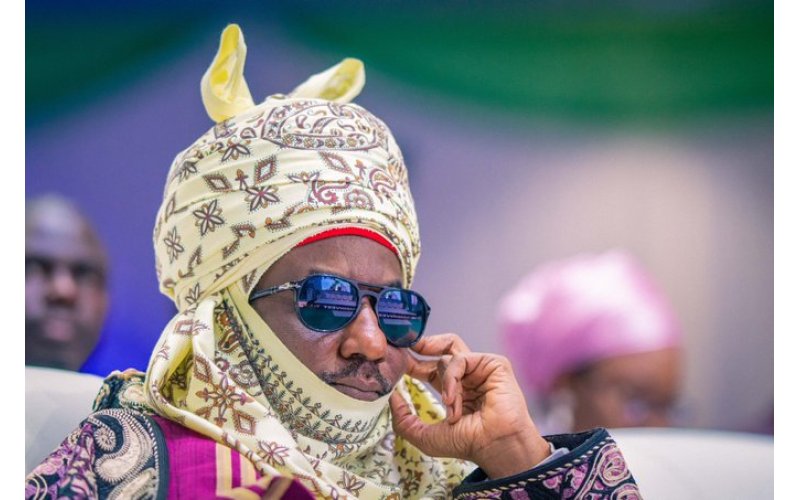
The deepening division within the Kano
Emirate reached a dramatic new turn as rival Emirs have appointed different
individuals to the prestigious title of Galadiman Kano, further intensifying
the battle for supremacy in the ancient kingdom.
The 15th Emir of Kano, Alhaji Aminu Ado Bayero,
approved the appointment of Alhaji Sanusi Ado Bayero, eldest son of the late
revered Emir Ado Bayero, as the new Galadiman Kano. The appointment, formalized
in a letter dated April 21, 2025, was signed by Senior Administrative Officer,
Awaisu Abbas Sanusi.
The letter invited Sanusi Ado Bayero to the Palace
Mosque in Gidan Sarki, Nasarawa, for his official installation on Friday, May
2, 2025, at 9:00 a.m., following a meeting presided over by Emir Aminu Ado
Bayero on April 16.
However, the move comes just weeks after the
reinstated Emir of Kano, Muhammad Sanusi II, made a parallel appointment,
promoting Alhaji Munir Sanusi Bayero from Wamban Kano to Galadiman Kano during
a ceremony on April 9, 2025. That appointment was communicated in a letter
signed by the Matawallen Kano, Aliyu Ibrahim Ahmad.
The conflicting appointments have thrown the emirate
into deeper uncertainty, highlighting the bitter rivalry between the two Emirs
since the controversial reinstatement of Sanusi II earlier this year. Sanusi II
had been dethroned in 2020 during a turbulent political era, only to be
reinstated amid changing political tides.
The Galadiman Kano title became vacant following the
death of the previous holder, Alhaji Abbas Sanusi. Instead of uniting under a
successor, the emirate now faces a historic split, with parallel authorities
recognizing different titleholders.
The dispute underscores broader tensions not just
within the royal family, but across the political landscape of Kano State,
where traditional and political powers have become increasingly intertwined.
Observers fear the dual appointments may trigger
further polarization among loyalists and deepen the crisis in the once-united
emirate, a situation with potential ramifications for peace and governance in
the state.
Comments:
Leave a Reply