

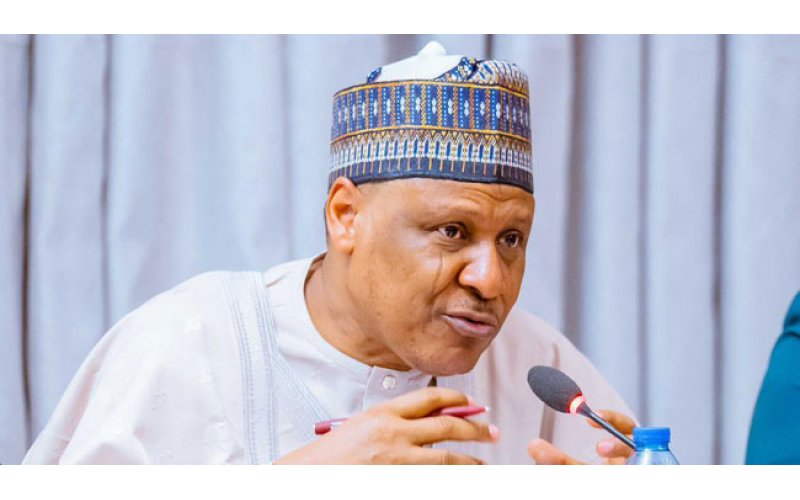
The Minister of Information and National Orientation,
Mohammed Idris, has warned against calls to restore Nigeria’s petrol subsidy,
saying such a move could reverse the economic gains recorded since the subsidy
regime was removed in 2023.
President Bola Tinubu ended the petrol subsidy regime
shortly after assuming office in May 2023.
In an opinion article published on Monday, Idris
argued that returning to the old system would recreate the fiscal pressures,
fuel scarcity, economic distortions and arbitrage opportunities that made the
subsidy unsustainable.
According to the minister, Nigeria spent about $10
billion on fuel subsidies in 2022 despite declining oil production and weak
government revenues.
Idris said subsidy removal had instead created
additional fiscal resources for the three tiers of government. Citing the
Federal Government’s Reform Scorecard, he said about ?15.8 trillion in
subsidy savings was mobilised for the Federation between June 2023 and December
2025.
He said approximately ?5.43 trillion accrued to
the Federal Government, ?6.52 trillion to states and ?3.88 trillion
to local governments.
The minister stressed that the funds represented
resources released within the broader fiscal system rather than a separate pool
of cash.
He also said the increased fiscal space had helped
governments meet salary and pension obligations while supporting investments in
infrastructure, security, agriculture, education and human capital development.
Idris said approximately ?6.47 trillion had
been spent additionally on strategic infrastructure, while more than ?400
billion had been committed to major social investment initiatives.
He further noted that social transfers had reached
more than 10 million households.
The minister warned that restoring petrol subsidy
would place additional pressure on public finances, especially as the
government was already bearing an electricity subsidy estimated at ?3.14
trillion between June 2023 and December 2025.
Idris challenged supporters of subsidy restoration to
consider the opportunity costs, asking whether Nigeria should prioritise
subsidising petrol or continue funding student loans, infrastructure,
healthcare, education, security and allocations to state and local governments.
“Nigeria cannot build tomorrow’s economy by returning
to yesterday’s unsustainable subsidy regime. We have moved beyond that model,”
he said.
He urged Nigerians to view the reforms from a
long-term perspective, arguing that maintaining the changes was necessary to
strengthen fiscal stability, investor confidence and the productive capacity of
the Nigerian economy.
Comments:
Leave a Reply