

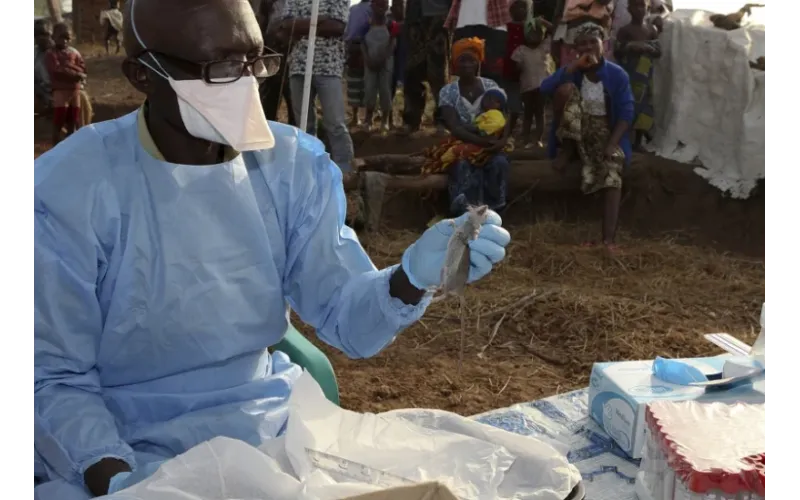
Nigeria's Centre for Disease Control and Prevention
(NCDC) has confirmed that 204 people have died from Lassa fever in 2026,
warning that delayed hospital visits, poor health-seeking behaviour and rising
infections among healthcare workers are worsening the outbreak.
According to the agency's latest Epidemiological Week
19 report, the disease's case fatality rate has climbed to 25.7 percent,
compared to 19.4 percent recorded during the same period in 2025.
Although confirmed infections dropped slightly from 22
cases in Week 18 to 17 in Week 19, the outbreak remains active across 23 states
and 108 local government areas nationwide. The latest confirmed cases were
reported in Ondo, Bauchi, Edo, Kogi, Taraba and Nasarawa states.
The NCDC said five states—Bauchi, Ondo, Taraba, Edo
and Benue—account for 84 percent of all confirmed infections recorded this
year. "Of the 84 percent confirmed cases, Bauchi and Ondo each contributed
26 percent, Taraba 16 percent, Edo 9 percent and Benue 7 percent," the
agency stated.
The report showed that young adults aged between 21
and 30 years remain the most affected group, although patients recorded so far
range from one to 90 years old.
Health authorities also confirmed that one healthcare
worker was infected during the reporting week, raising concerns about
occupational exposure among frontline medical staff.
In response to the outbreak, the NCDC said it has
activated a national multi-sectoral Incident Management System to coordinate
interventions across affected states.
The agency said emergency measures currently underway
include infection prevention training for health workers, rapid response
deployments, active case searches, contact tracing, public awareness campaigns
and distribution of protective equipment to health facilities.
The response is being supported by organisations
including the World Health Organization, UNICEF, Médecins Sans Frontières, the
United States Centers for Disease Control and Prevention and ALIMA. Part of the
intervention includes a newly introduced 30-day Healthcare Worker Protection
Plan aimed at reducing infections among medical personnel in high-risk states.
The NCDC blamed several factors for the worsening
outbreak, including late presentation at hospitals, poor environmental
sanitation, low public awareness and the high cost of treatment.
"Poor health-seeking behaviour due to the high
cost of treatment and clinical management of Lassa fever remains a serious
concern," the agency warned.
The agency urged healthcare workers to maintain strict
infection prevention measures and encouraged state governments to sustain
public sensitisation campaigns and strengthen surveillance systems to contain
the disease.
Comments:
Leave a Reply