

By any serious measure, political influence in Nigeria
has entered a new phase. Power is no longer exercised solely within legislative
chambers or government offices; it now unfolds daily on social media timelines,
where ideas are tested, contested, and amplified in real time.
In this evolving landscape, a growing number of
Nigerian women are reshaping political discourse through digital
engagement—particularly on X (formerly Twitter), Facebook, and Instagram—often
exerting more influence than traditional political structures allow. These
women are not just visible online; their voices increasingly shape national
conversations and policy debates.
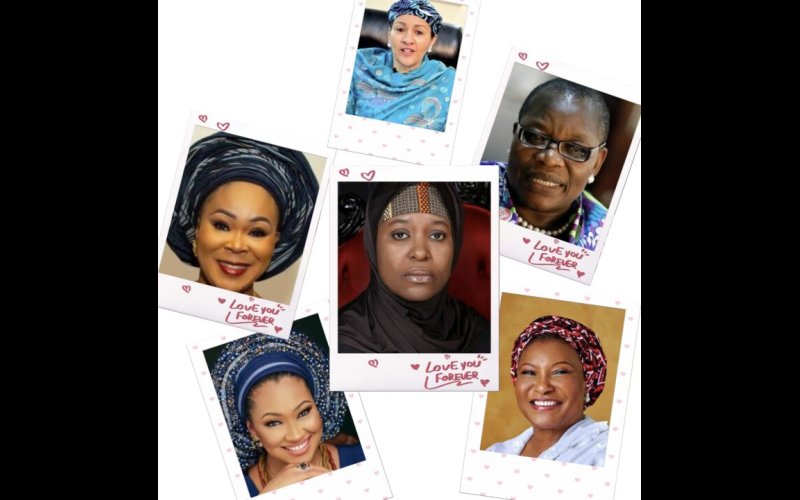
Below is an updated list of the 10 most influential
and most followed women in Nigerian politics, ranked by a combination of visibility,
engagement, consistency, and impact across major social media platforms.
1. Aisha Yesufu — A Dominant Activist
Voice
Although not a traditional officeholder, Aisha
Yesufu stands out as one of Nigeria’s most influential female political
voices online. With approximately 2.1 million followers on X and over 265,000
on Instagram, her activism around governance, accountability, and civil
rights consistently drives high engagement.
Her posts frequently shape public debate and often
outperform those of elected officials in digital reach and influence.
2. Oby Ezekwesili — A Consistent Champion
of Social Justice
Former minister and activist Dr. Oby Ezekwesili
remains a powerful digital force, widely known for spearheading major online
movements such as #BringBackOurGirls and #RedCardMovement.
With around 1.4 million followers on X, she
commands strong engagement on issues of governance, reform, and national
accountability, making her one of Nigeria’s most respected policy-focused
voices online.
3. Senator Ireti Heebah Kingibe — A
Lawmaker with Digital Traction
Senator Ireti Kingibe, representing the FCT,
has steadily built a solid online presence. While not among the highest in raw
numbers, her over 56,000 followers on X—alongside growing audiences on
Instagram and Facebook—benefit from high engagement driven by her historic
election and active participation in political debates.
Her visibility is amplified by frequent mentions and
discussions around her legislative role.
4. Senator Natasha Akpoti-Uduaghan — The
Viral Legislator
Known for her outspoken style and controversial Senate
moments, Senator Natasha Akpoti-Uduaghan commands significant online
attention.
She boasts over 463,000 followers on Instagram,
while her X presence remains modest, with roughly 2,000 followers.
Despite this imbalance, her ability to trend regularly makes her one of the
most visible women in Nigeria’s digital political space.
5. Oluremi Tinubu — Institutional Power
Meets Digital Reach
Nigeria’s First Lady and former three-term senator, Mrs.
Oluremi Tinubu, blends institutional authority with digital influence.
Her platforms—particularly Instagram, with about
109,000 followers, and X, with over 42,000 followers—are used to
promote women empowerment, social intervention programmes, and national unity,
reinforcing her status as one of the most consequential female political
figures in the country.
6. Abike Dabiri-Erewa — Diaspora
Engagement and Policy Visibility
As Chairman of the Nigerians in Diaspora Commission
(NiDCOM), Abike Dabiri-Erewa has carved out a distinct online niche.
She commands over 508,000 followers on X and 101,000
on Instagram, with strong engagement from Nigerians abroad. Her platforms
serve as a bridge between the diaspora and the federal government, amplifying
her diplomatic and policy influence.
7. Amina Mohammed — Global Influence,
Diplomatic Reach
Nigeria’s most influential female figure on the
international stage, Ms. Amina Mohammed, serves as Deputy
Secretary-General of the United Nations.
Her digital presence, though diplomatic in tone,
reflects Nigeria’s role in global governance. She has a combined following of about
695,700, including 494,700 on X, 149,000 on Instagram, and 52,000
on Facebook, with strong credibility in climate advocacy and sustainable
development.
8. Hadiza Bala Usman — Technocratic
Influence and Policy Credibility
Former Managing Director of the Nigerian Ports
Authority, Hadiza Bala Usman, represents a quieter but impactful form of
digital influence.
With 104,200 followers on X, 37,900 on
Instagram, and 123,000 on Facebook, her name frequently trends in
conversations around public sector reform, efficiency, and accountability.
9. Imaan Sulaiman-Ibrahim — Governance,
Humanity, and Engagement
Currently serving as Minister of Women Affairs,
and formerly Minister of State for Police Affairs, Imaan Sulaiman-Ibrahim
is a respected voice in public administration.
She engages actively with young Nigerians on
development, security, and empowerment issues, with 28,600 followers on
Instagram and around 5,000 on X.
10. Uju Kennedy-Ohanenye — Visibility from
a Historic Run
Barrister Uju Kennedy-Ohanenye, noted for her
historic presidential bid and former ministerial role, maintains a modest but
notable digital footprint.
She has over 6,000 followers on X and 11,400
on Instagram, reflecting limited reach compared to others on this list, but
sustained visibility from her political ambitions.
Why Their Voices Matter
What unites these women is not just their presence
online, but their ability to influence national conversations outside
traditional power hierarchies. In a country where women remain significantly
underrepresented in elective offices, social media has become both a platform
and a political equaliser—allowing women to shape narratives, mobilise
citizens, and hold leaders accountable.
Together, they represent a shift in Nigerian politics
where influence is shaped as much online as it is in parliament or government
offices. From millions of followers to viral moments and sustained policy
debates, these women are redefining leadership, amplifying female
representation, and inspiring civic participation nationwide.
Their growing digital and offline influence has also
intensified pressure on lawmakers, prompting renewed efforts in the National
Assembly to legislate reserved quotas for women’s representation in political
offices.
As Nigeria’s digital political space continues to
expand, these women remain at the forefront—proving that visibility, voice,
and impact now go hand in hand.
Comments:
Leave a Reply