

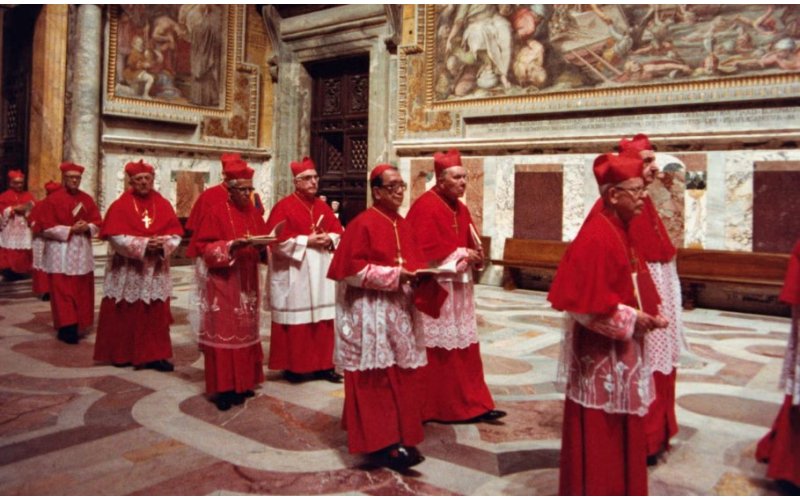
Vatican City – In a moment of profound
global attention and internal reflection, the Roman Catholic Church will begin
the process of electing its next leader on May 7, 2025, as 133 cardinals from
around the world gather in Vatican City for what is expected to be the
largest—and most diverse—papal conclave in Church history.
The conclave follows the death of Pope Francis, a
pontiff who reshaped the Church’s global image and left behind a complex legacy
marked by pastoral outreach, bold reforms, and unresolved crises.
On the eve of the conclave, Cardinal Blase Cupich of
Chicago led the North American delegation into sequestered quarters, greeted by
seminarians lining the roads in reverent applause. The cardinals will be cut
off from the outside world as they enter the Sistine Chapel, its ceiling
bearing Michelangelo’s famed frescoes, to undertake one of the most spiritually
significant decisions in Christendom—selecting the 267th pontiff of the
Catholic Church.
An Election Without a Frontrunner
“There’s lots of speculation, but nobody really is a front-runner,” said Father
Thomas Reese, a senior religious analyst observing his fourth conclave.
“They’ll likely choose someone in the middle—neither a sharp critic of Pope
Francis nor a radical reformer.”
Cardinal Cupich, viewed as a spiritual and strategic
bridge-builder, has called for prayers, underscoring the gravity of the moment.
“The conclave is a moment of deep discernment,” said Chase Hoffman, a student
pilgrim from Illinois. “Walking through those doors, you feel the Holy Spirit
move. It’s overwhelming.”
The Process Begins
The cardinals will first celebrate a mass at St. Peter’s Basilica, before
taking an oath of secrecy and surrendering their phones. They will vote twice
daily, with a two-thirds majority—89 votes—required to elect a pope. Black
smoke from the Sistine chimney signals no decision; white smoke will herald the
election of a new pope.
Before entering the conclave, cardinals held 12
preparatory meetings, known as general congregations, where issues ranging from
global conflict and migration to financial reform and sexual abuse were
discussed. The Church is battling declining credibility in the West, while
seeing surges in Africa, Asia, and Latin America.
“There is a sense of urgency,” said Cardinal Jean-Paul
Vesco of Algiers. “It would be surprising if we go beyond Friday without a
result.”
A Divided but Global Church
Of the 133 voting cardinals, 108 were appointed by Pope Francis, signaling his
long-term influence on the College of Cardinals. While Europe still holds the
largest bloc with 53 cardinals, many believe the next pope could come from the
Global South, where Catholicism is growing rapidly.
Prominent names in speculation include:
Cardinal Luis Tagle (Philippines): A protégé of
Francis often dubbed “the Asian Francis.”
Cardinal Pietro Parolin (Italy): Vatican Secretary of
State with diplomatic gravitas.
Cardinal Robert Prevost (USA): Known for measured
reform and administrative competence.
Cardinal Reinhard Marx (Germany): A reform-minded
voice within the European bloc.
Meanwhile, conservatives are pushing their own
candidates, including Cardinal Péter Erd? (Hungary) and Cardinal Robert Sarah
(Guinea), both representing a return to doctrinal orthodoxy and pre-Francis
values.
A Church at a Crossroads
The next pope will inherit a fractured Church wrestling with moral failures,
financial instability, and a shifting global center of gravity. How the
cardinals balance tradition and reform, regional dynamics and universal
mission, could shape the Catholic Church for decades.
As UK theologian Prof. Anna Rowlands observed, “This
conclave is totally unpredictable. The future of the Church may well lie in
hands we least expect.”
Comments:
Leave a Reply