

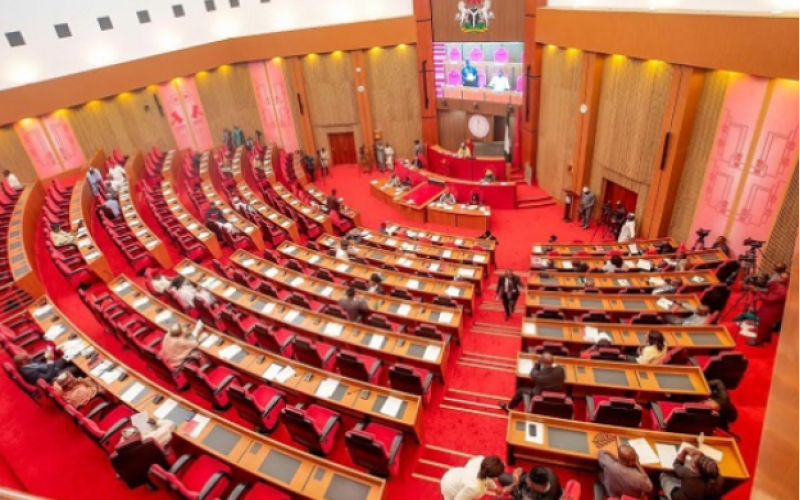
Nigeria’s Senate has called for stronger regulations
to bring financial technology companies under stricter supervision as part of
efforts to combat financial fraud and protect investors.
The call was made by Adetokunbo Abiru, Chairman of the
Senate Committee on Banking, Insurance and Other Financial Institutions, during
a one-day public hearing at the National Assembly of Nigeria in Abuja.
The joint hearing—organized by the Senate Committees
on Banking; ICT and Cyber Security; Capital Market; and Anti-Corruption and
Financial Crimes—focused on strengthening Nigeria’s financial regulatory
framework amid rapid digital growth and increasing cases of financial fraud.
Lawmakers also reviewed the activities of Ponzi
schemes in the country, particularly the recent collapse of the Crypto Bullion
Exchange (CBEX), which reportedly caused major financial losses for many
Nigerians.
During his remarks, Abiru proposed amendments to the
Banks and Other Financial Institutions Act 2020 to clearly place fintech
companies under the supervisory authority of the Central Bank of Nigeria.
He explained that the amendment would establish a
clear legal framework for identifying, registering, and supervising
Systemically Important Institutions, especially technology-driven financial
service providers.
According to the senator, the proposed changes would
allow the CBN to officially designate certain fintech and digital financial
institutions as Systemically Important Institutions. It would also create a
national registry to promote transparency, ensure disclosure of beneficial
ownership, and strengthen risk-based supervision tailored to technology-enabled
financial services.
Beyond fintech regulation, the Senate expressed
serious concern over the growing number of fraudulent digital investment
platforms and Ponzi schemes operating in the country.
Abiru noted that the CBEX incident highlighted the
devastating impact of such schemes, which reportedly affected young
professionals, retirees, traders, small business owners, and students.
He warned that fraudulent investment platforms not
only cause personal financial losses but also weaken public trust in legitimate
financial institutions, distort the allocation of capital, harm Nigeria’s
financial reputation, and increase the risk of money laundering and illicit
financial flows.
Following its investigation into regulatory gaps and
coordination challenges among agencies, the Senate proposed tougher measures
aimed at curbing fraudulent schemes and improving collaboration between
financial regulators.
Comments:
Leave a Reply