

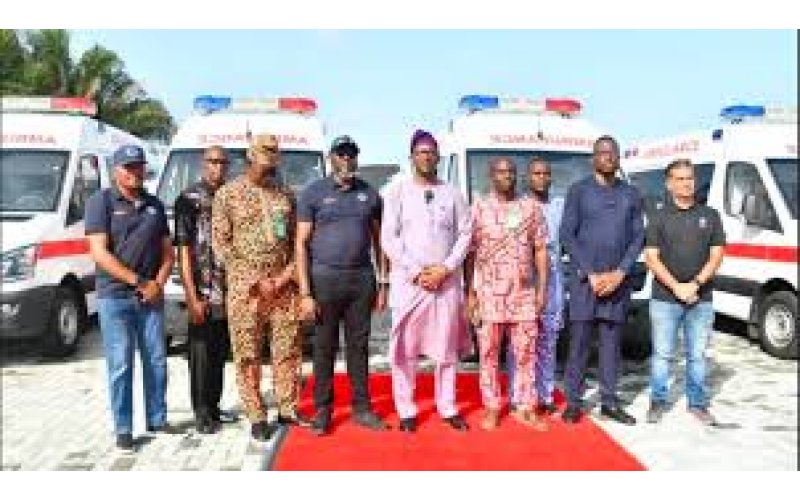
President Bola Ahmed Tinubu has inaugurated 79 locally
assembled ambulances for deployment to tertiary healthcare institutions across
Nigeria as part of efforts to strengthen emergency medical services and improve
access to quality healthcare.
The President was represented at the ceremony in Lagos
by Wasiu Lanre Adeyemo, who said the initiative forms part of the
administration's healthcare reforms under the Renewed Hope Agenda.
The ambulances were provided through the National
Emergency Medical Services and Ambulance System (NEMSAS), operating under the
Federal Ministry of Health and Social Welfare.
Strengthening Emergency Response
According to Adeyemo, the new vehicles will
significantly improve the ability of tertiary hospitals to respond to
emergencies, facilitate faster patient referrals, and enhance access to
lifesaving treatment.
He noted that the initiative aligns with the
healthcare reform agenda of Muhammad Ali Pate, which focuses on stronger
healthcare infrastructure, improved emergency services, and progress toward
universal health coverage.
“Healthcare facilities must be accessible when
emergencies occur. These ambulances will improve the movement of patients from
homes, schools, markets, highways and other locations to hospitals where they
can receive timely medical attention,” Adeyemo said.
Built in Nigeria
A key highlight of the project is that the ambulances
were assembled entirely in Nigeria, including the installation of emergency
medical equipment.
Adeyemo described this as evidence of the country's
growing capabilities in:
He said the initiative supports the government's
broader objective of strengthening domestic production capacity while reducing
reliance on imported systems.
“These ambulances are a testament to Nigeria’s ability
to produce world-class emergency response vehicles locally,” he stated.
Advanced Medical Features
The newly deployed ambulances are Advanced Life
Support units equipped with:
The dual-fuel system aligns with the government's
policy on sustainability and energy diversification.
Boosting Healthcare Access
The Federal Government said the distribution of the 79
ambulances nationwide is expected to strengthen emergency response systems,
improve patient outcomes, and reduce preventable deaths caused by delayed
access to medical care.
Adeyemo also encouraged state governments, local
councils, private hospitals, and other institutions to leverage Nigeria's
growing local production capacity when acquiring emergency medical
transportation equipment in the future.
The initiative forms part of ongoing efforts to build
a more coordinated, responsive, and accessible healthcare system across the
country.
Comments:
Leave a Reply