

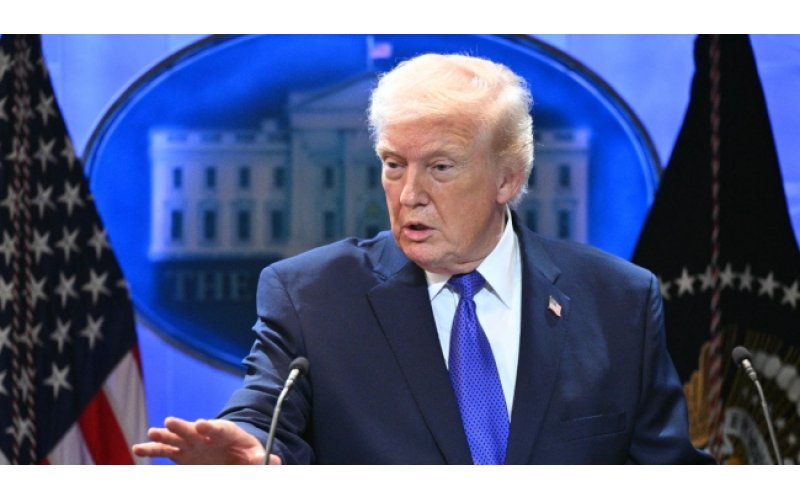
Tensions in the Middle East have intensified after
U.S. President Donald Trump threatened to impose a naval blockade on Iran in
response to its control over the strategic Strait of Hormuz.
In a strongly worded statement, Trump announced that
the United States Navy would begin intercepting vessels entering or leaving the
waterway, aiming to prevent Iran from benefiting economically from what he
described as unlawful restrictions on maritime traffic.
The Strait of Hormuz, a critical route for global
shipments of oil, gas, and other resources, has been partially restricted by
Iran, which has reportedly allowed passage only to vessels linked to allied
nations while tightening control over others.
Reacting to the development, Iran’s Revolutionary
Guard issued a warning, stating that it maintains full operational control of
the waterway and would respond forcefully to any perceived threats.
The latest escalation follows the collapse of
high-level peace talks between the United States and Iran in Islamabad, where
both sides failed to reach an agreement after prolonged negotiations.
The U.S. has maintained its demand for Iran to abandon
any ambitions of developing nuclear weapons, while Tehran insists its nuclear
programme is strictly for civilian purposes.
Trump also hinted at further economic and military
measures, including the possibility of imposing heavy tariffs on countries that
support Iran militarily, as well as potential strikes on Iranian infrastructure
if tensions worsen.
Meanwhile, global leaders have urged restraint,
warning that further escalation could disrupt international energy supplies and
destabilise the region.
Diplomatic efforts are ongoing, with countries such as
Pakistan continuing to play a mediating role, while other global powers have
called for the ceasefire to be maintained and negotiations to resume.
The situation remains fragile, with concerns that any
breakdown in diplomacy could lead to renewed conflict, rising oil prices, and
wider economic consequences worldwide.
Comments:
Leave a Reply