

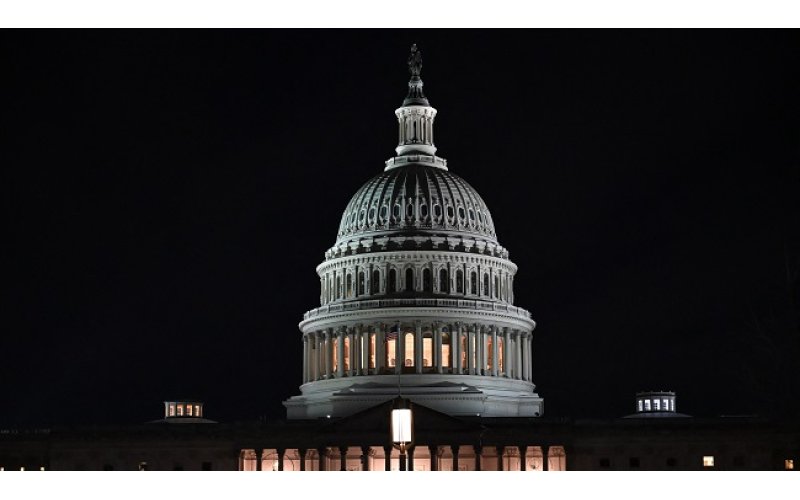
The United States slipped into a partial government
shutdown after negotiations over new funding for the Department of Homeland
Security (DHS) broke down, following Democratic outrage over the killing of two
protesters by federal immigration agents in Minneapolis.
The funding lapse came as anger within Democratic
ranks derailed talks, with party leaders insisting that DHS should not receive
additional funding without changes to immigration enforcement practices.
Senate Democratic Minority Whip Dick Durbin accused
the Trump administration of misplacing its priorities, arguing that federal
resources were being misused.
“Instead of going after drug smugglers, child
predators and human traffickers, the Trump administration is wasting valuable
resources targeting peaceful protesters in Chicago and Minneapolis,” Durbin
wrote on social media, adding that the administration was making the country
“less safe.”
The lapse in funding affects roughly three-quarters of
federal operations, raising the prospect of shutdown procedures across agencies
responsible for education, health, housing, defence and other essential
services.
Federal departments were expected to begin executing
shutdown plans overnight. However, leaders in both parties suggested the
disruption is likely to be brief rather than prolonged.
Late Friday, the Senate approved a package that clears
five outstanding funding bills to keep most government agencies operating
through September. The legislation also includes a two-week stopgap measure to
temporarily fund DHS while negotiations on immigration enforcement continue.
The House of Representatives was not in session when
the deadline passed and is scheduled to reconvene on Monday. If lawmakers
approve the Senate package early next week, funding could be restored within
days, limiting the real-world impact on government services, contractors and
federal employees.
Still, if the shutdown stretches beyond a few days,
tens of thousands of federal workers could face unpaid leave or be required to
work without pay until funding resumes.
President Donald Trump backed the Senate deal and
called for swift House approval, signaling his desire to avoid a prolonged
shutdown — the second of his second term — after a record-length stoppage last
fall disrupted federal operations for more than a month.
The Senate breakthrough followed Republican Senator
Lindsey Graham’s decision to lift a procedural block that had stalled the
package. Graham had objected to aspects of the DHS stopgap funding and to
House-passed language repealing a measure that allowed senators to sue the
Justice Department over the seizure of phone records during past
investigations.
He agreed to release his hold after Senate leaders
promised future votes on legislation he is sponsoring to crack down on
so-called “sanctuary cities” that limit cooperation with federal deportation
efforts.
Democrats, however, have remained united in opposing
DHS funding without reforms, pointing to the fatal shootings of Alex Pretti and
Renee Good in Minneapolis as evidence of inadequate oversight of immigration
agents.
Party leaders are demanding tighter warrant
requirements, limits on certain enforcement tactics and stronger accountability
mechanisms for agents in the field.
Much of the US media has interpreted the White House’s
decision to separate DHS funding from the broader budget package as an
acknowledgment that the administration faces mounting political pressure to
recalibrate its deportation strategy following the Minneapolis deaths.
Republicans remain divided, with some lawmakers open
to changes while others warn that concessions could weaken immigration
enforcement. Several conservatives have indicated they will push for tougher
measures during upcoming DHS negotiations, including penalties for states and
cities that resist cooperation with federal authorities.
Although Congress has passed six of the 12 annual
funding bills, those measures cover only a fraction of discretionary spending.
The remaining bills fund major portions of the federal government, raising the
stakes if the shutdown is extended.
Late Friday, the Office of Management and Budget
instructed federal agencies to prepare for an “orderly shutdown,” expressing
hope that the funding lapse would be brief.
Comments:
Leave a Reply