

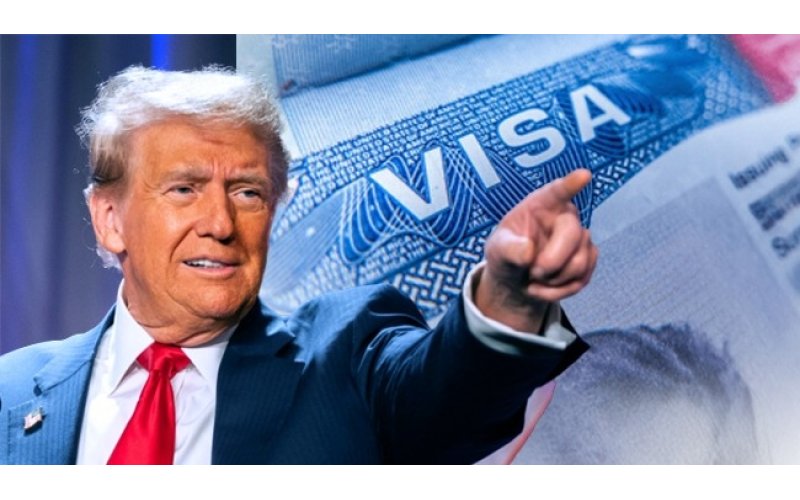
A US federal judge has temporarily blocked the
implementation of new visa rules that would have placed tighter restrictions on
the length of stay for international students and foreign journalists.
District Judge Dennis Saylor issued a preliminary
injunction just one day before the Department of Homeland Security (DHS)
regulations were scheduled to take effect.
Under the proposed rules, international students
entering the United States on student visas would have been permitted to stay
for a maximum of four years, after which they would need to apply for an
extension. The existing system allows students to remain in the country for the
duration of their academic programmes.
The new regulations would also have reduced the
permitted stay for foreign journalists to 240 days, or approximately eight
months, although they could seek extensions for similar periods. Previously,
foreign journalists could remain in the US for up to five years.
For Chinese journalists, the proposed rules would have
limited stays to 90 days, with the possibility of applying for additional
90-day extensions.
The restrictions were challenged in court by a
coalition of unions representing universities, teachers and journalists.
Saylor ordered the implementation of the DHS rules to
be suspended pending further proceedings, while stressing that he had not yet
ruled on the merits of the lawsuit. He scheduled the next hearing for October
2.
In an accompanying memorandum, the judge raised
concerns about the potential impact of the new restrictions on international
students, researchers, professors and journalists.
He noted that the existing visa system had enabled
tens of millions of foreign students to study in the United States,
contributing to major developments in science, medicine and technology, as well
as significant economic benefits.
Saylor criticised the decision by DHS to replace the
existing system, arguing that the proposed framework could significantly reduce
the number of foreign students, researchers, academics and journalists able to
remain in the country.
He further expressed concern that decisions on visa
extensions would largely be left to the discretion of DHS officials, with
limited grounds for appeal.
According to the judge, such a system could allow an
official to prematurely end the academic, research or teaching activities of a
non-US citizen based on broad or unclear criteria.
Saylor also warned that foreign journalists whose
extension applications were rejected would have little or no avenue to
challenge the decision.
He raised particular concern that the rules could
potentially be used against journalists critical of the US government or DHS
officials, describing the possibility of abuse as significant.
‘Absurd’ National Security Argument
The DHS had cited national security concerns as
justification for the proposed visa restrictions.
However, Saylor criticised the argument, describing it
as bordering on “the absurd” and saying it appeared to rely largely on a
limited number of individual cases.
The proposed visa changes form part of a wider
immigration crackdown under President Donald Trump, which includes stricter
enforcement measures in major US cities and additional restrictions on legal
routes to citizenship.
Official figures show that the United States hosted
more than 1.1 million international students during the 2023–24 academic year,
making it the leading destination worldwide for international education.
Comments:
Leave a Reply