

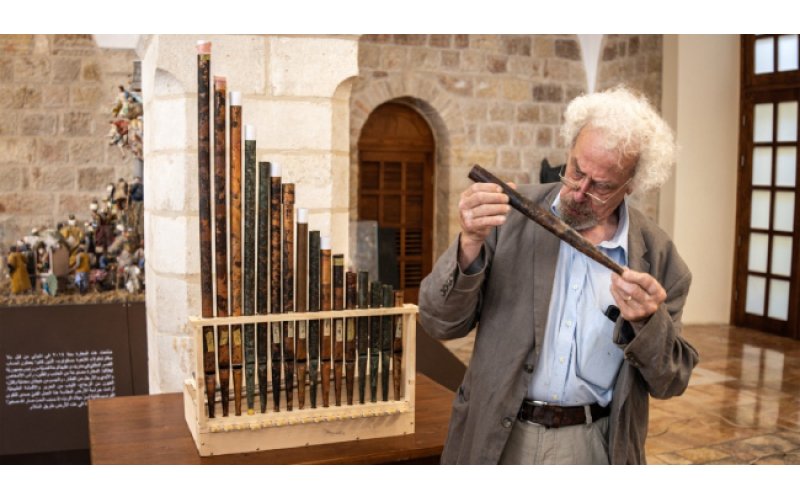
For the first time in modern history, the world can
hear the sound of an 11th-century organ once played by Crusaders at the Church
of the Nativity in Bethlehem.
Spanish researcher David Catalunya, who spent
more than five years on the project, described the moment as extraordinary:
“This is a window into the past… it’s not a reconstruction or a guess, but the
original sound — the same vibration the Crusaders heard at the Nativity
Church,” he told AFP.
The instrument, dubbed the “Bethlehem organ”,
dates back nearly a millennium. It was unearthed in 1906 near the Nativity
site, when workers stumbled upon 222 copper pipes and a bell carillon buried
with meticulous care. Its remarkable preservation allowed researchers to
restore it with precision.
Currently kept at the Monastery of Saint Saviour in
Jerusalem’s Old City, the organ will eventually go on display at a museum
run by the Franciscan Custody of the Holy Land.
“This is like finding a living dinosaur,” said
musicologist Alvaro Torrente, noting that while most surviving organs
date to the 15th century, this one predates them by centuries.
Originally built in France in the 11th century, the
organ was later transported by Crusaders in the 12th century to Bethlehem,
where it was used in Christian liturgy. Experts say its complexity — with 18
pipes producing a single note — and its survival make it one of the most
significant finds in music history.
Organ specialist Koos van de Linde, who also
worked on the project, called the restoration a fulfilment of medieval hope:
“The Crusaders who buried these pieces dreamed they would one day resound
again. That hope was not in vain.”
The research team hopes the rediscovery of the
Bethlehem organ will deepen global appreciation for sacred music and medieval
craftsmanship.
Comments:
Leave a Reply