

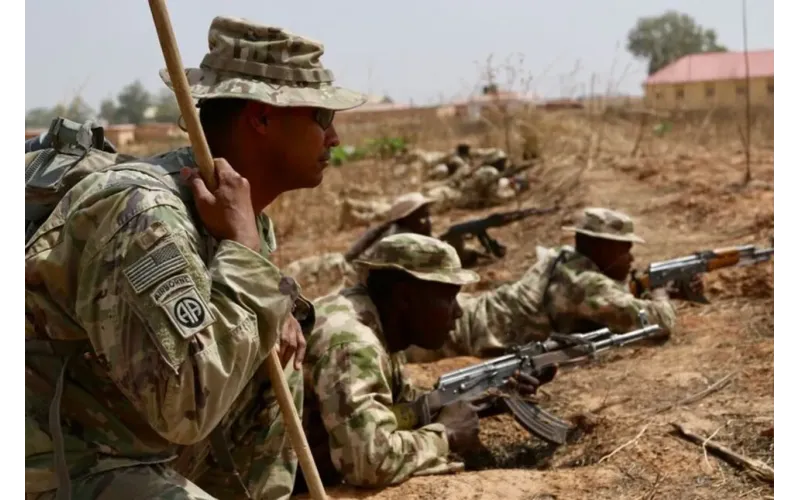
The Defence Headquarters (DHQ) has clarified that the
recent withdrawal of some United States troops from Nigeria involved personnel
temporarily deployed for a specific counterterrorism mission in the Lake Chad
Basin and does not affect the broader military partnership between both
countries.
Director of Defence Information, Major General Samaila
Uba, made the clarification on Friday following reports suggesting that the
United States had withdrawn its troops from Nigeria after completing a
counterterrorism operation.
According to Uba, the troops that departed were part
of an additional contingent deployed specifically for operations in the Lake
Chad Basin, while the approximately 200 US military personnel involved in
ongoing intelligence sharing and training missions remain in the country.
"The Commander was primarily talking about the
additional forces that came to execute the mission in Lake Chad. The initial US
personnel are still in Nigeria," Uba said.
He explained that the temporary deployment was always
intended to last only for the duration of the operation and that the
long-standing security partnership between Nigeria and the United States
remains unchanged.
"The partnership between Nigeria and the US is
unchanged, with key information sharing ongoing. As we saw in May, there are
times that require additional forces to execute specific missions. Those forces
are intended for short periods of time only," he added.
Uba noted that both countries would continue
collaborating in the fight against terrorism, adding that additional personnel
and resources could be deployed whenever operational requirements demand.
The clarification followed comments by the Commander
of the US Air Forces in Africa, General Dagvin R.M. Anderson, who reportedly
said the United States had withdrawn most of the troops deployed for the Lake
Chad Basin mission after successfully completing the operation.
According to Anderson, the mission disrupted ISIS
activities in the region and led to the elimination of a senior ISIS leader
responsible for the group's global operations, media activities and recruitment
efforts.
He stressed that although the temporary deployment had
ended, the United States would continue supporting Nigeria through intelligence
sharing and other forms of security cooperation at the request of the Nigerian
government.
Anderson also described Nigeria as a key regional
partner with a capable military, noting that intelligence collaboration between
both countries has delivered significant gains in the fight against ISIS.
Comments:
Leave a Reply