

The Jeffrey Epstein scandal continues to loom over
Washington, drawing in high-profile political figures and reigniting partisan
tensions around the handling of the case and its aftermath.
A U.S. court is scheduled to hear a request on
Wednesday seeking to restrict public access to investigative files connected to
Epstein, following complaints that the identities of alleged victims were not
properly protected, according to reports by The New York Times.
The controversy intensified last week after the
Justice Department released what it described as the final batch of documents,
images and videos related to Epstein. Instead of closing the chapter, the
disclosure deepened political scrutiny and placed renewed pressure on President
Donald Trump’s administration.
Lawyers representing Epstein’s victims say the
department failed to adequately redact sensitive information. According to the
Times, names of alleged victims—who were meant to remain anonymous—were left
visible in the documents.
In a letter submitted to the court, attorneys Brad
Edwards and Brittany Henderson of the Florida-based firm Edwards Henderson said
one of the released files contained an email listing 32 minors, with only one
name redacted. Another victim reportedly had her full home address disclosed.
The lawyers called for the immediate removal of the
files from the government website, citing serious privacy and safety concerns.
U.S. District Judge Richard M. Berman acknowledged the
request in a brief order, confirming that a hearing would take place on
Wednesday. “I am not certain how helpful I can be,” he wrote.
The Justice Department said on Sunday that it was
working continuously to correct the errors and apply additional redactions,
after journalists uncovered dozens of explicit images that included
identifiable faces. Many of those images have since been removed or obscured,
according to the Times.
Political fallout intensifies
The release of the files has also reignited political
confrontations on Capitol Hill. The House Rules Committee recently advanced
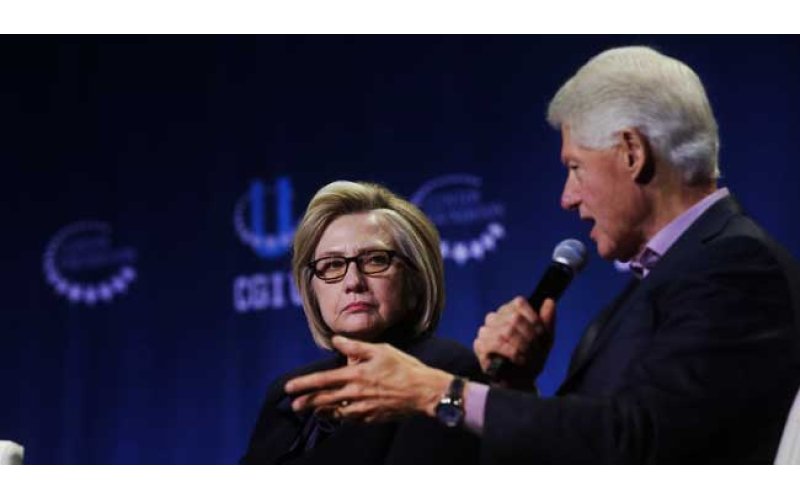
resolutions accusing former President Bill Clinton and former Secretary of
State Hillary Clinton of defying subpoenas related to their past associations
with Epstein.
The subpoenas stem from a congressional review of how
authorities handled earlier investigations into Epstein, who died in federal
custody in 2019.
After initially declining to appear, the Clintons
later agreed to cooperate. A spokesperson for Bill Clinton, Angel Urena, said
on X that both would testify and were “looking forward to setting a precedent
that applies to everyone.”
Democrats have criticized the probe, arguing that it
is being used to target political opponents of Trump rather than to pursue
genuine oversight. They note that Trump, who had past social connections with
Epstein, has not been asked to testify.
Trump himself previously attempted to block the
release of Epstein-related investigative files, despite the financier’s long
history of connections with powerful figures across politics, business and
entertainment.
Neither Trump nor the Clintons have been formally
accused of criminal wrongdoing in connection with Epstein.
Republicans, however, argue that Bill Clinton’s past
travel on Epstein’s private jet in the early 2000s warrants in-person testimony
under oath. Clinton has acknowledged taking the flights for humanitarian work
tied to the Clinton Foundation but has denied ever visiting Epstein’s private
island.
Hillary Clinton has said she had no substantive
relationship with Epstein, never flew on his plane and never visited his
island.
Both Clintons submitted sworn written statements
detailing their knowledge of Epstein and his associate Ghislaine Maxwell, who
is currently serving a 20-year prison sentence for sex trafficking.
Following their agreement to testify, the House Rules
Committee on Monday evening suspended plans to proceed with contempt votes.
Comments:
Leave a Reply