

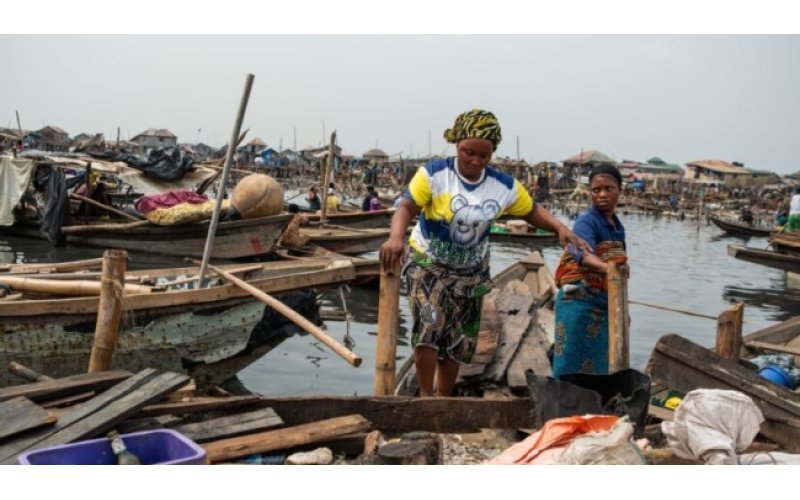
The Lagos State Government has defended its recent
intervention in Makoko, stating that the action was taken primarily to
safeguard lives, especially in areas situated beneath high-tension electricity
lines.
Speaking at a press briefing held at Alausa, Ikeja,
the Special Adviser to the Governor on eGIS and Urban Development, Olajide
Babatunde, said the clearance exercise was part of a statewide safety policy
and not targeted specifically at Makoko.
Babatunde explained that similar enforcement actions
have been carried out in other parts of Lagos following fatal incidents linked
to fallen power cables. According to him, clearing high-tension power corridors
is a mandatory safety measure across the state.
“The enforcement in Makoko follows the same safety
standards applied elsewhere in Lagos. It is not an isolated or selective
action,” he said.
He revealed that the state government had previously
considered several redevelopment proposals for Makoko, including a shoreline
extension project. However, the initiative was shelved after environmental
impact assessments conducted by experts, construction firms and international
partners flagged serious ecological threats to the lagoon and marine ecosystem.
Following those findings, Babatunde said the
government adopted the Water Cities Project, a more sustainable model designed
to improve living conditions while preserving the fishing community’s way of
life. The project focuses on sanitation, infrastructure development and
environmental protection without displacing residents unnecessarily.
He disclosed that the Lagos State Government has
committed $2 million to the initiative and is actively engaging international
development partners for additional funding and technical assistance.
The Special Adviser also outlined the state’s broader
urban regeneration approach, which emphasizes dialogue with affected
communities, compensation and resettlement when relocation cannot be avoided.
He cited previous regeneration efforts in areas such
as Okobaba, Adeniji-Adele and Dosunmu as examples where redevelopment was
achieved through consultations and negotiated settlements with residents and
traders.
Babatunde further noted that frequent fire outbreaks,
building collapses and limited access for emergency responders in overcrowded
settlements have made it necessary to enforce building regulations, minimum
setbacks and land-pooling policies.
According to him, Lagos is working to align its urban
development framework with international standards that uphold the right to
safe and adequate housing, stressing that substandard living conditions pose
long-term risks to residents.
Comments:
Leave a Reply