

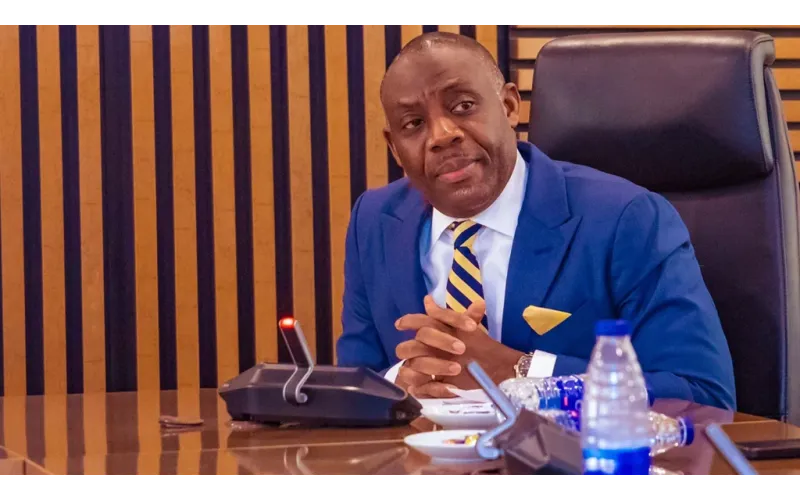
The Federal Government of Nigeria has unveiled plans
to abolish the Junior Secondary School Common Entrance Examination and
introduce a nationwide student tracking system using unique identification
numbers.
The Minister of Education, Tunji Alausa, announced the
proposed reforms during an interactive session with journalists in Lagos,
stating that the initiative is aimed at improving access to education and
monitoring students’ academic progress across the country.
Under the new policy, the common entrance examination
will be replaced with a Continuous Assessment (CA) system. This approach will
track pupils’ performance from primary school and allow their academic records
to follow them even when they transfer between schools.
Alausa explained that the reform seeks to address a
major gap in Nigeria’s education system, particularly the significant drop in
enrolment between primary and junior secondary levels.
Government data shows that while over 23 million
pupils attend more than 50,000 public primary schools, only about 3 million
transition into junior secondary school within the public system—leaving
millions of children unaccounted for.
To improve oversight, the government plans to
introduce a Learner Identification Number (LIN) for every child starting from
primary school. This unique ID will remain with each student throughout their
educational journey, regardless of location or school changes.
The system is expected to enable authorities to track
student progress and quickly identify dropouts, making it easier to investigate
and address barriers to education.
The minister also stressed the need for state
governments to invest in building more schools to accommodate increasing
demand, noting that private institutions cannot absorb the large number of
out-of-school children.
Additionally, the government plans to revive the
school feeding programme and place it under the supervision of the Federal
Ministry of Education to improve its effectiveness in boosting enrolment and
retention.
The reforms form part of broader efforts to strengthen
the education system, reduce dropout rates, and ensure more children complete
basic education in Nigeria.
Comments:
Leave a Reply