

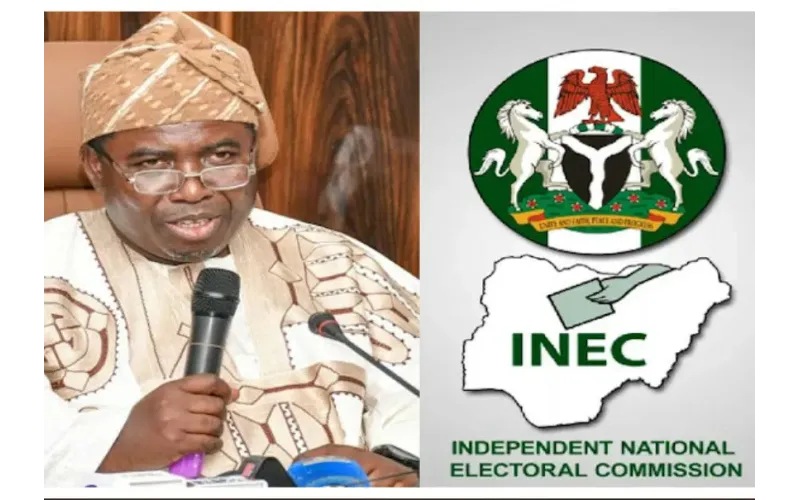
The Independent National Electoral Commission (INEC)
has disclosed that it is yet to receive budgetary allocations for the conduct
of the 2027 general elections, despite already commencing preliminary
preparations for the exercise.
The commission's National Commissioner in charge of
Voter Education and Publicity, Mohammed Haruna, made this known during a
cross-sectoral interactive session in Abuja organised by the Peering Advocacy
and Advancement Centre in Africa (PAACA) in partnership with Legis360.
The "fireside chat" brought together
representatives of political parties, civil society organisations (CSOs), and
electoral officials to review the recently concluded Ekiti State governorship
election and discuss INEC's readiness for the 2027 general elections.
Haruna disclosed that the commission has proposed a
budget of N873.78 billion for the elections, with a significant portion
allocated to election operations, technology deployment, and capital
expenditure. However, he noted that the commission is still awaiting the
release of the funds.
He explained that the current situation does not
violate the Electoral Act, 2026, which requires that funds for a general
election be released to INEC no later than six months before the polls.
Despite the delay, Haruna said the commission has
begun preparations for the procurement of election materials, including the
replacement of Bimodal Voter Accreditation System (BVAS) devices that were
damaged, lost, or not recovered after previous elections.
"Our Director of ICT just returned from China
regarding procurement because not all the BVAS devices used during the last
general elections were recovered. Orders need to be placed, and these things
take time," he said.
To avoid a repeat of the technical challenges
experienced with the INEC Result Viewing (IReV) portal during the 2023
presidential election, Haruna said the commission plans to conduct mock
presidential election exercises to thoroughly test its technology before the
2027 polls.
Addressing concerns over the projected cost of the
elections, Haruna argued that the average cost per voter provides a more
accurate picture than the overall budget.
"This N800 billion-plus sounds enormous, but when
you calculate the average cost per voter, it is about six dollars, which is
reasonable for a country such as Nigeria," he said. "People forget
that virtually everything we use is imported. The BVAS devices and many other
election materials are imported, while exchange rate fluctuations also affect
the overall cost."
Haruna also identified conflicting court rulings and
last-minute judicial orders as major operational challenges facing the
commission. He cited the Ekiti governorship election, where injunctions issued
between 24 and 48 hours before the poll required INEC to make urgent
adjustments to its election materials and software.
"When a court gives a last-minute injunction to
include parties such as the National Democratic Congress (NDC) and the African
Democratic Congress (ADC), we are forced to reconfigure the software and update
physical materials immediately," he said. "This leaves very little
time to properly test the systems, although we still strive to achieve
substantial compliance with the electoral guidelines."
Comments:
Leave a Reply