

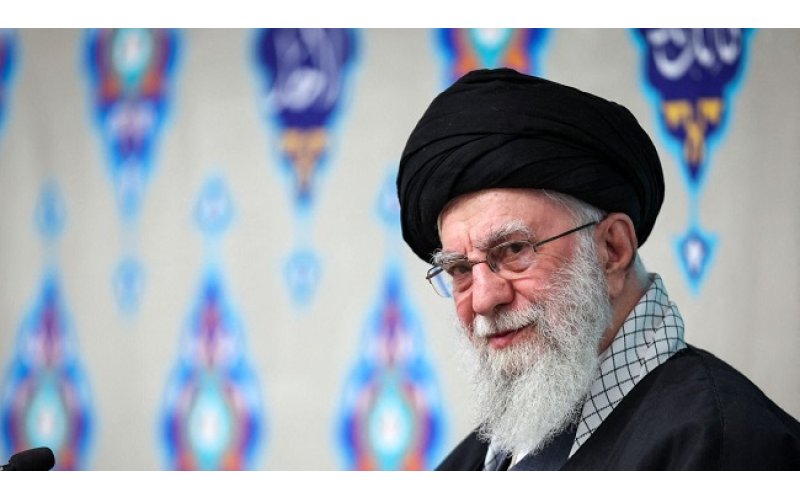
Iran’s powerful clerical body, the Assembly of
Experts, is expected to name a successor to the late Supreme Leader Ali
Khamenei, following his death during recent missile strikes linked to the
escalating conflict involving the United States and Israel.
One of the Assembly’s members, Ahmad Khatami, told
Iranian state media that the body hopes to hold a vote to select the next
leader “at the earliest opportunity.”
Possible Successors
Several figures are being considered for the position,
including Alireza Arafi, a member of the interim council currently managing the
country’s affairs, and hardline cleric Mohsen Araki. Another potential
candidate is Hassan Khomeini, the grandson of Ruhollah Khomeini, the leader of
the Iranian Revolution that toppled the monarchy in 1979.
Attention has also focused on Mojtaba Khamenei, the
56-year-old son of the late leader. His appointment would represent a
hereditary transfer of power—an idea his father reportedly rejected in 2024.
A Quiet but Influential Figure
Born on September 8, 1969, in the city of Mashhad in
eastern Iran, Mojtaba Khamenei is one of six children of the former supreme
leader. Despite holding no formal government office, he is widely believed to
wield significant influence behind the scenes in Iran’s political and security
structures.
He is often described as close to conservative
factions and maintains strong ties with the Islamic Revolutionary Guard Corps,
Iran’s powerful ideological military force. His relationship with the security
establishment dates back to his time serving in a combat unit toward the end of
the Iran–Iraq War (1980–1988).
International Sanctions and Controversy
In 2019, during the presidency of Donald Trump, the
United States Department of the Treasury imposed sanctions on Mojtaba Khamenei.
Officials accused him of acting on behalf of his father while advancing Iran’s
regional ambitions and domestic security policies.
Critics have also linked him to the crackdown on
protests that erupted after the disputed re-election of Mahmoud Ahmadinejad in
2009.
A report by Bloomberg cited intelligence sources
suggesting that Mojtaba Khamenei had accumulated wealth exceeding $100 million
through investments linked to oil revenues and properties in Europe and Dubai.
Religious Standing and Personal Life
Mojtaba studied theology in the religious city of Qom,
where he also taught. He holds the clerical rank of Hujjat al-Islam,
which is below the rank of Ayatollah held by his father and Iran’s
revolutionary founder.
Iranian authorities also confirmed that his wife,
Zahra Haddad-Adel, the daughter of a former parliamentary speaker, died in the
same US-Israeli strikes that killed Ali Khamenei.
Meanwhile, Israel Katz, Israel’s defence minister,
warned that whoever succeeds the late leader could become a future target.
The Assembly of Experts, which consists of 88 clerics
elected every eight years, has only overseen one leadership transition
before—when Ali Khamenei was chosen as supreme leader in 1989 following the
death of Ruhollah Khomeini.
Comments:
Leave a Reply