

The
labour union charged the government to introduce policies to address workers’
suffering.
The
federal government on Friday appealed to the Nigeria Labour Congress (NLC) to
shelve its planned two-day national protest against alleged government’s non-implementation
of the agreement reached on palliatives to cushion the effects of the removal
of fuel subsidy on workers and general public, which labour had argued was
fueling economic hardship in the country.
Responding
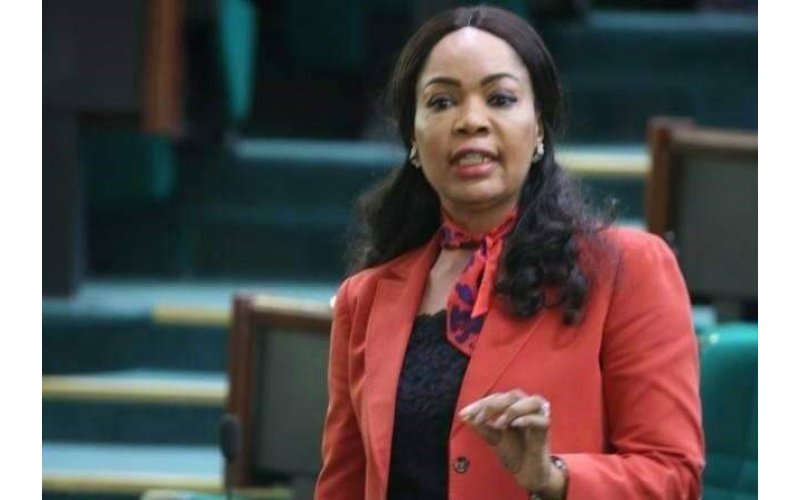
to THISDAY’s enquiry, the Minister of State for Labour and Employment, Hon.
Nkeiruka Onyejeocha, was quoted by her Special Adviser on Media to have said:”
We are reaching out to NLC and TUC to ensure that the issues are resolved and
that the situation is not allowed to escalate. Federal government is giving
them assurances that it is working hard see that it does not renege on the
agreement reached with organised labour.”
Earlier
on Friday, NLC President Comrade Joe Ajaero, who addressed journalists in
Abuja, on Friday, on the resolutions of the National Executive Council meeting
of the labour movement held on Friday morning, said organised labour was
displeased by government’s continued delay in executing the agreement it
reached with the workers since October, 2023.
This
comes just as it appeared that impact of recent measures introduced by the
Central Bank of Nigeria (CBN) to halt the slide of the naira exchange rate were
yet to be felt as the nation’s currency weakened further to N1620 to a dollar
on the parallel FX market. Nigeria’s inflation rose to a 21-year high of 29.9
percent in January 2024, which according to National Bureau of Statistics (NBS)
data, was the highest since 2003, as prices of goods and services continued to
skyrocket.
Speaking
further, Ajaero said although organised labour was yet to formally propose an
amount for the new minimum wage, but as long as the Naira continued its current
free fall in the exchange market, the workers would demand for an upward review
of the amount even above the N1 million he had been quoted to have said.
Apart
from ratifying the February 23 deadline for commencement of actions in protest
against federal government’s apparent foot dragging in the implementation of
agreement with labour, Ajaero said the NEC meeting resolved that NLC would
embark on a two-day national protest beginning from February 27.
In a
communique jointly signed by Ajaero and the Acting NLC General Secretary,
Ismail Bello, the labour movement said it’s, “NEC meeting unanimously noted its
deep disappointment and condemned the actions of the federal government in
refusing to implement the agreements.”
Ajaero said the NLC NEC also
reaffirmed the 14 days-notice issued the federal government within which to
implement the agreement and address the mounting crisis of survival in Nigeria.
According
to him, the NEC meeting resolved, ‘that if the notice expires on the midnight
of Thursday, the 22nd of February, 2024 and Congress is not satisfied with the
level of government’s compliance with the conditions of the notice, it will be
at liberty to take action that will compel government to implement the
agreement.”
In
addition, he said the NLC has therefore declared a two-day National Protest on
27th and 28th of February, to demonstrate outrage on the mounting hardship and
insecurity around the nation.
“If
demands are not met after the nationwide protests to issue a seven-day notice
that will expire on the 2nd day of March, 2024 to the federal government after
which an indefinite nationwide strike will ensue,” he said.
Earlier,
Ajaero said, “NEC considered the unfortunate state of our nation; the huge
suffering pervading the nation, the general crisis of living, the outrage
expressed by the majority, and the increased attendant fears of the continued
consequences of these policies and the persistent refusal of the government to
implement the tenets of the October Agreement”.
He said
NEC also took notice of the decision of the National Administrative Council
(NAC) of the both Congresses of the NLC and the Trade Union Congress (TUC) to
demand that the agreement be implemented.
The
communique further stated: “That Nigerian workers and people are not interested
in empty talk now but action so, calls on all of affiliates, state Councils and
Civil Society Allies to start mobilising across the nation for effective action
as the deadline approaches.
“As such,
in light of the urgency of the situation and the continued suffering of the
Nigerian people and Workers, the NEC-in-session calls for immediate action from
the federal government to rectify these grievances and restore faith in the
democratic process and social dialogue.”
Meanwhile,
economic experts have attributed the rising hardship in the country to the pass-through
effects of the floating of the Naira in the foreign exchange market.
Commenting
on the current economic hardship in the country, Professor of Economics at
University of Uyo and former Director General of West African Institute of
Financial and Economic Management, Professor Akpan Hogan Ekpo, said the federal
government has to get back to subsidising basic things of life for Nigerians
for one or two years.
“The
money is available. All the money being stolen should be put into alleviating
the hardship of the masses and the government should stop the security
challenges so that farmers can go back to their farms.
“We have
reached a stage where northern governors are telling their farmers not to send
foods to the south, which is very dangerous,” he said.
Ekpo
stressed that something must be done before it would be too late, warning that
it might get to the point where people would not mind dying on the street.
He said:
“I think that something has to be done, which is for the government to pump in
money to reflate the economy in the short and medium term.
“It
should pump in money into solving insecurity problem and subsidising basic
things like health, education and transportation in the short to medium term
while it works on the long term to make the economy productive.
“A
country where more than two-third of its population are in poverty is very,
very dangerous.”
Ekpo also
said by now Nigerians should be showing their anger by mild demonstrations for
government to take them seriously.
“It
should be led by the NLC and other groups because the hardship is too serious,”
he added.
He
advised government to return back to managed float and manage it very well.
According
to him, “it is either it works on the demand side or it will have enough supply
of foreign exchange (FX). The FX rate is going up every day. Today it is
N1,600 plus. I do not know what it will be tomorrow.”
He said:
“I do not see the hardship abating. It will continue. We cannot open the
foreign exchange market the way we have done. Otherwise the inflation pass
through via the exchange market will continue and that will bring more hardship
to the citizens. So, I do not see hardship abating.”
Speaking
in the same vein, the Chief Executive Officer of Centre for the Promotion of
Private Enterprise (CPPE), Dr. Muda Yusuf, attributed the current economic
hardship in the country to high and increasing cost of living faced by many
citizens.
Yusuf
identified the depreciating exchange rate, surging transportation costs,
logistics challenges, forex market illiquidity, astronomical hike in diesel
cost, insecurity in farming communities and structural bottlenecks to
production as major drivers of the spiraling cost of living.
He noted
that the experience of the past few months has underlined the need to
interrogate the policy choice of complete floating of the Naira, especially in
the light of the current inflationary pressures and price volatility.
According
to him, “the weakening of the naira against the currency of our neighboring
countries [CFA], had continued to incentivize the outflow of agricultural
products to these countries. This is complicating the supply side challenges,
especially of food crops.”
He also
said that “tackling the high cost of living requires urgent government
intervention to address the challenges bedeviling production, productivity,
logistics, foreign exchange and insecurity in the economy. The real sector of
the economy needs to be incentivized to moderate operating and production
costs.
“The
government needs to grant tariff and tax concessions on intermediate products
for agro allied industries and other industrialists.
“The same
is true of investors in logistics sector. The exchange rate benchmark for the
computation of import duty should be pegged at N950/dollar.
“This
would reduce the escalating costs of cargo clearing, reduce cargo diversion and
minimize uncertainty in the international trade processes. This would trickle
down to the vulnerable segments of society in the form of lower prices.
Comments:
Leave a Reply