

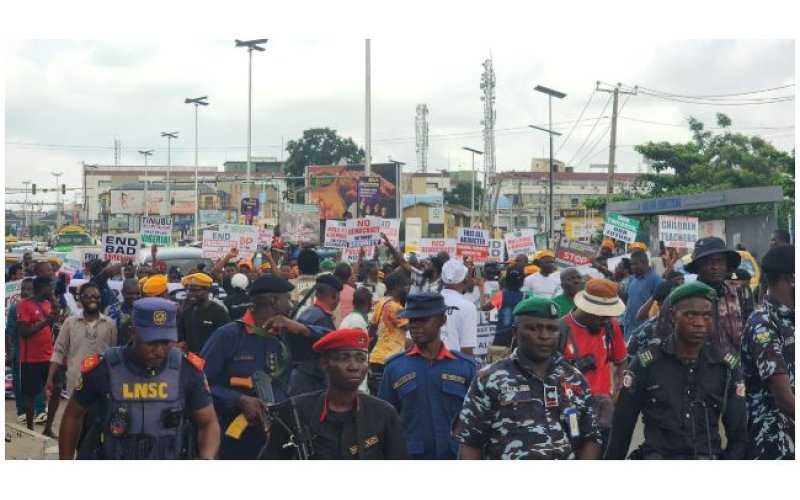
Hundreds of Nigerians took to the streets on Thursday
to protest rising insecurity, economic hardship, and the increasing cost of
living, as the country marked Democracy Day.
The demonstration attracted civil society
organisations, activists, and concerned citizens who marched peacefully while
carrying placards with messages including “Free All Captives Now,” “End
Anti-People Policies Now,” and “For a Living Wage and Mass Creation of
Employment.”
The protest followed recent reports of coordinated
mass kidnappings in Oyo and Borno states, incidents that have renewed public
concerns about security across the country. Participants urged the government
to intensify efforts to rescue abducted victims and prevent further attacks.
Beyond security concerns, demonstrators highlighted
the growing economic challenges facing ordinary Nigerians, including soaring
inflation, rising transportation costs, and reduced purchasing power. Many
called for urgent interventions to ease the burden on citizens struggling to
cope with the high cost of living.
Leading human rights lawyer and Senior Advocate of
Nigeria, Femi Falana, joined the protest and reiterated calls for reforms aimed
at addressing insecurity and improving the welfare of citizens. Falana had
previously backed the declaration of June 12 as a day of nationwide
demonstrations, citing widespread hardship and governance concerns.
Popular Nigerian rapper and activist Folarin Falana,
known professionally as Falz, also participated in the march. He called on
authorities to strengthen security in educational institutions and ensure that
schools remain safe for students and staff.
Security personnel were deployed to monitor the
demonstration and maintain order throughout the event.
Meanwhile, a separate group of demonstrators staged a
counter-rally in support of the government's economic policies and reform
agenda. Carrying banners with the message “Better Days Ahead for Nigeria,” the
group appealed to citizens to remain patient, arguing that current reforms are
necessary to achieve long-term economic stability and sustainable national
development.
The contrasting demonstrations reflected the growing
national debate over the impact of ongoing reforms and the government's
handling of security and economic challenges.
Comments:
Leave a Reply