

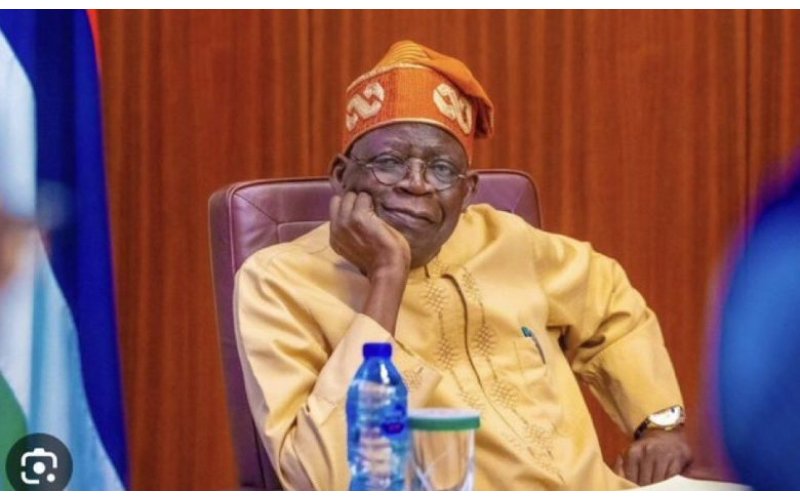
Recent developments within Nigeria’s political sphere
have raised concerns regarding the stability of opposition parties and the
increasing dominance of the ruling All Progressives Congress (APC). Central to
this issue are the political maneuvers allegedly orchestrated by President Bola
Ahmed Tinubu, with key figures like former Rivers State Governor Nyesom Wike
and ousted National Secretary of the Peoples Democratic Party (PDP), Samuel
Anyanwu, playing significant roles. This article explores how these political
dynamics may be paving the way for a potential shift towards a one-party state,
with far-reaching implications for Nigeria’s democracy.
Tinubu’s Influence on PDP Leadership
The political landscape in Nigeria is witnessing a
significant shift, largely driven by President Bola Ahmed Tinubu’s strategies.
While the PDP has long been a major force in Nigerian politics, recent reports
suggest that internal divisions, exacerbated by external influence, are eroding
the party’s unity. According to public statements from prominent political
figures, including Bauchi State Governor Bala Mohammed, Tinubu and his ally
Wike are alleged to be directly responsible for the crises affecting the PDP
and other opposition parties such as the New Nigeria Peoples Party (NNPP) and
the Labour Party (LP).
Tinubu, through his strategic political alliances,
appears to be pursuing a calculated approach to fragment the opposition, making
it easier for the APC to maintain its hold on power. By leveraging figures like
Wike and Anyanwu, he is said to be consolidating support within the PDP and
ensuring the opposition is weakened from within.
Wike’s Role: The Masquerade Behind the Chaos
At the heart of the PDP’s current turmoil is Nyesom
Wike, a prominent politician who has been thrust into the spotlight as both a
central figure in the PDP’s internal conflict and an ally of the ruling APC.
Wike’s abrupt appointment as Minister of the Federal Capital Territory in
Tinubu’s administration, without prior consultation with PDP elders, has fueled
accusations that he is serving the interests of the APC rather than those of
the PDP. His role as a bridge between the ruling party and dissident factions
within the PDP has led to widespread suspicion that he is orchestrating a plan
to weaken the opposition and strengthen the APC’s dominance.
Many PDP members, including activist lawyer Deji
Adeyanju, have voiced concerns over Wike’s political tactics, which they argue
prioritize his personal political ambitions and those of the APC over the
broader goals of the PDP. Wike’s supporters within the party, including key
figures like Acting PDP National Chairman Umar Damagum and Samuel Anyanwu, are
seen as crucial players in the ongoing discord. Their alignment with the ruling
party has only deepened the sense of betrayal among many party members.
Anyanwu’s Contested Position and the Legal Battles
Another key figure in the unfolding crisis within the
PDP is Samuel Anyanwu, a former National Secretary of the party whose
legitimacy has been a source of contention. Anyanwu’s disputed claim to the
position has led to numerous legal challenges and power struggles within the
party. As factions within the PDP engage in counter-suspensions and legal
battles, Anyanwu’s position as a potential ally of Wike and the ruling APC has
further raised questions about the integrity of the party’s leadership.
The ongoing legal wrangling surrounding Anyanwu’s
position highlights the deep fractures within the PDP. His involvement in the
dispute, combined with Wike’s political maneuvers, paints a picture of a party
in disarray, with no clear path forward for reconciling the various factions.
The Crisis and Its Impact on Party Unity
The infighting within the PDP, exacerbated by the
alleged influence of President Tinubu and his allies, threatens the unity of
the opposition and the broader democratic process in Nigeria. With the party’s
leadership in disarray and no clear direction for the future, the PDP’s
relevance as a formidable opposition force is in jeopardy. The prolonged crisis
has created a vacuum in Nigerian politics, with the APC becoming the dominant
political force.
Political analysts are increasingly concerned that
this fragmentation within the PDP and other opposition parties could pave the
way for the emergence of a one-party state. A lack of unity among opposition
parties leaves the ruling APC with little competition, making it more difficult
for checks and balances to function effectively. The absence of a strong,
cohesive opposition would significantly undermine the democratic process,
raising the specter of one-party dominance in Nigerian politics.
Implications for Nigerian Democracy
The ongoing crisis within the PDP serves as a stark
reminder of the vulnerabilities of opposition politics in Nigeria. While
President Tinubu’s role in orchestrating divisions within the party remains a
subject of controversy, the consequences for Nigerian democracy are clear. A
fragmented opposition, fueled by internal conflicts and external influence,
will make it increasingly difficult for Nigeria to maintain a balanced and
representative political system.
The weakening of the opposition also raises questions
about the future of democratic governance in Nigeria. If the PDP cannot resolve
its internal issues and present a united front, it risks losing its place as a
credible alternative to the APC. This would leave Nigerian voters with fewer
choices in future elections, diminishing the overall quality of democratic
competition.
The Path Forward: Rebuilding Unity and Strengthening
Democracy
As Nigeria grapples with the political fallout from
the crisis within the PDP, it is crucial for the country’s political leaders to
prioritize the stability and integrity of the democratic process. The
challenges facing the PDP are not just internal matters; they have broader
implications for the entire political system.
To safeguard Nigerian democracy, all parties must work
towards greater unity and cooperation. The opposition must find a way to
resolve its internal divisions and present a united front to effectively
challenge the dominance of the ruling party. Failure to do so could result in a
political environment where a single party wields unchecked power, ultimately
eroding democratic accountability and representation.
The PDP crisis is a warning sign of the fragility of
opposition politics in Nigeria. It is essential for Nigerian voters, political
leaders, and civil society groups to recognize the importance of a vibrant and
unified opposition in maintaining the health of the country’s democracy. In the
face of increasing political fragmentation, Nigeria must take decisive action
to ensure that its democratic institutions remain robust and resilient in the
face of potential challenges.
However, the political developments surrounding
President Tinubu’s alleged involvement in the PDP crisis paint a complex
picture of power dynamics within Nigeria. Figures like Nyesom Wike and Samuel
Anyanwu have played pivotal roles in the party’s fragmentation, raising
concerns about the future of opposition politics in the country. As the crisis
deepens, the risk of a shift towards a one-party state becomes ever more
imminent.
The erosion of opposition unity in Nigeria is not just
a political issue; it is a threat to the very foundations of the country’s
democracy. If the PDP and other opposition parties cannot resolve their
internal conflicts and forge a cohesive strategy for the future, Nigeria may
find itself on the path to one-party dominance, with dire consequences for the
principles of democratic governance.
For Nigerian democracy to thrive, it is crucial that
all political forces prioritize unity, inclusivity, and the collective good
over individual ambitions. Only by doing so can Nigeria ensure that its
political system remains diverse, competitive, and truly representative of its
people.
Comments:
Leave a Reply