

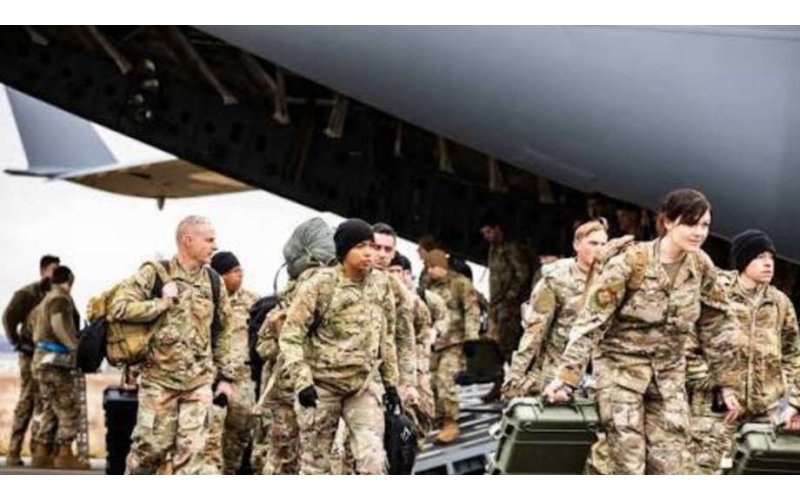
The United States is preparing to withdraw about 200
troops deployed to Nigeria earlier this year to support the country’s fight
against Islamist militants, according to a report by The New York Times.
The withdrawal is expected to be completed by late
September, following months of joint operations between American and Nigerian
forces focused on intelligence sharing, special forces training and
counterterrorism missions against extremist groups.
US and Nigerian officials told the newspaper that
although the deployment was relatively small, it produced significant results.
Small teams of American trainers and intelligence
analysts are expected to remain in Nigeria after the larger contingent leaves,
according to the report published on Thursday, August 27.
US officials reportedly described the deployment as a
potential model for future American military operations in Africa, arguing that
a limited number of personnel were able to achieve substantial counterterrorism
gains.
One of the major successes cited was the May operation
that killed Abu Bilal al-Minuki, a senior Islamic State figure and reported
second-in-command of ISIS in the Lake Chad Basin. The operation was conducted
jointly by US and Nigerian forces.
The American troops were deployed to northeastern
Nigeria in February 2026, months after President Donald Trump criticised
Nigeria’s handling of terrorist violence, particularly attacks targeting
Christian communities.
Last month, Dagvin Anderson, commander of US Africa
Command (AFRICOM), said the United States had already withdrawn a significant
number of its personnel from Nigeria following the May operation.
Anderson said the operation had dealt a major blow to
ISIS leadership in Nigeria and had also affected the group’s broader
operations.
Despite the reported successes of the joint campaign,
militant violence has continued in several parts of Nigeria, with armed groups
carrying out deadly attacks in recent weeks.
The planned withdrawal therefore comes as Nigeria
continues to face persistent security challenges and seeks to strengthen its
own counterterrorism capabilities.
Comments:
Leave a Reply