

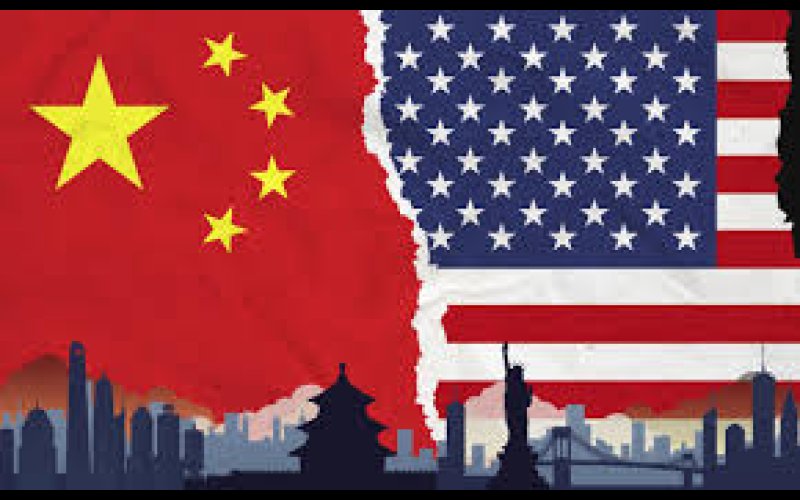
The trade war between the United States and China has
entered a new, more volatile phase, with both nations imposing aggressive
tariffs that have rattled global markets and left businesses scrambling for
stability. Despite mounting international pressure, neither Washington nor
Beijing is backing down, signaling that the ongoing conflict could persist well
into 2025, disrupting international trade and economic relations.
US Imposes Sweeping Tariffs: A Bold Move in the Trade
Conflict
On April 2, 2025, President Donald Trump addressed the
nation in a televised speech, unveiling a major new tariff strategy designed to
curb the United States' trade deficit and hold foreign competitors accountable.
The President labeled the new policy as "Liberation Day" for the
American economy, marking a dramatic shift toward protectionist trade policies.
Under the new plan, the United States has imposed a
blanket 10% tariff on imports from countries outside of the North American Free
Trade Agreement (NAFTA) bloc, including China. The tariffs will go into effect
on April 5, 2025, and are expected to have immediate ripple effects on global
markets. Additionally, a series of retaliatory tariffs targeting specific
nations, including China, will be enacted by April 9, 2025, further escalating
the trade standoff.
"This is a bold step toward leveling the playing
field and putting America first," Trump said during his announcement,
vowing to protect American industries from what he called "unfair foreign
trade practices." The move is expected to have wide-reaching implications
for industries that rely on foreign imports, including technology, agriculture,
and manufacturing.
China Strikes Back: Retaliatory Tariffs on US Imports
In response, China swiftly unveiled a series of
retaliatory tariffs on U.S. goods, targeting an array of American exports
including soybeans, aircraft, and automobiles. On April 4, 2025, the Chinese
Ministry of Commerce announced that the country would impose a 34% tariff on
all imports from the United States, effective April 10, 2025. The Chinese
government condemned the U.S. tariffs as "unilateral" and warned of
further countermeasures if Washington continues down this path.
"This is not a trade war we sought, but we will
not back down in the face of aggressive actions," said a Chinese
government spokesperson. The retaliatory measures are expected to hit U.S.
exporters hard, particularly in sectors like agriculture, where China is a
major market for American products.
Market Turmoil: Stock Markets Plunge as Trade Tensions
Escalate
The news of the tariff escalation triggered immediate
turmoil in global financial markets. U.S. stock indices plunged dramatically in
the wake of the announcement. The Dow Jones Industrial Average experienced its
worst one-day drop since the onset of the COVID-19 pandemic, losing over 2,200
points in a single session. The Nasdaq followed suit, falling more than 5%,
while the S&P 500 dropped nearly 6%.
European and Asian markets mirrored the U.S. declines,
as investors reacted to the uncertainty surrounding the future of U.S.-China
relations. The FTSE 100 in London dropped 5%, while major Asian indices saw
significant losses, particularly in markets heavily reliant on global trade and
supply chains.
Analysts have warned that the tariff war could push
the global economy toward a recession, with rising prices, shrinking profits,
and slower economic growth expected in the coming months. The uncertainty
surrounding the trade dispute is prompting concerns over inflation, job losses,
and the potential for a stagflationary environment, particularly in countries
with close economic ties to both the U.S. and China.
Sectoral Impact: The Economic Consequences of a Tariff
War
Several key industries are already feeling the strain
of the ongoing tariff conflict:
Technology: U.S. tech companies that rely on Chinese
manufacturing and supply chains are particularly vulnerable to the new tariffs.
The price of electronics could rise significantly, with some analysts
predicting a 15% reduction in earnings for tech companies. The global
smartphone and semiconductor markets are expected to be among the hardest hit.
Agriculture: American farmers have long been reliant
on exports to China, and the retaliatory tariffs on U.S. agricultural products
are expected to have a devastating impact. Soybean farmers, in particular, are
facing a sharp decline in demand from one of their largest international
customers.
Energy: The energy sector, already dealing with
volatility in global oil prices, is now contending with tariffs on energy
exports. The effects are likely to be felt most acutely by U.S. oil and gas
companies that supply China with crude oil, liquefied natural gas (LNG), and
other energy products.
Global Reactions: Pressure Mounts for Diplomacy
As the tariff war intensifies, international calls for
diplomacy and de-escalation have grown louder. The European Union and other
major trading partners have expressed concern over the damaging effects of the
tariffs, urging both the U.S. and China to engage in constructive dialogue to
resolve the dispute.
"The global economy cannot afford a prolonged
trade war," said a spokesperson for the European Commission. "We call
on both sides to prioritize negotiation over confrontation, as further tariffs
will only harm businesses and consumers worldwide."
The International Monetary Fund (IMF) has also raised
alarms, warning that escalating tariffs could lead to a "global economic
slowdown." IMF officials have urged both nations to return to the
negotiating table and find a mutually beneficial solution to the trade
imbalance.
The Path Forward: Can the US and China Find Common
Ground?
With both the United States and China entrenched in
their positions, the prospects for an immediate resolution appear slim. Trade
experts are predicting that the situation could worsen before it improves, with
both sides continuing to escalate their tariffs in an attempt to gain leverage.
In the coming months, the Biden administration may
face increasing pressure to reconsider its tariff policies, especially as the
impact on U.S. businesses and consumers becomes more apparent. However, with
the Chinese government firmly committed to its retaliatory measures, a
full-scale resolution may require significant diplomatic maneuvering and
concessions from both sides.
Conclusion: A Defining Moment for Global Trade
As the U.S.-China tariff war enters a new and more
dangerous phase, the global community watches with bated breath. The actions of
both nations over the next several months will determine not only the future of
their economic relations but also the stability of the global economy. With
tensions running high and no clear end in sight, the U.S.-China trade conflict
stands as a pivotal moment in the evolution of international trade and
geopolitical.
Comments:
Leave a Reply