

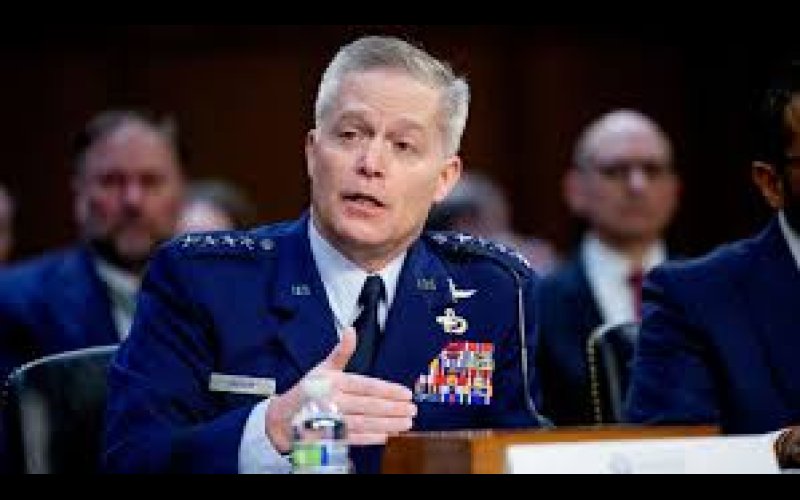
In a dramatic and unexpected move, the White House has
announced the firing of the National Security Agency (NSA) chief, General
Michael Rhodes, amid growing concerns over national security and intelligence
operations. The decision, which has taken both Washington insiders and the
public by surprise, comes at a time of heightened global tensions and domestic
concerns regarding cyber threats, espionage, and the integrity of U.S.
intelligence operations.
The Shocking Dismissal
On April 4, 2025, a senior administration official
confirmed that President Joe Biden had made the decision to relieve General
Rhodes of his duties as head of the NSA. The firing follows weeks of internal
discussions within the White House about the agency’s performance in addressing
rising cybersecurity threats and its role in national security operations,
particularly in relation to China and Russia.
While the White House did not provide an official
reason for the dismissal, sources close to the administration suggest that it
was due to concerns over the NSA's handling of recent intelligence lapses and
allegations of ineffective leadership within the agency. General Rhodes had
been under scrutiny following a series of high-profile cyberattacks on U.S.
infrastructure that were traced back to foreign adversaries.
Unraveling the Issues: Cybersecurity and Intelligence
Shortcomings
The decision to remove General Rhodes comes after a
turbulent period for the NSA, which has faced criticism for its perceived
inability to prevent sophisticated cyberattacks, particularly from China,
Russia, and Iran. U.S. officials have expressed frustration over the NSA’s
failure to detect and prevent large-scale hacking campaigns that have targeted
critical infrastructure, government networks, and private businesses.
In particular, the NSA’s inability to adequately
address the 2024 cyberattack on the U.S. power grid, which temporarily
disrupted electricity supply across several states, has been a point of
contention. Sources within the intelligence community suggest that the failure
to prevent such an attack reflected deeper organizational issues at the NSA,
prompting calls for new leadership to better handle emerging threats.
White House Statement: A Call for Change
Following the firing, the White House issued a brief
statement highlighting the need for change in the U.S. intelligence community
as the nation faces new and evolving challenges in the realm of cybersecurity
and national security.
“President Biden has made the difficult decision to
relieve General Michael Rhodes of his duties as Director of the National
Security Agency,” the statement read. “As we confront new and emerging threats,
it is imperative that we have leadership in place that can adapt to the rapidly
changing landscape of national security. The President is committed to ensuring
that the United States has the strongest and most effective intelligence
community in the world.”
The White House has yet to name a permanent
replacement for General Rhodes, but sources say that an interim leader is
expected to be appointed soon. Additionally, the Biden administration has vowed
to conduct a comprehensive review of the NSA’s operations to ensure that it is
properly equipped to tackle both traditional and cyber threats.
Political and Public Reactions: Bipartisan Concerns
The firing has sparked a flurry of reactions from both
political parties. Republicans have largely supported the decision, with many
citing concerns over the growing cyber threats facing the U.S. and the need for
stronger leadership in the intelligence community. Senate Minority Leader Mitch
McConnell praised the move, calling it “necessary for safeguarding America’s
security interests in a rapidly evolving global environment.”
On the other hand, some Democrats have expressed
skepticism over the timing and motivations behind the dismissal. Several
members of Congress have questioned whether the decision is an attempt to
deflect attention from broader intelligence failures and the administration's
handling of national security issues.
“I am deeply concerned about what this decision
signals regarding our broader national security strategy,” said Senator
Elizabeth Warren. “We need to ensure that the agency is not only held
accountable for past mistakes, but that we are making meaningful investments to
prevent future failures.”
Global Implications: A Shift in U.S. Intelligence
Strategy?
Internationally, the firing of the NSA chief has
raised eyebrows among U.S. allies and adversaries alike. The NSA plays a
crucial role in global intelligence-sharing efforts, particularly with Western
allies like the United Kingdom, Germany, and France. The sudden leadership
change at such a critical time has led to speculation about whether it will
affect the U.S.'s intelligence relationships with its partners.
“It’s clear that the U.S. intelligence community is
undergoing some form of reorganization,” said James Leighton, a former CIA
officer and security analyst. “This could have significant ramifications for
intelligence-sharing between NATO members and other key allies.”
Meanwhile, adversaries like Russia and China have
taken note of the developments in Washington. Chinese state-run media have
already suggested that the leadership shake-up is a
sign of internal discord within the U.S. government,
potentially emboldening their cyber espionage efforts.
Looking Forward: A New Era of U.S. Intelligence?
As the Biden administration moves forward with the
reshuffling of leadership within the intelligence community, many are watching
closely to see what changes might come to the NSA and the broader U.S. national
security apparatus. Cybersecurity is now one of the most pressing national
security issues in the United States, and the decision to remove General Rhodes
signals that the government is taking these threats seriously.
Some analysts believe that the leadership change could
pave the way for a more aggressive, forward-looking approach to countering
cyber threats and enhancing U.S. intelligence capabilities. However, the true
impact of this decision will likely unfold over the coming months, as the
administration works to stabilize the agency and rebuild public trust in its
ability to protect the nation.
In the meantime, the firing of General Rhodes has set
the stage for a new chapter in U.S. intelligence strategy, one that will likely
involve heightened scrutiny of both domestic and foreign cyber operations. As
national security challenges continue to grow, the White House's next steps in
reforming the NSA and other intelligence agencies will be critical in shaping
the future of U.S. defense policy and cybersecurity.
Conclusion: A Pivotal Moment for U.S. Intelligence
The firing of General Michael Rhodes marks a pivotal
moment for the U.S. intelligence community, coming at a time when national
security threats—particularly cyberattacks—are at the forefront of global
concerns. As the Biden administration seeks new leadership to tackle the
evolving landscape of global security, all eyes will be on the NSA and its
ability to adapt to the ever-changing challenges of modern warfare and
intelligence gathering.
The future of U.S. intelligence operations hinges on
this transition, and with it, the nation's capacity to safeguard its security
in an increasingly complex world. The decision to fire the NSA chief could
ultimately define the trajectory of U.S. intelligence policy for years to come.
Comments:
Leave a Reply