

President Joe Biden’s recent trip to Angola – the
first state visit by a United States (US) president in nine years – has
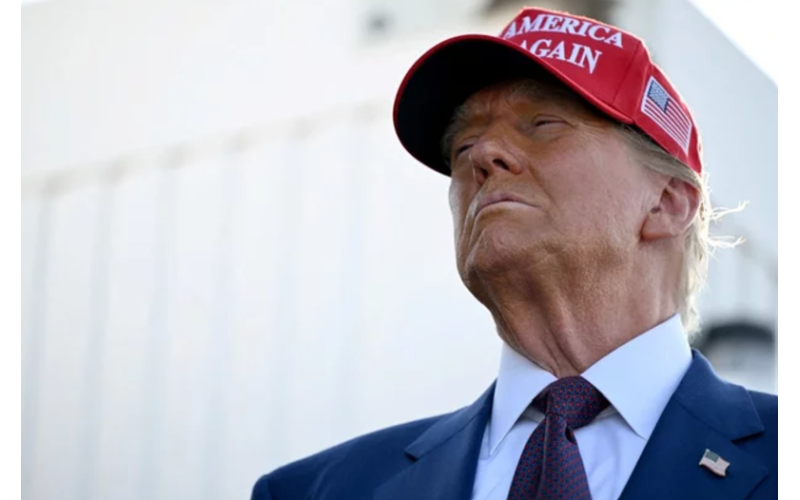
highlighted America’s renewed engagement with Africa. But as Donald Trump
prepares for his second term in office, questions arise about the future of
US-Africa relations, and whether this engagement will continue.
Mr Trump’s first term, characterised by an
inward-focused ‘America First’ agenda, showed the need for Africa to
recalibrate its strategies – particularly in strategic geopolitical and
security engagements. Several key issues at bilateral, regional and continental
levels will be impacted by his second-term policies and the priorities of his
inner circle.
Mr Trump’s return presents African countries with an
opportunity to take a proactive stance in shaping their political and economic relations with the US and developing
resilient strategies instead of reacting to shifting US policies.
Key bilateral relationships, particularly between the
US and South Africa, are expected to shift – stemming from US opposition to
South Africa’s International Court of Justice (ICJ) case against Israel
over Gaza, and the country’s close ties with China and
Russia.
In particular, South Africa’s neutral position on the
Russia-Ukraine war will be a point of tension in a second Trump presidency. The
president is also opposed to South Africa’s growing partnership with China,
which is amplified by China’s efforts to direct global trade away from the US
and BRICS’ attempt at de-dollarisation, a move criticised by
Mr Trump.
Notable figures in Mr Trump’s camp will also likely
affect US-South Africa relations. For example, Marco Rubio, the presumptive
Secretary of State and a strong critic of China, condemned South Africa’s
decision to downgrade Taiwan’s embassy.
Mr Trump’s pick for UN Ambassador, Elise Stefanik, was
part of a petition condemning South Africa’s ICJ case against Israel, calling
it an attempt to ‘demonise’ Israel. Michael Waltz led a push to review US-South Africa ties, a move Mr Biden
resisted, but with Ms Waltz as Trump’s pick for National Security Advisor, it
could gain momentum.
South Africa assumed the G20 chair on 1 December and
will host the 2025 Johannesburg summit. The country now faces a dual challenge
of maintaining neutrality while addressing growing geopolitical divisions –
seeking to build consensus among G20 members and an expanded BRICS group while
managing a more isolationist US under Mr Trump’s leadership.
This also presents an opportunity for Pretoria to
spotlight African priorities on the global stage, especially with the African
Union (AU), now a full member of the G20. With the US succeeding South Africa
as chair, this transition could pave the way for a possible Cyril
Ramaphosa-Trump engagement within the year, offering a critical window for
dialogue and potential recalibration of relations.
In East Africa, Kenya’s newly elevated status as a
major non-North Atlantic Treaty Organization (MN-NATO) ally could offer Nairobi
some bargaining chips in the international space. Despite Mr Trump’s America
First policy and negative views on NATO, he may temper his approach by
focusing on strategic bilateral partnerships with MN-NATO allies, like Kenya.
The new US administration will probably continue its
security relations in East Africa and the Horn – largely due to Mr Rubio’s
visit to Kenya and Somalia in 2019, part of a bipartisan oversight mission for
the Senate Select Committee on Intelligence.
Furthermore, because of the declining US security
influence in West Africa, resulting from successive coups and the subsequent
expulsion of US troops from Niger, maintaining the security partnership with
Kenya is expected to remain a priority.
And given the Kenya-led Multinational Security Support
(MSS) mission in Haiti, US-Kenya bilateral engagements might move the needle
towards securing commitment to America’s over $300 million funding pledge to
the mission. However, this would be a tall order given the Trump camp’s
reluctance to fund the UN, and peacekeeping in particular – despite the
US proposing the resolution to replace the Kenyan-led
MSS with a UN mission.
Mr Trump’s preference is for strategic partners to
take up more of the burden without the US overextending its resources – so
Kenya must look beyond the US for support.
On the regional front, perhaps the most contentious
area is the Horn of Africa. The controversial Project 2025 document of
proposals produced by the conservative Heritage Foundation chapter on the State
Department includes the recognition of Somaliland as a hedge against China’s
growing influence in Djibouti.
This aligns with former Assistant Secretary for
African Affairs Tibor Nagy, who served in Mr Trump’s first term and advocated
for its recognition. Although denied by Mr Trump, Project 2025 is predominantly
written by key former Trump officials, including the State Department chapter
author, Kiron Skinner. Supporting this are optimistic statements of Somaliland recognition from former
UK defence secretary Gavin Williamson after discussions with Mr Trump’s policy
leads.
This could complicate US-Somalia and US-Ethiopia
relations, as it will intensify brewing tensions over Ethiopia’s Red Sea access
deal with Somaliland, much to the chagrin of Somalia, which has sought
alliances with Egypt and Eritrea to counter them. Whether this is followed
through will be crucial in determining the success of the AU’s
Ethiopia-Somalia mediation efforts.
On a continental level, how the US responds to United
Nations Security Council (UNSC) reform proposals will matter to Africa. Current
UN Ambassador Linda Thomas-Greenfield has expressed support for Africa securing a permanent seat
(albeit without veto) on the UNSC. Will the Trump administration continue this
momentum?
Given Mr Trump’s first-term attempts at defunding the UN and preference for bilateral over
multilateral relations, momentum for UNSC reform in Africa’s favour will
unlikely increase under Mr Trump’s second term. Regardless, Africa must address
its internal divisions on how the two seats outlined in the Ezulwini Consensus will be allocated.
A more consequential area facing US-Africa relations
would be the US’s position and contribution to UNSC Resolution 2719, a mechanism designed to fund
AU-led peace support operations (PSOs). America is the largest contributor to
UN PSOs, at 27 per cent of the 2023-24 $6.1-billion budget. Within months of Mr
Trump’s first term, the US successfully lobbied to reduce the UN peacekeeping
budget by $600 million, although they aimed for an initial $1 billion
reduction.
Although the resolution will be maintained, the
case-by-case basis on which authorisation must be supported might present a
significant challenge for Africa. UNSC discussions on implementation of 2719 in
Somalia, for example, attract a strong negative US pushback.
Whether Mr Trump maintains America’s renewed focus on
Africa will depend on aligning US and African interests – despite their
diversity – and Washington’s push to counter Russia and China’s growing
influence. Regardless of the US’s policy trajectory, Africa must be prepared.
Comments:
Leave a Reply