

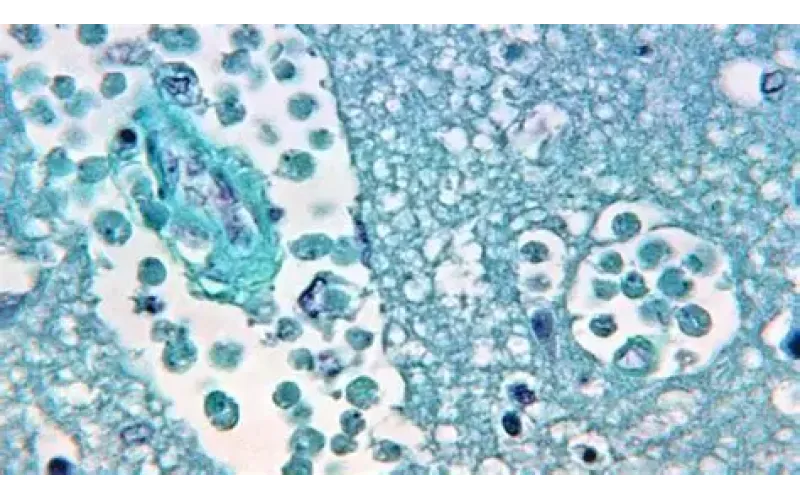
Authorities have confirmed 19 deaths and 72
infections from Naegleria fowleri — a rare but deadly amoeba often
dubbed the “brain-eating amoeba” — this year, including nine deaths and 24
cases in September alone.
Dr. Altaf Ali, a member of the government task force
tackling the spread, told AFP that officials were conducting large-scale
testing across the state to detect and treat cases early. “It’s worrying that
new cases this year have emerged from across the state, as opposed to specific
pockets in the past,” he noted.
The amoeba thrives in warm freshwater sources such as
lakes and rivers. It infects humans when contaminated water enters the nose,
traveling to the brain where it destroys brain tissue. It is not spread
person-to-person.
The US Centers for Disease Control and Prevention
(CDC) warns that infections, though “very rare,” are almost always fatal,
with a mortality rate of over 95%. Symptoms progress rapidly from fever,
headache, and vomiting to seizures, hallucinations, and coma, according to the World
Health Organization (WHO).
In 2024, nine people died from 36 reported cases.
Since 1962, nearly 500 cases have been recorded globally, with most
reported in the United States, India, Pakistan, and Australia.
Comments:
Leave a Reply