

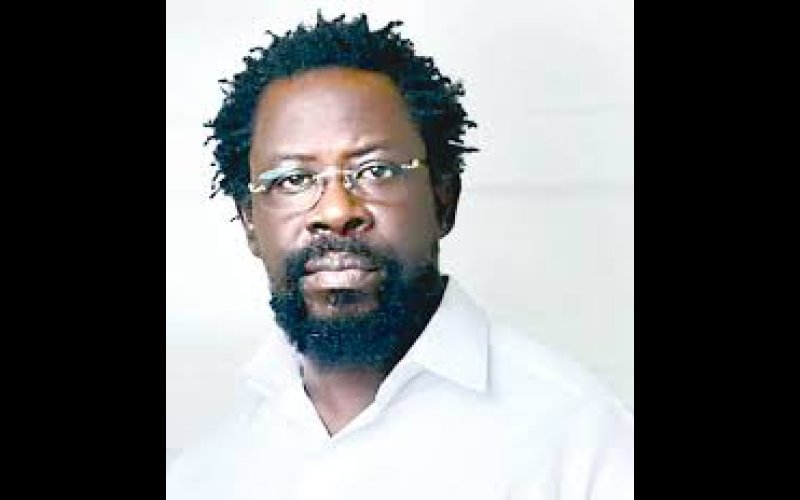
Prominent among the CSOs that signed a statement made
available to the media are Global Rights, Yiaga Africa, The Kukah Centre,
International Press Centre (IPC), Cleen Foundation, Accountability Lab, Amnesty
International Nigeria, BudgIT, and Media Rights Agenda, among others.
They condemned the arrest, detention, persecution, and
torture of the human rights activist. Additionally, they faulted the treatment
of the case involving Farotimi as a criminal rather than a civil one.
They wrote: “While the court sitting in Ekiti has
granted him bail, we maintain that the manner of his arrest was an aberration
and that Mr Farotimi should never have been subjected to the criminal justice
process.
Additionally, the prohibitive terms of bail for what
is supposed to be a misdemeanour raise the real possibility that Mr Farotimi’s
right to be tried – as required by Nigeria’s constitution – by a court
constituted in such a manner as to guarantee its independence and impartiality
cannot be guaranteed.”
They pointed out many troubling aspects of Mr
Farotimi’s encounter with Nigerian law enforcement, beginning with the
“unnecessarily aggressive and confrontational manner in which the arrest was
effected.”
They decried the unprofessional and violent nature of
the police officers, captured on CCTV footage, who crossed state lines to
arrest him.
“The officers were not dressed in uniform and could
have passed as armed thugs. They also threatened Mr Farotimi’s staff for no
reason after unlawfully seizing their phones. The brutal manner of his arrest
suggests the apprehension of a bandit on a most-wanted list rather than a
publicly accessible human rights lawyer.”
According to them, the reason given was even more
troubling than the manner of the arrest.
They went on: “Before he was unlawfully ‘picked up’
from his office on the 2nd of December, Mr Farotimi had foretold the Nigerian
public of his impending arrest. In a press release from his office a day
before, he stated that the police had invited him to answer for specific claims
he had made in his most recent book, Nigeria and its Criminal Justice System.
“Mr Farotimi went on to state that his impending
arrest was being orchestrated by two powerful individuals, Tony Elumelu and
Chief Afe Babalola CFR, SAN, who were displeased with the unflattering
depictions Mr Farotimi had made of them in his book. Rather than challenging
his claims by suing him for defamation in civil court, they decided to wield
their enormous influence to have him arrested, detained, and charged to court
for a crime that does not exist in the jurisdiction of his arraignment.”
The CSOs contended that defamation is a civil matter
and should be treated as such.
“Section 4 of the Police Act 2020 forbids the police
from entering civil matters. In an orderly society built on the rule of law,
those contending the veracity or otherwise of the claims Mr Farotimi made in
his book or who feel he has defamed them in any of his writings or speech would
seek justice in the civil court, where Mr Farotimi would have had to defend his
claims or provide redress should he have been found to have maligned their
character.
“When a person feels that his or her reputation has
been tarnished, the law creates opportunities for redress in civil court.”
As Nigeria’s Supreme Court pointed out in 2021,
criminal defamation was invented by the ‘Star Chamber’ in late Mediaeval
England. That is why it has been written out of the law in most states in
Nigeria and many other Commonwealth countries. It should have no place in the
books of a Republic.
“Another troubling aspect of this saga is that the
police charged Mr Farotimi before a Magistrate Court in Ekiti State on 16
counts of criminal defamation. However, the crime of criminal defamation is
unknown to Ekiti State’s Criminal Law of 2021, which currently spells out the
criminal law regime in Ekiti State. It also does not exist in the Criminal Code
of Lagos, where Mr Farotimi resides, works, presumably wrote his book, and was
abducted.
“Our Constitution provides in Section 36(12) that
‘subject as otherwise provided by this Constitution, a person shall not be
convicted of a criminal offence unless that offence is defined and the penalty,
therefore, is prescribed in a written law.’”
They also flayed the police for charging Farotimi
before the Magistrate Court for a “crime” that the court did not have
jurisdiction to entertain, describing it as an abuse of legal processes.
They made four demands: That the charges against Mr
Farotimi be immediately dropped and he be released without preconditions; that
all laws supporting criminal defamation in Nigeria’s criminal jurisprudence be
immediately repealed, and cases initiated under those laws struck out by the
courts; that those who feel Mr Farotimi wrongfully tarnished their reputations
with the claims he made in his book should seek redress in civil court and that
the Inspector-General of Police ensure law enforcement agents cease being a
willing tool of the powerful to oppress law-abiding citizens.
Comments:
Leave a Reply