

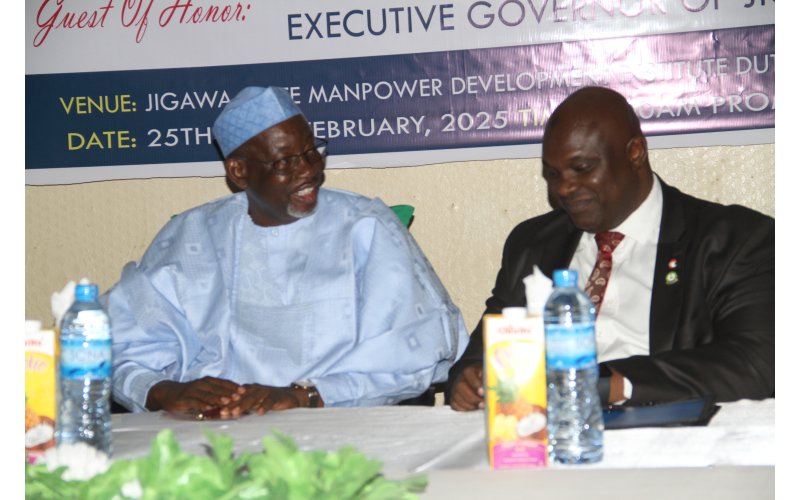
The Kano Zonal Director of the Economic and
Financial Crimes Commission, EFCC, Commander of the EFCC, CE Ibrahim
Shazali, has called on public servants in Jigawa State to embrace integrity,
accountability and transparency in the discharge of their duties.
He made the call in Dutse on Tuesday, February
25, 2025 while presenting a paper titled "Corrupt Practices and
Punishments in Government Businesses" delivered at a three-day
sensitisation workshop organised by the Jigawa State Public Complaints and
Anti-Corruption Commission.
In his presentation, Shazali emphasized the need for
public servants to lead by example in the fight against corruption. He
highlighted the detrimental effects of corrupt practices on national
development and warned that offenders risk imprisonment, asset forfeiture, and
disqualification from public office under Nigeria’s anti-corruption laws.
The Zonal Director commended the Jigawa State Public
Complaints and Anti-Corruption Commission for organising the workshop and
reiterated the EFCC’s commitment to investigating and prosecuting financial
crimes. He urged participants to report suspicious activities and become
ambassadors of change in their workplaces.
While appreciating JSPCACC for organizing the
workshop, the EFCC’S Director also congratulated the agency on its one
year anniversary since inauguration. He described its establishment as well
-thought -out and timely.
‘’I would like to extend my gratitude to the
leadership of the Jigawa State Public Complaints and Anti-Corruption Commission
(JSPCACC) for organizing this great event which is very timely to educate
public servants on issues of government management and inform them about
corruption and its vices. This will surely strengthen integrity,
accountability, and ethical governance”, he said.
He said that the establishment of JSPCACC will
complement the efforts of the federal anti-corruption agencies like the
EFCC, ICPC and CCB’’. Shazali further described corruption as a common enemy
that should be collectively fought. “Corruption remains a significant
challenge in Nigeria, eroding public trust, stifling economic growth and
perpetuating inequality. As public servants, we have a collective
responsibility to combat this menace and uphold the principles of transparency,
accountability and integrity”, he said.
‘’Stressing further, he pointed out that,
“corruption in government affairs is not merely an administrative flaw,
it is a fundamental threat to governance, development, and public trust.
It manifests in various forms, including bribery and kickbacks in public
contracts and procurement processes, embezzlement and misappropriation of funds
meant for essential public services, abuse of office and favoritism that
undermine meritocracy and efficiency contract inflation and kickbacks, among
others”.


Comments:
Leave a Reply