

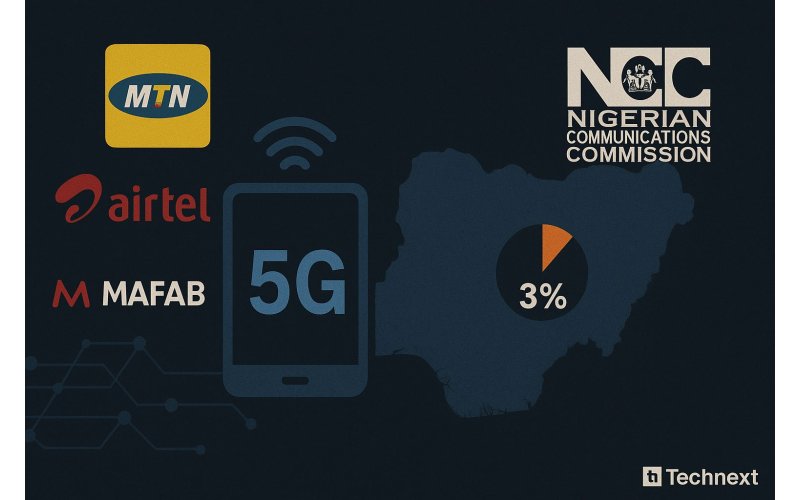
Despite significant investment by telecom operators,
only 3% of Nigeria’s internet subscribers—around 4 million users—are
currently using the ultra-fast 5G network, according to the latest data
from the Nigerian Communications Commission (NCC).
The NCC report highlights that 4G has overtaken 2G
as the dominant mobile technology, accounting for 44.96% of subscribers.
Meanwhile, 2G accounts for 43.53%, and 3G for 9.32%.
By contrast, global 5G adoption has surged,
with more than 1.5 billion connections worldwide by the end of 2023,
making it the fastest-growing mobile broadband technology. The GSMA projects
Africa will have over 340 million 5G connections, with the technology
expected to contribute $26 billion to the continent’s economy by 2030,
benefiting sectors like retail, agriculture, and manufacturing.
Challenges Slowing Nigeria’s 5G Growth
Nigeria has licensed three operators to provide 5G
services, but only MTN and Airtel have rolled out networks, while Mafab
Communications has yet to deploy a single mast, despite a public launch in
January 2023.
A key barrier is device affordability. Many
users lack 5G-compatible smartphones, which are priced around $150.
Analysts say adoption would surge if prices fell below $50, similar to
4G-enabled devices. The GSMA has called on African governments to remove
taxes on sub-$100 devices, potentially reducing costs by up to 50% and
expanding access for the three billion people still offline.
Infrastructure Costs and Vandalism
High network deployment costs also hinder
expansion. Equipment is mainly imported from a small number of Western
manufacturers, making it expensive and vulnerable to currency fluctuations.
Dense fibre-optic backhaul, tower upgrades, and high power consumption add
further strain.
In 2023, NCC data showed industry-wide operating
costs rose by 50.92%, driven by diesel, security, and imported equipment
prices. Vandalism remains a major issue: MTN reported 5,478 fibre cuts in
2025, with repair and revenue losses totaling N27 billion ($23 million)
in 2023.
Path Forward for Nigeria’s 5G Vision
Experts suggest three main steps to accelerate
adoption:
1.
Lower device costs
through affordable smartphones tailored to the African market.
2.
Infrastructure sharing
among operators to reduce expenses on towers, fibre networks, and power.
3.
Digital skills and local services
to ensure coverage translates into meaningful connectivity.
While satellite solutions like Starlink can
extend reach to remote areas, real progress depends on affordable devices,
shared infrastructure, and localised digital services, ensuring Nigeria’s
5G ambitions translate into widespread participation.
Comments:
Leave a Reply