

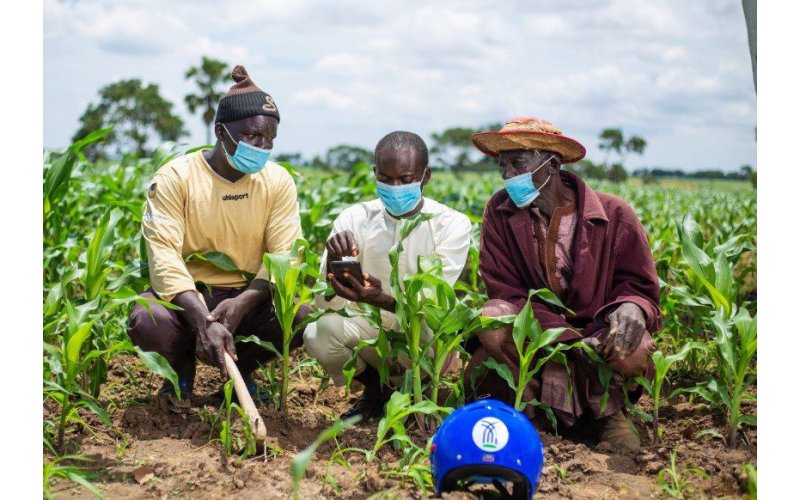
Nigerian agri-tech startup Babban Gona has
raised $7.5 million in debt funding from the British International
Investment (BII) to expand its support for smallholder farmers across
Northern Nigeria.
The funding, announced Monday, will enable the company
to scale its climate-resilient agricultural model, strengthen food security,
and improve the livelihoods of about 150,000 farmers by 2029.
Founded in 2012 by Kola Masha, Babban
Gona—meaning “Great Farm” in Hausa—was established to address Nigeria’s
high unemployment and food insecurity by empowering smallholder farmers with
finance, training, and technology-driven solutions. The company currently
supports over 110,000 farmers across 15 northern states, including
Kaduna, Kano, Katsina, Bauchi, Plateau, Jigawa, and Abuja.
Impact and Vision
For Masha, who serves as managing director, the new
financing represents both recognition of the startup’s impact and an
opportunity to accelerate its vision.
“This investment will catalyse the next phase of our
journey as we enable others to replicate what we do, with a goal to support 50
million smallholder farmers,” Masha said. “It is a powerful testament to
Babban Gona’s vision of shaping lives and strengthening food security.”
The $7.5m raise marks Babban Gona’s first external
funding in over a decade; its last capital injection was a much smaller public
debt raise in 2013.
Backing from British International
Investment
Benson Adenuga,
BII’s West Africa regional director and head of office for Nigeria, said the
collaboration demonstrates confidence in Babban Gona’s high-impact model.
“By backing this pioneering franchise model, we are
not only addressing a critical financing gap but also helping to build a more
resilient and productive agricultural sector in a region often overlooked by
investors,” Adenuga noted.
Technology for Agriculture
Alongside credit financing, Babban Gona leverages artificial
intelligence, trained with more than 2 million images, to help
farmers detect and manage crop-related issues. Its model also includes Trust
Groups—farmer cooperatives of 3–5 members—who undergo agronomy, financial
literacy, and leadership training via the Babban Gona Farm University before
accessing low-interest loans.
Agriculture’s Role in Nigeria’s Economy
Agriculture remains a cornerstone of Nigeria’s
economy, employing 34% of the workforce and contributing 28.65% to
GDP in Q3 2024. Despite modest growth of 0.18% in Q1 and 1.14% in Q3 last
year, the sector faces chronic underinvestment. Startups like Babban Gona are
increasingly seen as key to unlocking productivity, creating jobs, and building
climate resilience.
With the fresh capital from BII, Babban Gona is
positioning itself as a model for sustainable agri-tech investment in Africa,
blending technology, finance, and grassroots empowerment to transform farming
at scale.
Comments:
Leave a Reply