

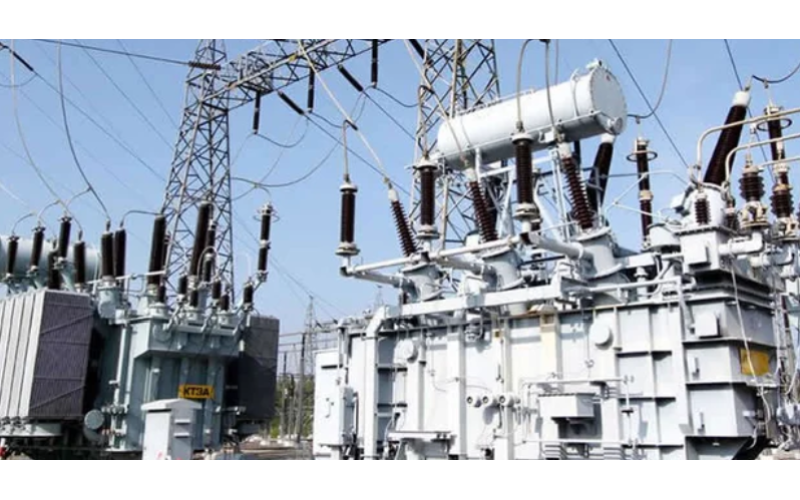
The Nigerian electricity sector is facing a grim
outlook, says Mr Chinedu Bosah, the National Coordinator of the Coalition for
Affordable and Regular Electricity (CARE).
Bosah raised the alarm on Wednesday in an interview .
He said it was essential to address the issues
plaguing the industry.
According to him, the performance of Distribution
Companies (DISCOs) in 2024 has been “abysmal.”
Bosah said the sector was marked by widespread
consumer complaints about erratic power supply and sky-high electricity
billing.
The energy expert criticised the DISCOs for
prioritising profits over infrastructure investment, which had left the power
supply system in disarray.
One of the significant issues affecting the sector,
according to him, is the pervasive problem of estimated billing.
“Approximately 55 per cent of households connected to
the national grid, around seven million, still lack meters.
“Meters, which should be provided free of charge by
the DISCOs, have become an expensive commodity due to a profit-driven meter
supply mechanism.
“In 2024, many consumers were forced to purchase
prepaid meters at exorbitant prices from Meter Asset Providers (MAP),
exacerbating the financial strain on households.
“This is a clear example of how the privatisation of
the sector has turned it into a money-spinning venture at the expense of
ordinary Nigerians,” he said.
The electricity tariffs have also soared, with Bosah
warning that the current structure is becoming unaffordable for many Nigerians.
He compared the high Band A tariff to an
“apartheid-styled” system, where only the wealthy could afford power, leaving
the majority in darkness or consuming minimal electricity.
According to him, this is a stark reminder that
electricity should be considered a basic right, not a privilege.
Bosah argued that the sector needed to shift away from
privatisation and toward a more democratic control, where the needs of the
people are prioritised over profits.
He also noted that vandalism of electricity
infrastructure was another persistent issue, attributed to rising poverty and
the lack of effective policing.
Bosah emphasised the need for stronger community
engagement and democratic control over local security forces to protect
critical power infrastructure.
“A significant factor contributing to the sector’s
crisis is the shortage of gas for power generation.
“As a country rich in oil and gas resources, Nigeria
should be investing more in gas exploration and transportation to ensure a
steady and affordable supply for power plants.
“However, the government’s lack of investment and
reliance on multinational companies have led to high gas prices, further
compounding the sector’s challenges,” he explained.
Bosah called for a reduction in gas prices from $2.4
per MMBTU to below $1 per MMBTU to enable more power generation and improve the
economy.
According to him, the Transmission Company of Nigeria
(TCN), which manages the country’s electricity grid, has also faced severe
shortcomings in 2024.
Bosah criticised the outdated infrastructure and
frequent grid collapses, which left the nation in darkness for hours at a time.
“The most recent grid failure, which occurred on Dec.
11, marked the 12th collapse of the year.
“This highlighted the pressing need for modernisation
and investment in the transmission network.
“The core issues in Nigeria’s power sector—neglect,
lack of investment, and failed privatisation—have led to a system in disarray,
with generating plants operating at a fraction of their installed capacity.
“Despite having the potential to generate 14,000MW of
electricity, the country struggles to produce even 4,000MW on average, further
illustrating the scale of the crisis,” he said.
He added that if public funds “currently being
misallocated” were invested in the power sector, Nigeria could achieve
affordable, uninterrupted power supply.
The solution, he insisted, was in nationalising the
sector and placing it under the democratic control of workers and communities.
Bosah said without such a bold step, the sector would
continue to suffer, with the current state of chaos and underperformance
extending into 2025 and beyond. (NAN)
Comments:
Leave a Reply