

A battle on the electoral turf has just been
won and lost in Edo State, Nigeria. Governor Godwin Obaseki was elected as Governor in 2016
on the platform of the All-Progressive Congress (APC) in that state. By 2019,
he had fallen out of favour with the Godfather that brought him to power,
former Nigerian Labour Congress President, and former Governor of Edo State for
eight years (2008 – 2016), now Senator Adams Oshiomhole. In due course,
Oshiomhole left the PDP and pitched his tent with the APC where he would later
rise to the position of the National Chairman of the Party. In 2020, Obaseki
crossed over to the Peoples’ Democratic Party and successfully upstaged his
Godfather to get a second term in office. His tenure in office ends on November
11, 2024. Hence, there has been a lead up to Gubernatorial elections in Edo
State to mark the effective end of Obaseki’s tenure, the Nigerian Constitution
providing for only two terms in office for Governors and the President. The
Gubernatorial election to see Obaseki out of office and to determine the next
occupant of the Osadebey Government House in Benin was held on Saturday,
September 21, with 17 candidates and political parties on the ballot.
We were eventually confronted with a three
horse-way race involving boardroom guru and lawyer, Asue Ighodalo of the PDP,
Senator Monday Okpebholo of the APC and former Nigerian Bar Association (NBA)
President, Olumide Akpata of the Labour Party (LP) as the leading contenders.
The voting took place in 4, 519 polling units, in the state’s three Senatorial
districts, with 35, 000 policemen in attendance along with 8, 000 other
security agents – military, EFCC and the Civil Defence Corps. Total number of
registered voters in the election was 2, 629, 025. Total number of 2, 249, 780
voters’ cards were collected. It was a high stakes election as seen in the
febrile drama that led to the election, with the incumbent Governor saying it
was a do-or-die election in which the Federal Government was determined to rig
in favour of the APC candidate, creating a Federal Might vs. The People’s might
encounter. The PDP further alleged that the state police command and the state
resident INEC commissioner were known associates of former Governor of Rivers
State, now Minister of the Federal Capital Territory, Nyesom Wike. The
Inspector General of Police, Kayode Egbetokun pledged that the police were
impartial and unbiased. Wike did not help matters by boasting openly on live television
that no Jupiter could change the police commissioner in Edo state and the INEC
resident commissioner and that he, Wike would not endorse either Ighodalo or
the PDP in Edo State. This is the same Wike who claims to be the political
leader of the PDP in Rivers State, but he is currently an unabashed agent of
the APC in deed and in words! No individual should be so brazen.
Instructively, Obaseki, the PDP and their
candidate refused to sign the Peace Accord that had been brokered by the
National Peace Committee, a respectable body of eminent men and women led by
Nigeria’s former Head of State, General Abdulsalami Abubakar, Bishop Mathew
Hassan Kukah and others. A Governorship debate that was organized for the
candidates was boycotted by the PDP and APC. Only the candidate of the LP
showed up to complain bitterly about the effrontery of the APC that offered to
send Senator Adams Oshiomhole who was clearly not the candidate to stand in for
Okpebholo. Similarly, Akpata condemned Ighodalo. There were fears about the
possible outbreak of violence and the breakdown of law and order. Poll watchers
and analysts pointed to a number of factors that could determine the September
21 election as follows: climate of fear and voter apathy, which could affect
voter turn-out, manipulation of votes, violence and ballot snatching, vote
buying or stomach infrastructure; voter suppression, current economic hardship,
neutrality of otherwise of the Independent National Electoral Commission (INEC)
and the security agencies, the influence of key political actors especially
Godfathers, Federal might and power of incumbency at both Federal and state
levels. When the battle was won and determined on September 21, against the
background of a slew of allegations and mixed reactions, INEC on September 22,
announced the results to the effect that Monday Okepbholo of the APC had been
validly elected, with 291, 667 votes, winning in 11 Local Government Areas,
Asue Ighodalo, the PDP candidate, with 247, 274 votes with majority in 7 LGAs,
and Olumide Akpata, of the LP with 22, 763 votes, without any majority in any
LGA, not even in his own polling unit. APC leaders have been singing and
dancing since then, claiming that God has blessed the words of their mouth,
that the APC would triumph. The PDP leaders believe that they have been robbed.
Gov. Obaseki calls this “a travesty and a tragedy”, a display of brute force and
a violation of the people’s right to choose. He has however asked that the
aggrieved should be calm and seek redress by following due process in
expressing their grievances. Asue Ighodalo, the PDP candidate alleges that the
Edo Election 2024, might be the worst ever in the history of this country.
Akpata says the votes went to the highest bidder. Mr. Peter Obi, Presidential
candidate of the LP has said this was a case of “state capture”.
My quick observation is that whatever happens
hereafter, perhaps at the election petition tribunal and the courts, both
Ighodalo and Akpata have put up a gallant and spirited challenge and there are
more people in and out of Edo State who consider them the better candidates in
the race. If the beauty of television advertisements alone could win elections,
the tally would have gone to Olumide Akpata. If the ability to speak English
grammar and a person’s pedigree mattered for anything in Nigerian politics, Ighodalo
would have won. What we have just been confronted with in Edo state is the
reality of Nigerian politics – where ideas, pedigree, brilliance – in the
context of a webbed transactional politics that compromise and overwhelm every
single factor in the process, do not matter.
In 1999, shortly after the election that
brought President Obasanjo and the PDP to power in Nigeria, election observers
had reported that Nigerian politicians had devised many methods of election
rigging, which some analysts identified in a well-publicized list. This led to
talks about electoral reform and the need to clean up Nigeria’s elections to
promote the common good. In 2003, and 2007, analysts had observed greater
sophistication in the corrupt manipulation of election results across the
country. It was so bad in 2007 that the Yar’Adua/Jonathan administration that
came to power openly admitted that the elections were flawed, and insisted that
the most urgent task before Nigeria was electoral reform. In 2015, Dr. Goodluck
Jonathan was a victim of his own insistence on the values of transparency,
integrity and accountability in elections. The APC leaders who succeeded him
could not care less. In 2021, it was a tough battle to get the amended
Electoral Reform Bill of 2010 signed by President Buhari. In fact, it was not
signed for flimsy reasons. In 2022, the National Assembly finally managed to
smuggle in an Electoral Act 2022, under which the 2023 general elections were
conducted. But in real terms, nothing has changed since 1999. Civil society
groups are still arguing for an Electoral Framework with the same old argument
that the extant Electoral Act is defective. The first lesson of Edo Election
2024 is that nothing has changed in Nigerian politics. The political parties,
the institutions, the politicians and the people have learnt nothing. The
people quotient of Nigerian democracy is weak, poor, disconnected. Edo State
has just confirmed our worst fears. There has been open, front-face evidence of
vote-trading. On Saturday, September 21, politicians and agents offered to buy
votes, with the cost now as high as N20, 000. It used to be cheaper to buy a
vote, but we are made to understand that the high inflation in the land and
economic hardship have both marked up asking prices. In Edo, they were selling
votes as if they were trading bags of tomatoes. Ballots were snatched. Ballot
papers were burnt. There were sporadic shootings if not an outright breakout of
violence. Yiaga Africa, one of the many civil society observer groups that
formed the Nigerian Situation Room observing the Edo election has reported that
the biggest problem was the failure of integrity.
The stakes were high. Edo 2024 was a revenge
operation among the Godfathers and the political actors. It has been said that
the loser in the election is not Asue Ighodalo (PDP) but Godwin Obaseki, the
incumbent Governor, seen to be the main supporter of Ighodalo, and who had
acquired a very powerful team of former allies turned “enemies”. These enemies
were determined to teach him a lesson for alienating them. Asue Ighodalo
probably chose the wrong party for as we see, there was nothing he could have
done to please the likes of Adams Oshiomhole, the Godfather whom Obaseki turned
against and embarrassed thoroughly and Philip Shuaibu, the Deputy Governor whom
Obaseki despised and humiliated. There were other anti-Obaseki political
actors: Dan Orbih, Anselm Ojezua, Osagie Ize-Iyamu and Kabiru Adjoto. Obaseki
was also considered unfriendly to the exalted throne of the Omo N’Oba. In Edo
state, anyone considered rude to the palace loses favour, even among the
people. The Oba once had cause to admonish Obaseki publicly to remember that
one day he would no longer be Governor and he should be guided accordingly.
That moment has arrived! It is Ighodalo who has now paid the price of this
undercurrent. Philip Shuaibu was on television yesterday boasting that he won
his polling unit, his ward and his LGA for Monday Okpebholo, the best record in
Edo State. He boasted that Obaseki was a non-politician that was brought from
Lagos and made a Governor. Obaseki in this last election did not win his ward
and LGA. He was outboxed, outthought, and bulldozed as Daniel Dubois did to
Anthony Joshua at the IBF boxing match at the Wembley Stadium the very same
day! In 2020, Obaseki boasted, while seeking a second term, that “Edo No Be
Lagos” in a subtle reference to Tinubu’s promise that he would return Edo State
to the APC. Over the weekend, the point would seem to have been made that “Edo
is now Lagos” and we saw the APC chieftains dancing. Shuaibu says Obaseki has
to come and beg the victors. That may not be an idle threat.
The security agencies have been praised for
overseeing a peaceful election in Edo State. But was it free and fair? Is the
outcome fair to all parties concerned? It would have been scandalous for the
security agencies to deploy a total of 43, 000 men, who could have been put to
better use to fight banditry and terrorism, to an off-cycle election and we
would have a breakdown of law and order. The architects of violence in Edo
State had to moderate their madness perhaps because the security presence was intimidating,
and oppressive. Edo State was like a war zone. Two days earlier, Nigeria’s
Chief of Defence Staff, General Christopher Musa was on the ground to address
his troops and the people, noting that he had express instructions from the
President, Commander in Chief to enforce peace in Edo State. Elections should
not be held with the gun pointed at the people’s heads. It should be a
peaceful, civil event where the people make informed choices freely and without
fear and pressure. Not surprisingly, voter turn-out in the Edo election was
low, despite the people’s obvious enthusiasm. Election observers put the voter
turn-out rate at 22.4% with a margin of error of +/- 1.6%, much lower than the
27% turn-out in the 2020 Edo Gubernatorial election. If this is a case of
apathy, then it means the people in Edo as elsewhere, are beginning to lose
faith in Nigeria’s electoral process.
INEC, the electoral umpire has featured
prominently in the various reports. The electoral umpire did well with BVAS and
accreditation but voting processes did not start early. As at 8:30 am only
about 17% of the voters had been accredited, by 11:51 am, about 64%. For an
off-cycle election in just one state, this was not good enough. There were
inconsistencies in the officially announced results, on IREV, the INEC portal.
At some point, the political parties and their agents felt obliged to take over
the collation process. Governor Adamu Fintiri of Adamawa state who was in
Benin, as Chairman of the PDP Campaign Council for the Edo election, had to do
his own collation and advise INEC not to delay the announcement of results in
outstanding three LGAs. Fintiri had to explain that he had not broken any law –
he merely announced what he found on the IREV portal. Nonetheless, INEC is the
only body empowered by law to announce any results. But Fintiri insists that
the Edo election was a rape of democracy and that the PDP candidate won. He
says he weeps for Nigeria because “democracy is under attack”. The desperation
of the various political personae casts doubts on the effectiveness of INEC in
the Edo election. There is no denying it: there is still the urgent need to
strengthen electoral institutions and address the challenge of reforms.
Obviously, no amount of law can transform Nigeria’s elections unless the people
themselves agree to change and the institutions function differently.
The Edo Gubernatorial election 2024 has taken
place against the background of the fact that many Nigerians have been
complaining about poor governance and hunger in Nigeria. In August, this class
of Nigerians openly expressed their anger and they are threatening to do so
again in October. In other climes, when people face economic hardship in the
hands of a sitting government, they express themselves through the polls when
they have the opportunity to do so. Nigeria is a strange country where a
political party’s performance in power does not really matter, and hence,
politicians get rewarded, regardless of how the people think or feel. It is
therefore not for nothing that an APC chieftain has remarked that the outcome
of the Edo election is an affirmation of the people’s confidence in President
Tinubu’s economic reforms. It is possible in Nigerian politics to say anything
when your party has won and has been declared winner. The standard rule in
Nigerian politics is for you to work on your strategy so well, whether in a
crooked manner or not, win and let the other party complain. Both PDP/Ighodalo
and LP/Akpata may be talking to their lawyers right now but while they are
spending more money paying lawyers, Monday Okpebholo would be sworn in on
November 11, 2024. With the Federal Might behind him, and powerful Godfathers
like Adams Oshiomhole, Nyesom Wike, Philip Shuaibu and the APC demolition
machinery involved, it would be difficult to upturn the results announced on
September 22. It is called realpolitik.
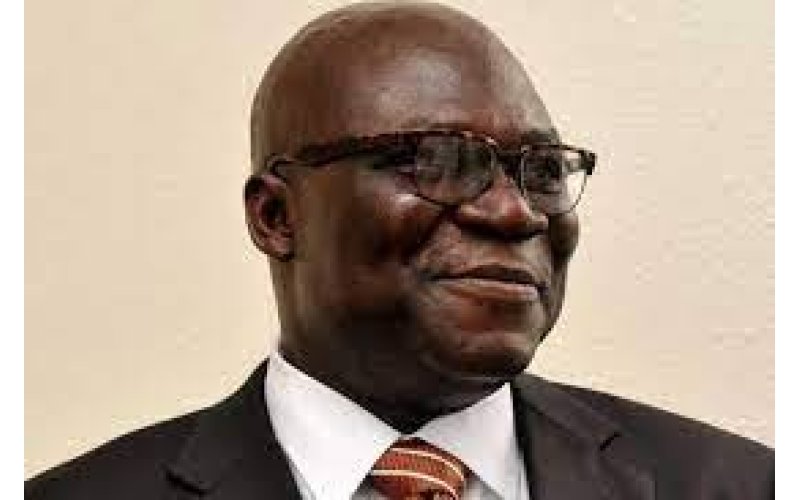
Reuben Abati is a host of the Morning Show on
Arise Television. He was the spokesperson and special adviser, media and
publicity to President Goodluck Jonathan (2011 – 2015). A former chairman of
the editorial board of The Guardian, Dr. Abati is one of the most respected
columnists in Nigeria. He writes his syndicated column twice a week. He tweets
from @abati1990
.
Comments:
Leave a Reply