

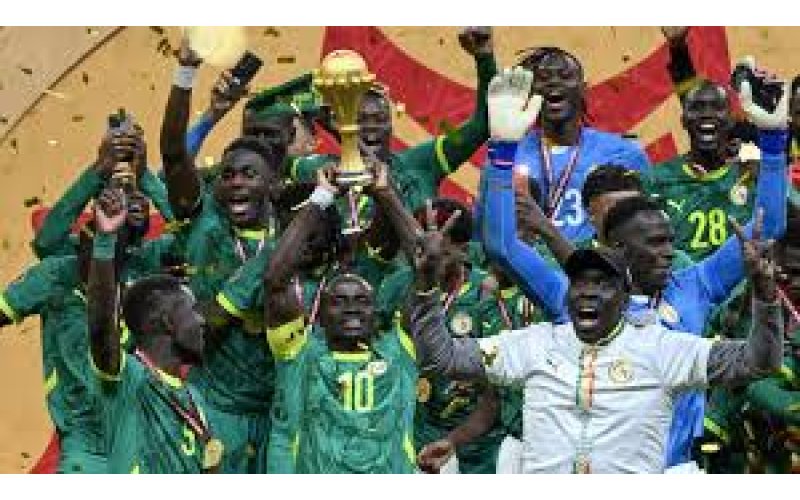
Tensions have escalated sharply in African football as
the Senegalese Football Federation (FSF) strongly criticized the Confederation
of African Football (CAF) over a controversial decision to strip Senegal of
their Africa Cup of Nations title.
FSF president Abdoulaye Fall described the ruling as
unjust and vowed to challenge it through both legal and administrative means,
calling the decision a serious threat to the integrity of the sport.
“This issue goes beyond a trophy,” Fall stated,
emphasizing that it raises deeper concerns about fairness, governance, and the
future of football decisions.
The controversy traces back to the AFCON final held in
Rabat on January 18, where Senegal initially left the pitch in protest
following a disputed penalty awarded to Morocco. Despite the disruption, the
team returned to complete the match and secured a 1–0 victory in extra time.
However, CAF’s appeal board later overturned the
result, declaring Senegal to have forfeited the match—a decision that has
sparked widespread debate.
In response, Senegal has taken the matter to the Court
of Arbitration for Sport (CAS) in Paris, seeking an urgent resolution. Leading
their legal effort is renowned sports lawyer Juan de Dios Crespo Perez, who
warned that allowing such decisions to stand could set a dangerous precedent
for football globally.
He argued that if match outcomes begin to be decided
in courtrooms rather than on the field, it could undermine one of football’s
core principles—that results are determined during play.
Senegal’s legal team is pushing for a fast-tracked
hearing to avoid prolonged uncertainty, stressing that the stakes involve not
just a title but also the credibility of the sport.
Meanwhile, the FSF has maintained its stance,
continuing to act as though Senegal remains champions. Plans have reportedly
been made to showcase the AFCON trophy to fans at the Stade de France ahead of
an international friendly against Peru—an apparent signal of defiance toward
CAF.
The outcome of the case could have far-reaching
implications. A ruling in Senegal’s favour may reinforce the authority of
on-field decisions, while a decision supporting CAF could reshape how football
disputes are handled in the future.
For now, the football world watches closely as the
dispute unfolds, with its potential to redefine key aspects of the game.
Comments:
Leave a Reply