

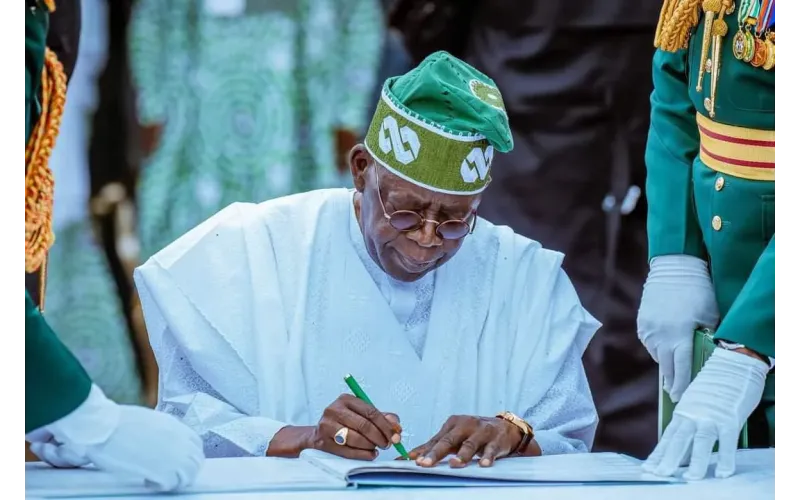
President Bola Ahmed Tinubu has approved a N3.3
trillion financial settlement aimed at clearing longstanding debts in Nigeria’s
electricity sector, in a move designed to stabilise power supply and rebuild
investor confidence.
The development was disclosed in a statement by
presidential spokesperson Bayo Onanuga, who explained that the decision
followed a comprehensive review of legacy debts accumulated between February
2015 and March 2025 under the Presidential Power Sector Financial Reforms
Programme.
According to the statement, the approved amount
represents a final settlement after a verification process, ensuring
transparency and fairness in resolving obligations owed to stakeholders in the
sector.
Implementation of the initiative is already in
progress. So far, 15 power generation companies have signed agreements covering
about N2.3 trillion of the total debt. Additionally, approximately N501 billion
has been sourced to support the process, with N223 billion already disbursed.
Speaking on the reform, the Special Adviser to the
President on Energy, Olu Arowolo-Verheijen, noted that the plan is not only
about settling debts but also about restoring functionality across the entire
electricity value chain.
She explained that ensuring timely payments to gas
suppliers and generation companies would help keep power plants operational and
improve the reliability of electricity supply nationwide.
The reform effort is also tied to broader structural
changes in the sector, including improved metering systems and the introduction
of service-based tariffs. These measures aim to ensure that electricity
consumers are billed in line with the quality of service they receive.
Government officials further emphasised that priority
would be given to industries and businesses, recognising the critical role of
stable electricity in driving economic growth, supporting productivity, and
creating jobs.
Authorities believe that clearing the debt backlog
will enhance liquidity within the sector, leading to improved generation
capacity and better service delivery. The presidency also confirmed that the
next phase of the reform programme, known as Series II, is expected to commence
within the current quarter.
Nigeria’s power sector has long faced persistent
challenges, including low generation output, recurring grid failures, and
frequent outages. Analysts have previously estimated that inadequate
electricity supply costs the country billions of dollars annually, while
businesses continue to rely heavily on alternative energy sources such as
generators.
The latest move is seen as a significant step toward
addressing these challenges and building a more efficient and sustainable power
system.
Comments:
Leave a Reply