

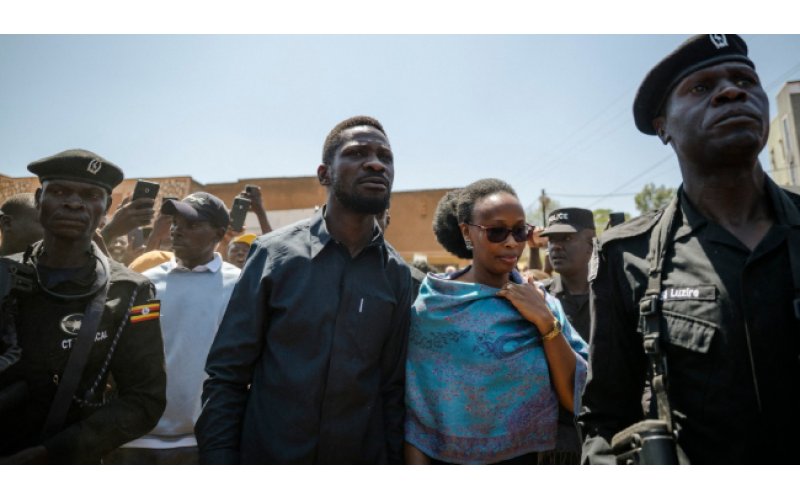
Ugandan opposition leader Bobi Wine said on
Saturday that he had escaped a police raid on his home and was in hiding, as
the country awaited the results of a tightly contested election conducted under
an internet blackout.
Earlier reports suggested that Wine, whose real name
is Robert Kyagulanyi, had been forcibly taken from his home by an army
helicopter on Friday, a day after elections marred by reports of violence.
With final results due around 1200 GMT on Saturday, President
Yoweri Museveni, 81, appeared poised to extend his 40-year rule,
maintaining a commanding lead over Wine. The election has been marked by
allegations of intimidation, violence, and suppression of opposition
activities.
Wine, 43, a former singer and now prominent
politician, confirmed on social media that he had evaded authorities.
“Currently, I am not at home, although my wife and other family members remain
under house arrest. I know that these criminals are looking for me everywhere,
and I am trying my best to keep safe,” he posted on X.
Security was heavily deployed across the capital,
Kampala, with police and military personnel controlling access to areas
considered “security hotspots” to prevent potential unrest.
“We have not necessarily denied people access, but we
cannot tolerate instances where his residence is used to gather and incite
violence,” police spokesman Kituuma Rusoke told reporters.
Residents reported heightened fear following the raid.
“Many people have left the area. We have a lot of fear,” said 29-year-old
stall-owner Prince Jerard, describing the presence of drones and helicopters
around Wine’s home.
With more than 90 percent of votes counted, the Electoral
Commission reported Museveni leading with 71.9 percent, against Wine’s 24.5
percent. Wine has accused the government of massive ballot-stuffing and
targeting his party members under the cover of an internet shutdown, which
remained in effect as of Saturday.
African Union election observers, represented by
former Nigerian President Goodluck Jonathan, said they saw no direct
evidence of ballot-stuffing but condemned reports of intimidation, arrests, and
abductions, which they said had “instilled fear and eroded public trust in the
electoral process.”
Analysts have long viewed the Ugandan election as a
formality, noting Museveni’s control over the state and security apparatus.
Past challengers, including opposition leader Kizza Besigye, have faced
abductions and ongoing trials. Reports also emerged of at least 10 campaign
agents being killed, though police disputed the figures, claiming opposition
members attempted to overrun local polling centers.
Comments:
Leave a Reply