

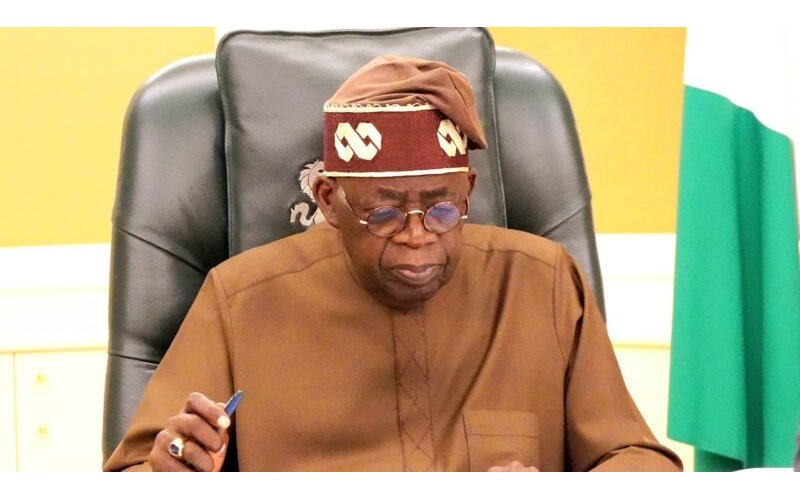
The Director-General of the United Nations-affiliated
Institute of Law Research and Development (ILAWDUN), Professor Cyprian
Edward-Ekpo, has called on President Bola Tinubu to reverse the state of
emergency imposed in Rivers State, warning that the action poses a grave threat
to Nigeria’s democracy and international reputation.
In a letter dated March 28, addressed to the
president, Edward-Ekpo, a professor of international environmental law,
criticized the emergency declaration as unconstitutional and damaging to
Nigeria’s global image. He said the move undermines the democratic principles
that President Tinubu once espoused as a pro-democracy figure in the 1990s.
Background to the Crisis
On March 18, President Tinubu declared a state of emergency in Rivers State
following a prolonged political crisis and the vandalisation of critical oil
infrastructure. The president also suspended Governor Siminalayi Fubara, his
deputy Ngozi Odu, and all members of the Rivers State House of Assembly for six
months.
In their place, he appointed Retired Vice Admiral
Ibok-Ete Ibas as sole administrator of the state. The National Assembly
approved the emergency measures on March 20, in a move that sparked widespread
criticism and legal debate.
Ibas later suspended all political officeholders in
Rivers on March 26, further escalating the situation.
“A Crisis of Confidence”
In his letter, Edward-Ekpo noted that while he initially considered taking the
matter to the Supreme Court, he ultimately declined due to “growing scepticism”
about the independence of Nigeria’s judiciary.
“It has become a widely held global perception that
Nigeria’s judicial system suffers a crisis of confidence. Many have lost faith
in the court’s integrity, moral standing, and intellectual credibility,” he
wrote.
The legal scholar warned that Tinubu’s actions could
irreversibly damage his legacy as a democratic leader.
Global Repercussions
Edward-Ekpo cited recent incidents involving Nigerians abroad as evidence of
Nigeria’s eroding international credibility.
“Just a few days ago, a reputable individual was
denied the opportunity to rent office space in Washington, D.C., simply because
he was Nigerian. Similarly, a business partner withdrew from a tripartite
investment contract due to the designation of Nigeria as the venue for dispute
resolution,” he stated.
“Beyond concerns about fraud—often driven by economic
desperation and weak social systems—Nigeria’s greatest reputational burden is
its judiciary.”
“A Leader’s Legacy at Stake”
Reminding the president of his past as a renowned pro-democracy advocate,
Edward-Ekpo said the handling of the Rivers crisis has cast a long shadow over
the president’s political identity.
“It has shattered the image of a once-principled
political stance. It has cast doubt on the democratic values you once
embodied,” he added.
The professor concluded by stating unequivocally that
President Tinubu lacks the constitutional power to suspend an elected governor,
and urged a swift reversal of the emergency measures.
Comments:
Leave a Reply