

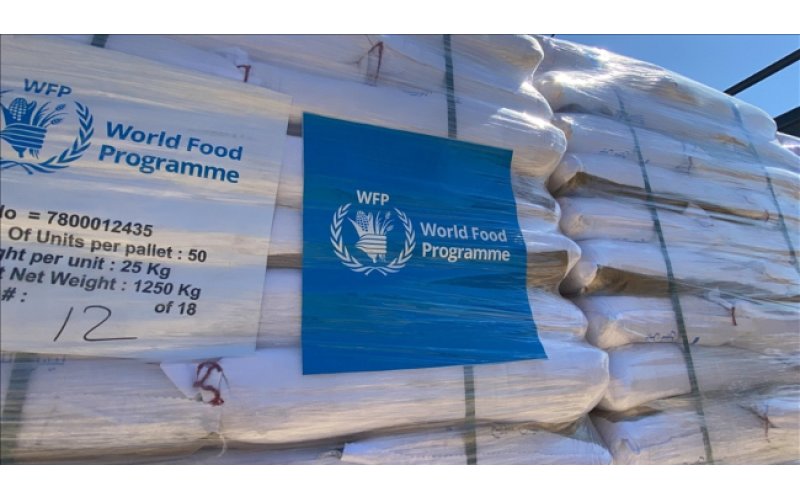
The United Nations World Food Programme (WFP) has
warned that thousands of people in northeast Nigeria are facing the risk of
catastrophic food shortages for the first time in nearly a decade, as funding
cuts worsen hunger and malnutrition across the region.
In Borno State alone, about 15,000 people are at
immediate risk, while more than 13 million children across Nigeria’s northeast
are projected to suffer malnutrition this year, according to the agency.
Years of conflict, displacement and economic hardship
have already left communities struggling to access food, but recent reductions
in humanitarian assistance are now pushing vulnerable families beyond their
coping limits.
“The reduced funding we saw in 2025 has deepened
hunger and malnutrition across the region,” said Sarah Longford, WFP’s Deputy
Regional Director for West and Central Africa.
The warning extends beyond Nigeria. Across West and
Central Africa, an estimated 55 million people are facing severe food
shortages, with more than three-quarters of those affected living in Nigeria,
Chad, Cameroon and Niger.
While the WFP did not specify the exact funding gaps,
humanitarian agencies have repeatedly raised concerns since the United States
began cutting foreign aid under its “America First” policy, alongside similar
reductions by the United Kingdom and other countries redirecting spending
toward defence.
Funding shortfalls in 2025 have already forced the WFP
to scale back nutrition programmes in Nigeria, affecting over 300,000 children.
The agency previously warned that nearly 35 million Nigerians could face hunger
as resources dwindled at the end of last year.
“In Nigeria, WFP will only be able to assist about
72,000 people in February,” the statement said, a sharp drop from the 1.3
million people supported during the 2025 lean season.
Elsewhere in the region, ongoing insecurity in Mali
has disrupted key food supply routes, leaving 1.5 million people facing
crisis-level hunger. In Cameroon, more than 500,000 people could soon be cut
off from aid entirely.
The WFP said it urgently requires more than $453
million over the next six months to maintain life-saving humanitarian
operations across West and Central Africa.
Without immediate funding and coordinated action, the
agency warned that the region’s most vulnerable populations face yet another
devastating year.
“To break the cycle of hunger for future generations,
we need a paradigm shift in 2026,” Longford said. “Governments and partners
must invest more in preparedness, anticipatory action and resilience-building
to empower communities and reduce long-term dependency on aid.”
Comments:
Leave a Reply