

Every day, 40-year-old Landry Obame-Mezui drives a
taxi through the streets of Libreville, Gabon’s capital. But it’s not just any
taxi—it’s a gleaming white car labeled “Taxi Gab+,” part of a government scheme
introduced by transitional leader Gen Brice Oligui Nguema.
Obame-Mezui, once a driver for someone else, now owns
his car through a hire-purchase initiative launched by Oligui Nguema, who
seized power in August 2023. With youth unemployment around 40%, the program
has offered over 800 new vehicles to young people, helping some take their
first steps toward entrepreneurship.
“Before August 30, things weren’t going as I wished,”
says Obame-Mezui, leaning against his car. “Today, I have something stable to
build on.” On his taxi roof, a slogan makes his political stance clear: “I will
vote for the builder Oligui Nguema.”
Nineteen months after the peaceful coup that ended
more than five decades of Bongo family rule, Gabonese citizens are preparing to
elect a new president. And the man who led the coup is now the frontrunner.
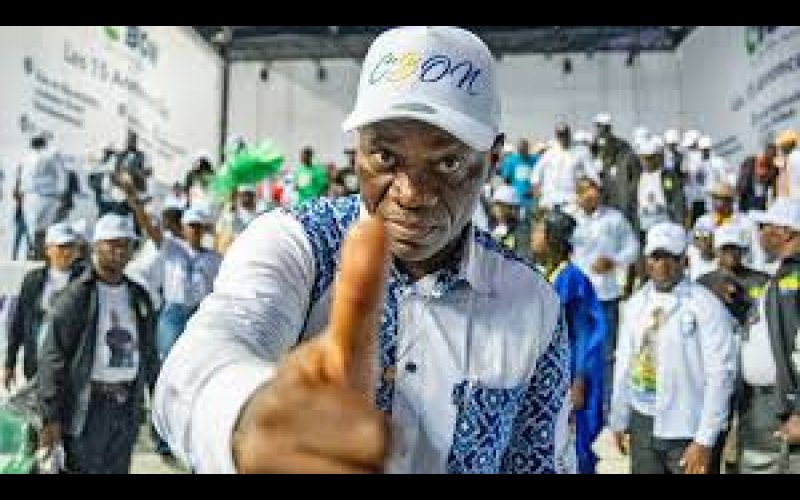
In Libreville, Oligui Nguema’s face dominates
billboards, market stalls, and airport walls, dwarfing the visibility of his
opponents.
“It’s just for the ambiance,” says 30-year-old voter
Shonnys Akoulatele, who remains skeptical. She’s voting out of duty, not
enthusiasm, citing a lack of real change: “We’re merely seeing a monotony of
the previous regime.”
Most of the eight candidates in Saturday’s election
are former allies of ex-President Ali Bongo, including main challenger Alain
Claude Bilie-by-Nze, a former prime minister. Other candidates, like Stephane
Germain Iloko and Alain Simplice Boungouères, also held senior roles in the old
PDG party.
Oligui Nguema himself served under both Bongo father
and son, but now highlights his break from the past through his leadership of
the 2023 coup. He’s built his campaign around anti-corruption promises and the
arrest of former First Lady Sylvia Bongo and her son, who are accused of
illicit enrichment—claims they deny.
Supporters point to infrastructure projects—roads,
hospitals, and schools—as signs of progress. But not everyone is convinced.
“I appreciated what they were doing at first,” says
Libreville resident Jacques Okoumba. “But after several months, I realized not
everything promised actually materialised.”
Following a constitutional referendum in November
2024, many hoped this election would mark the end of the Bongo era and the true
beginning of a new chapter.
Yet analysts like Bergès Mietté are cautious. “Real
political transition means a renewal of the political class and governing
style,” he says. “Right now, we’re seeing the same elites in power.”
Despite this, the election is the first in decades
without a Bongo or the PDG party on the ballot. Critics argue the new
constitution favors Oligui Nguema by allowing him to run while barring older
opposition figures due to age limits.
Even so, many say his likely victory comes down to a
simple fact: there’s no real competition.
Comments:
Leave a Reply