

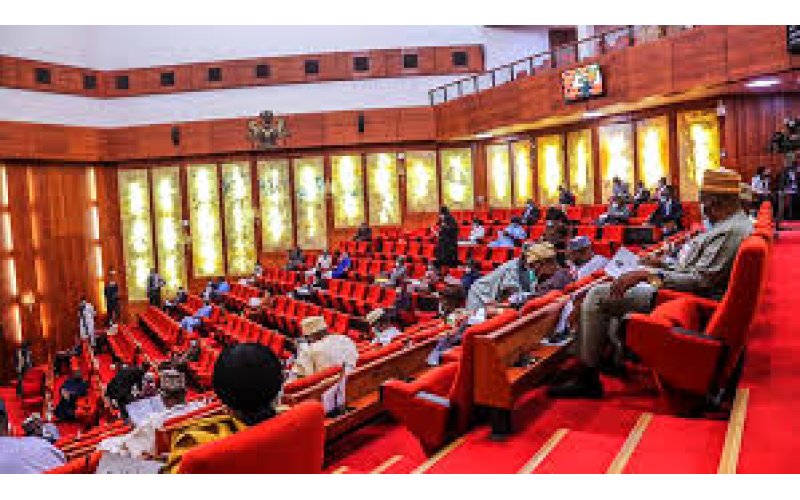
The Nigerian Senate has taken decisive action to halt
the proposed acquisition of Lafarge Cement by a Chinese firm, citing concerns
over economic sovereignty, national security, and potential monopolistic
control of the cement industry. This intervention has sparked widespread debate
among industry stakeholders, economists, and government officials, highlighting
the delicate balance between foreign investment and national interest in
Nigeria’s growing economy.
Background of the Sale Lafarge Africa, one of Nigeria’s leading cement producers, has been in negotiations to sell a significant portion of its operations to a major Chinese conglomerate. The proposed deal, reportedly worth billions of dollars, was expected to strengthen the presence of the Chinese firm in Nigeria’s construction and manufacturing sectors, further consolidating China’s influence in Africa’s largest economy.
While details of the transaction remain under review,
industry insiders suggest that the deal includes the sale of multiple cement
plants, mining rights, and distribution networks. The move was initially
welcomed by some investors as a potential boost to Nigeria’s cement production
capabilities. However, concerns have emerged regarding the broader implications
of foreign ownership in a sector critical to Nigeria’s infrastructure and
economic development.
Senate's Position During a heated session in the
National Assembly, lawmakers raised multiple red flags regarding the potential
acquisition. Key concerns highlighted include:
1. Economic Sovereignty: Senators argue that allowing
a foreign entity to control a significant portion of Nigeria’s cement industry
could weaken the country’s economic independence. Cement is a fundamental
material for national development, and ceding control to a foreign firm could
expose Nigeria to economic vulnerabilities.
2. Job Security: Lawmakers fear that a foreign
takeover could lead to job losses for Nigerian workers, as the new owners might
implement restructuring measures that favor expatriate labor or automation over
local employment.
3. National Security: Given the strategic importance
of cement production for infrastructure, defense-related projects, and national
development, there are worries about the potential risks of foreign ownership.
4. Market Competition: The Senate is also concerned
that a dominant foreign player in the cement industry could stifle competition,
potentially leading to price manipulation, reduced local investments, and
unfavorable market conditions for consumers.
5. Debt Trap Diplomacy Fears: Some lawmakers expressed
concerns that the acquisition could be a part of a larger pattern of Chinese
economic influence in Africa, where major infrastructure projects and
industries are controlled by Chinese firms, leading to long-term financial
dependencies.
Stakeholder Reactions
The proposed acquisition has drawn mixed reactions
from various quarters:
Industry Experts: Some analysts argue that foreign
investment could bring in much-needed capital, technological advancements, and
improved efficiency in cement production. However, others warn that it could
lead to undue foreign influence over a critical sector of the economy.
Labor Unions: Workers' unions have voiced strong
opposition to the deal, fearing layoffs and unfavorable working conditions
under foreign management. Some labor leaders have called for nationwide
protests if the sale is not halted.
Economic Analysts: Some economists believe the
Senate’s intervention could send a negative signal to foreign investors,
potentially discouraging further international investments in Nigeria. However,
others argue that the protection of national industries should take precedence
over short-term economic gains.
The Chinese Firm: The company seeking to acquire
Lafarge has yet to issue a formal statement, but insiders suggest it is
engaging in behind-the-scenes negotiations to address concerns raised by
Nigerian lawmakers.
Government and Regulatory Response
The Nigerian government, through the Ministry of
Industry, Trade, and Investment, has indicated that it will conduct a thorough
review of the proposed sale. The Nigerian Investment Promotion Commission
(NIPC) and the Securities and Exchange Commission (SEC) are also expected to
weigh in on the matter to ensure compliance with foreign investment
regulations.
Additionally, the Federal Competition and Consumer
Protection Commission (FCCPC) has stated that any deal must comply with
Nigeria’s antitrust laws to prevent market monopolization. The commission has
vowed to scrutinize all aspects of the transaction to ensure that fair
competition is maintained in the industry.
Potential Outcomes
Several possible scenarios could emerge from the
Senate’s intervention:
1. Deal Cancellation: The government could outrightly
reject the sale if it deems the acquisition detrimental to national interests.
This would effectively block the Chinese firm from acquiring Lafarge’s assets
in Nigeria.
2. Modified Terms: Lafarge and the Chinese firm may
renegotiate the deal to include safeguards that protect Nigerian jobs, ensure
local partnerships, and maintain competitive market conditions.
3. Senate Approval with Conditions: The Senate may
allow the deal to proceed under strict regulatory oversight, including
requirements for technology transfer, job security assurances, and price
controls to prevent cement price hikes.
4. Legal Battles: If the sale is blocked, the Chinese
firm could challenge the decision through legal channels, leading to prolonged
court proceedings and potential diplomatic tensions between Nigeria and China.
Historical Context
Nigeria has a history of balancing foreign investment
with national economic interests. In the past, similar debates have arisen over
foreign acquisitions of strategic industries, including telecommunications,
agriculture, and oil and gas. Previous administrations have both welcomed and
resisted foreign takeovers, depending on economic conditions and national
security considerations.
In the cement industry, past government policies have
encouraged local production and discouraged imports to promote
self-sufficiency. The emergence of major local players such as Dangote Cement
and BUA Cement has been attributed to these policies. The Senate’s move to
block the Lafarge sale aligns with previous efforts to keep key industries
under Nigerian control.
Implications for the Cement Industry
The Nigerian cement industry is one of the largest in
Africa, contributing significantly to GDP and employment. If the sale is
halted, it could reinforce the government’s commitment to protecting local
industries. However, if foreign investments are discouraged too aggressively,
it could limit competition and innovation in the sector.
A major concern is whether local cement manufacturers
can meet the increasing demand for cement, especially with ongoing
infrastructure projects nationwide. If Lafarge’s sale is blocked, the
government may need to implement policies that encourage expansion and
investment from local firms to ensure continued growth.
Conclusion
The Nigerian Senate’s move to halt the sale of Lafarge
Cement to a Chinese firm underscores the complexities of balancing foreign
investment with national economic interests. While concerns over sovereignty,
security, and market control remain valid, proponents argue that foreign
investments could also drive industrial growth. The coming weeks will be
crucial in determining whether the deal proceeds, is modified, or gets
completely scrapped, shaping the future of Nigeria’s cement industry and its
broader economic landscape.
As the debate continues, policymakers must carefully
consider how to protect national interests while ensuring that Nigeria remains
an attractive destination for responsible foreign investments. Whatever the
outcome, this case will likely set a precedent for future foreign acquisitions
in Nigeria’s key
Comments:
Leave a Reply