

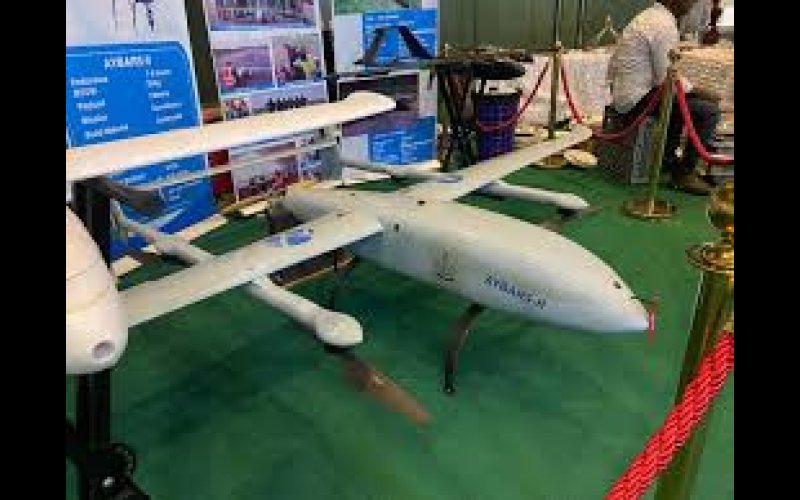
In a major leap toward self-reliance in defense
technology, Nigeria has successfully developed its first locally made attack
drones. These drones, a product of a strategic collaboration between the
Nigerian Air Force (NAF) and the Briech UAS Company, are armed with bombs and
missiles, marking a significant milestone in Nigeria's military capabilities.
The announcement of these homegrown attack drones
comes at a time when nations worldwide are increasingly prioritizing the
development of unmanned aerial systems (UAS) for both defense and security. The
Tsaigumi UAV (Unmanned Aerial Vehicle), developed under the partnership, is
capable of executing both surveillance and strike missions, potentially
transforming the way Nigeria secures its borders and responds to internal
security threats.
The Nigerian government, led by President Muhammadu
Buhari, recently showcased the newly developed drones in a ceremony in Kaduna.
Buhari hailed the initiative as a demonstration of Nigeria’s growing capacity
to design and produce complex military hardware. The drones are expected to
significantly enhance the Nigerian Armed Forces’ ability to conduct
intelligence, surveillance, and reconnaissance (ISR) missions, as well as
precision strikes in combat zones.
A notable feature of these attack drones is their
operational capabilities. The Tsaigumi UAV boasts an impressive mission range
of up to 100 kilometers, a service ceiling of 15,000 feet, and an endurance
time of approximately 10 hours. These specifications make them well-suited for
both tactical reconnaissance and the delivery of precise strikes on designated
targets, including enemy positions, logistics, and infrastructure.
Experts suggest that this indigenous development could
set Nigeria apart as a potential exporter of unmanned systems to other nations,
thereby opening up new markets for the country's burgeoning defense industry.
With the potential for future upgrades and enhancements, the drones represent a
significant investment in national defense and technological innovation.
This development is in line with Nigeria’s broader
efforts to reduce its dependency on foreign arms and military technology. In
the past, the country has faced challenges in acquiring advanced military
equipment due to international political considerations and financial
constraints. By investing in indigenous drone technology, Nigeria aims to
ensure that its military remains capable and independent, especially in the
face of ongoing security threats from insurgents and armed groups across the
country.
However, the deployment of such advanced technology is
not without its challenges and concerns. One of the most significant risks
highlighted by experts is the potential for operational mishaps and unintended
consequences. In December 2023, a tragic incident occurred when a Nigerian Army
drone mistakenly targeted civilian areas in Kaduna State, resulting in the
deaths of at least 126 people. This mistake brought to light the need for
rigorous operational protocols and oversight to prevent such incidents in the
future.
The Nigerian government has acknowledged the
seriousness of this issue and has committed to ensuring that the new drones are
operated with the highest levels of responsibility and precision. The air force
has promised to implement comprehensive training for drone operators to prevent
further mishaps. Additionally, officials emphasize the importance of adhering
to international humanitarian laws when deploying armed drones, ensuring that
civilian areas are not inadvertently targeted.
While concerns about the ethical use of drones in
military operations remain, many see this development as a step forward in
Nigeria’s quest for military modernization. The Tsaigumi UAVs are part of a
larger effort by the Nigerian military to integrate advanced technology into
their arsenal, from fighter jets to armored vehicles, and now, drones.
As Nigeria continues to push the boundaries of
military technology, there is hope that these advancements will strengthen the
country’s defense posture, particularly in regions plagued by Boko Haram
insurgents, banditry, and other security challenges. The success of the
Tsaigumi UAVs could also inspire other African nations to explore similar
pathways, potentially fostering greater regional cooperation and
self-sufficiency in defense.
In conclusion, while Nigeria's indigenous attack
drones represent a major step forward in terms of technological progress and
national security, they also underscore the delicate balance between
innovation, ethical considerations, and civilian protection. As the country
continues to develop its defense capabilities, it must ensure that
technological advancements are accompanied by stringent oversight and adherence
to international standards, safeguarding both its citizens and its military
personnel.
Comments:
Leave a Reply