

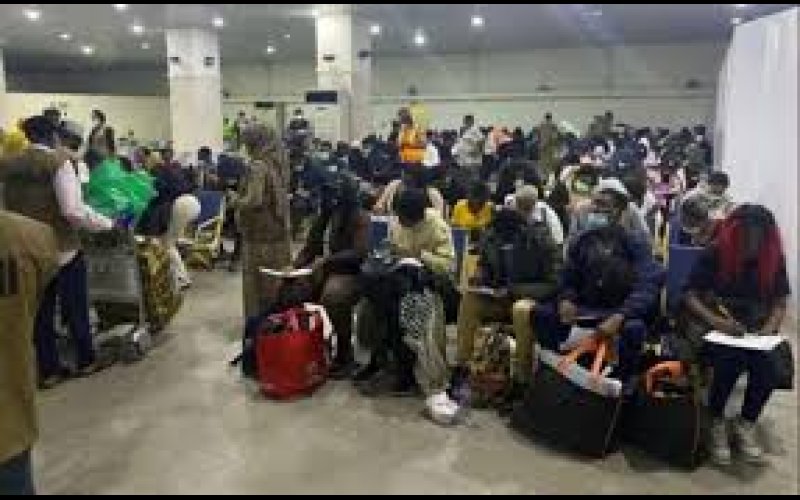
The Federal Government says discussions
are ongoing on how 15,000 Nigerians stranded in Cameroon, Niger, Chad and other
parts of the world will be returned to Nigeria in safety and dignity.
Alhaji Tijani Ahmed, Federal Commissioner, National
Commission for Refugees, Migrants and Internally Displaced Persons (NCFRMI),
disclosed this at a media briefing on Friday in Abuja.
Ahmed revealed that no fewer than six million people
are displaced in Nigeria while thousands of refugees are living elsewhere
across the world.
“We have 15,000 Nigerians that want to return to the
country voluntarily and we also have not less than 100,000 foreigners living in
this country as refugees.
“All these are the responsibilities of the commission,
to give them support,” he said.
While reiterating government’s tireless efforts to
ensure safe return of the displaced persons, Ahmed thanked President Bola
Tinubu for the support given to the commission and the Humanitarian Affairs
Ministry.
The NCFRMI boss also disclosed that Nigeria would be
hosting the first thematic meeting under its chairmanship of the Rabat Process
with more than 100 delegates from the 57 partner countries in attendance.
It would be recalled that Nigeria assumed chairmanship
of the Rabat Process – a Euro-African dialogue on migration and development –
in January, 2025.
Ahmed said that the meeting,scheduled for May 13 and
May 14, themed, “Youth, Innovation and Education: Driving the Future of
Migration.” will pave the way for bilateral discussions between Nigeria and
other countries, leading to better migration governance
“Membership in these platforms provides opportunities
for knowledge transfer and better migration management.
“Nigeria’s leadership in the Rabat Process is seen as
an advantage, despite its being a one-year term,” he added.
The federal commissioner also outlined the challenges
in managing migration, including the need for adequate advocacy to inform
younger generations about legal migration pathways.
“There is a need to educate migrants about the
consequences of irregular migration, including negative outcomes.
“The focus should be on advocating for legal migration
pathways to reduce the number of irregular migrants.
“Regular migration involves moving through legal
channels, while irregular migration often involves dangerous and illegal
methods.
“Irregular migration can lead to hardship and danger,
with many migrants unable to return to their home country,” he said
Ahmed, therefore, called for better coordination and
support from various stakeholders, including the media to enhance migration
governance.
Comments:
Leave a Reply