

The race for contactless payments in Nigeria is
heating up, with key players positioning themselves to crack this form of
payment. While not new, contactless payments have long been a sleeper
innovation in the country, held back by a lack of infrastructure, customer
awareness, and adoption.
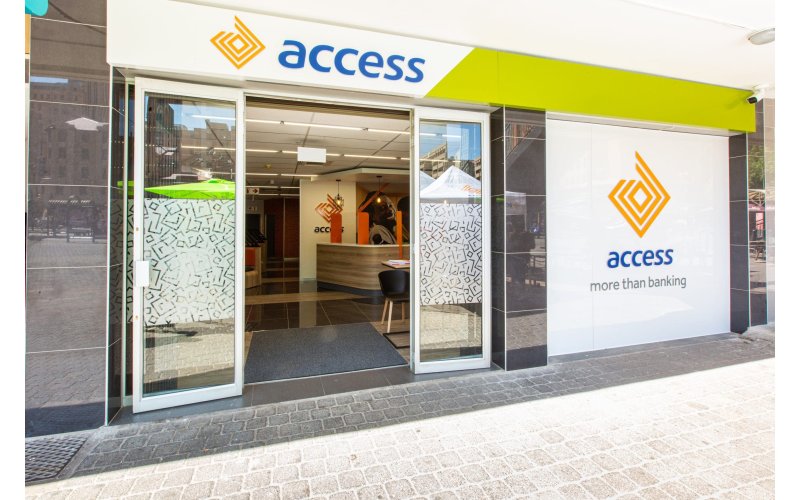
Access Bank, Nigeria's largest bank by assets,
has launched a Tap to Phone solution to expose the average
Nigerian to contactless payments. Tap to Phone uses software point-of-sale
(softPOS) technology, where merchants download an app and use their smartphones
as POS terminals. With a Near Field Communication (NFC)-enabled card, customers
can withdraw by simply bringing their cards near the smartphone without needing
to slot them in.
This isn’t Access Bank’s first foray into contactless
payments. It previously launched QR code capture payment technology, where users
scan pre-generated QR codes to pay for goods and services. However, the bank
hasn’t disclosed transaction numbers or how that technology is performing. With
softPOS, Access Bank joins existing players like Kuda softPOS, which provides tap to phone functionalities
in its business banking suite.
Fintech rivals Moniepoint and PalmPay are also pushing contactless payments.
Moniepoint partnered with AfriGO to introduce cards, while PalmPay teamed up
with CashAfrica, a Nigerian contactless payments infrastructure provider, to
launch payment terminals. This hyper-activity reflects a belief that
contactless payments are the future.
While infrastructural blockers are solvable, a deeper
psychological block around security remains. How can users maintain control of
their financial access if they lose their phones or cards? The Central Bank of
Nigeria (CBN) has introduced daily cumulative limits capped at ?50,000
($33) to prevent heavy losses in cases of theft. However, building
security-first solutions is crucial. In countries where contactless payments
are entrenched, authorisation is key. Although providing authorised access to
every payment is less user-friendly, it is efficient. Yet, the next will be
making authorisation overrides difficult in those cases of theft.
With the country’s biggest bank throwing its hat in
the race for contactless payment adoption, one needs no telling that
contactless payments may be about to take off in Africa’s biggest economy.
Comments:
Leave a Reply