

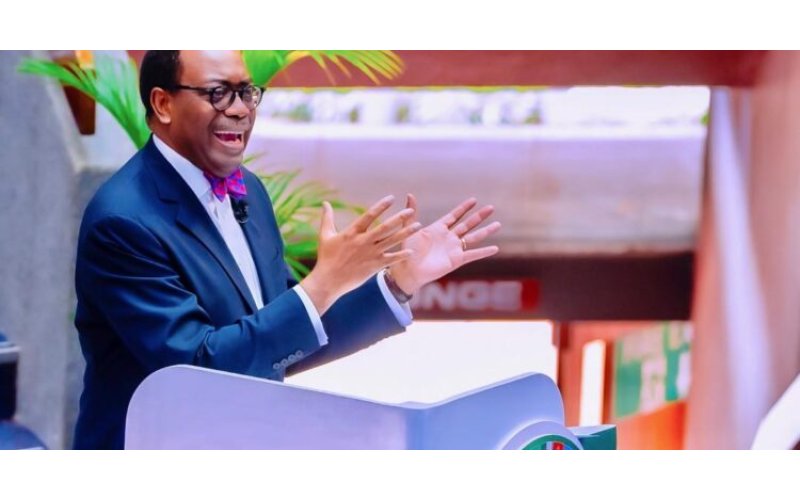
The African Development Bank (AfDB) has
revealed that the continent loses more than $580 billion every year
through corruption, profit shifting, and illicit capital outflows — a
haemorrhage that continues to cripple economic progress and worsen Africa’s
debt challenges.
AfDB President, Dr. Akinwumi Adesina, disclosed
this in a Bloomberg interview, warning that the losses exceed Africa’s capacity
to finance its infrastructure and development needs, even as the continent’s
total debt stock approaches $2 trillion.
“It doesn’t matter how much water you pour into a
bucket if the bucket is leaking. If you’re able to reduce the leakages to
illicit capital, also corruption and all of these things, Africa will be able
to keep a lot of these resources and meet the amount of infrastructure it
needs,” Adesina said.
$1.6 Billion Lost Daily
According to AfDB estimates, Africa loses about $1.6
billion every day to what it describes as “financial leakages.” This figure
includes:
These staggering losses occur at a time when the
continent faces an annual infrastructure financing gap of up to $170 billion.
Instead of investing resources in growth-enabling projects, many African
governments are burdened by rising debt-service obligations.
A recent study by the Boston University Global
Development Policy Center and the Institute for Economic Justice
found that debt servicing in Africa has reached its highest level since the
early 2000s debt crisis, with more than half of African governments now
spending more on interest payments than on public healthcare.
AfDB Calls for Action
Adesina stressed that while concessional loans and
debt restructuring are vital, the most effective way to safeguard Africa’s
resources is by curbing corruption and illicit financial flows. Doing
so, he argued, would reduce the continent’s dependence on borrowing and free up
funds for development.
Nigeria in Focus
The AfDB’s recently released 2025 African Economic
Outlook raised concern over Nigeria’s growing debt crisis, projecting that
the country could spend up to 75% of its revenues on interest payments
in 2025.
The Bank warned that a low debt-to-GDP ratio does not
automatically translate to sustainability if government revenues are heavily
consumed by debt servicing. It noted that while some African countries
benefited from lower debt levels between 2022 and 2023, this progress could
easily unravel if growth slows, interest rates rise, or governments engage in reckless
fiscal policies.
Comments:
Leave a Reply